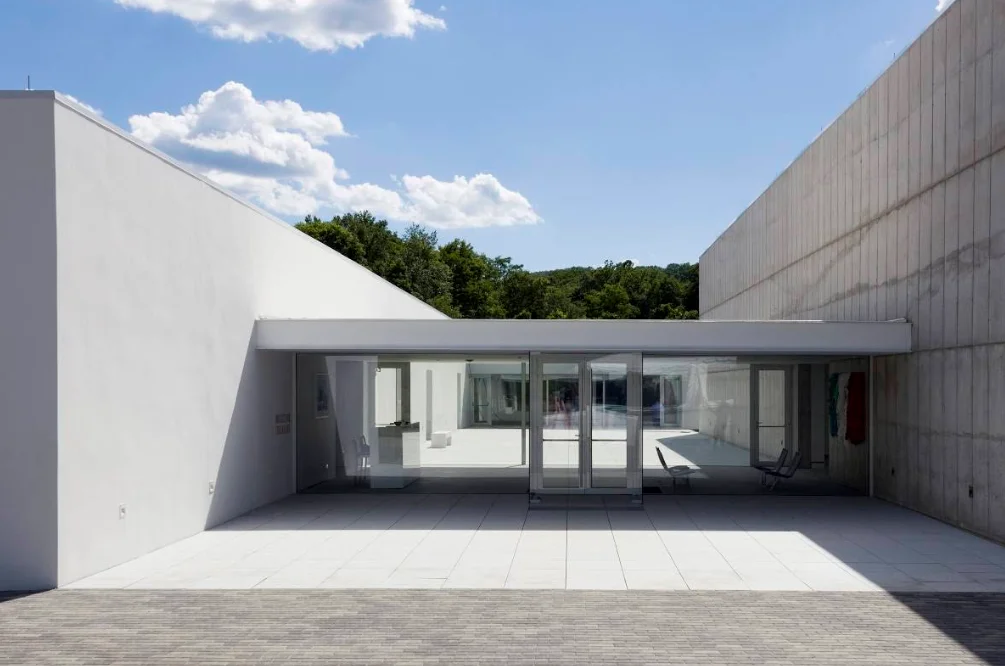
A luminous Hudson Valley museum where Arte Povera, Italian design and contemporary architecture turn a day outside New York into a genuine art escape.
The permanent installation brings together 76 works by twelve artists:
Giovanni Anselmo, Alighiero Boetti, Pier Paolo Calzolari, Luciano Fabro, Jannis Kounellis, Mario Merz, Marisa Merz, Giulio Paolini, Pino Pascali, Giuseppe Penone, Michelangelo Pistoletto, Gilberto Zorio
Collection highlights:
- Mario Merz: igloos, Fibonacci numbers and the collision between organic life and industrial structures.
- Marisa Merz: intimate, fragile constructions
- Jannis Kounellis: coal, steel, sacks, clothing and other materials
- Michelangelo Pistoletto: mirror works
- Giuseppe Penone: trees, skin, breath and bodily contact of natural materials.
- Luciano Fabro: sculpture reconsidered through gravity, fabric, metals and the cultural image of Italy.
- Giulio Paolini: art about looking and the relationship between artwork and viewer.
- Alighiero Boetti: systems, maps, language, dual identities, collaboration and the tension between order and chance.

Permanent Arte Povera → Tutto Boetti → lunch or coffee → Yoichi Ohira → Bruna Esposito
Placing Esposito last works particularly well. Her dark, socially charged installation interrupts the pavilion’s architectural purity and the seductive surfaces of Murano glass.
If travelling by train, reserve both museum admission and the shuttle in advance. The campus sits beside Route 9 and is not realistically walkable from central Cold Spring.
Take the Metro-North Hudson Line from Grand Central Terminal to Cold Spring. The journey is approximately 80 minutes, with particularly attractive river views on the left side when travelling north. Magazzino operates a shuttle from the Cold Spring station parking area, scheduled around trains arriving from Grand Central.
Seasonal reservations essential
About the venue
About
Magazzino was founded to promote greater recognition of postwar and contemporary Italian art in the United States. Its name means “warehouse” in Italian, referring both to the original industrial building and to its deliberately restrained architectural language.
Miguel Quismondo transformed an 11,000-square-foot structure dating from 1964 and connected it to a new cast-concrete extension, producing approximately 20,000 square feet of exhibition space.
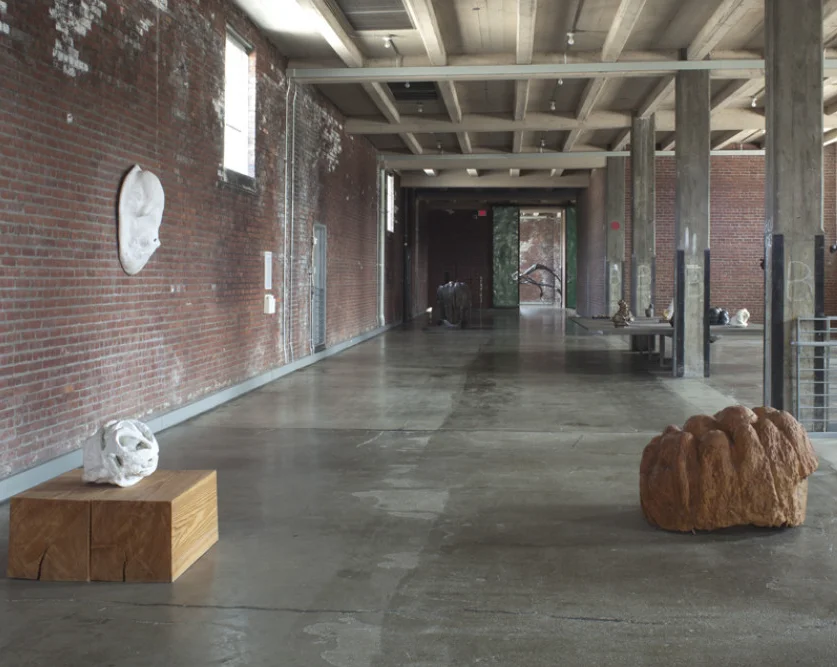
The architecture deliberately echoes Arte Povera: simple construction, exposed industrial elements, modest materials and carefully controlled natural light. Two glass connectors and a reflecting-pool walkway unite the original warehouse and extension.
Worth the trip
Magazzino offers one of the most concentrated introductions to Arte Povera outside Italy.
Instead of presenting the movement as a chapter within a general contemporary collection, the museum gives its artists room to breathe.
The museum is also worth visiting for its architecture.
© Magazzino Italian Art