At a glance
Forget the white cube: at Dia Beacon, monumental art gets the space, natural light and time it needs to completely change how you experience it.
Why go
You'll see
Pace of visit
Don't miss

Artlovers Tip
Don't try to “complete” Dia Beacon.
Pick a few artists and give them serious time. Walk around Serra. Sit with Agnes Martin. Notice the daylight on Ryman. Experience the building as part of Robert Irwin's work.
Dia is one of those museums where slowing down doesn't mean seeing less — it means seeing more.
Make it a route. Dia Beacon is not about ticking masterpieces off a list.
Artlovers relevance
Inside the exhibition
Meet the artist
Key Movements
Medium
Description
Dia Beacon is unusual because the permanent collection is not presented as a conventional art-historical survey. There is no attempt to squeeze hundreds of artists into a chronological sequence. Instead, Dia concentrates on artists it has supported deeply, often dedicating entire galleries to a single artist or body of work.
That philosophy is particularly powerful for the generation that transformed art during the 1960s and 1970s. For artists such as Judd, Serra, Heizer, LeWitt, Smithson and Weiner, space is not simply the container for an artwork — space, scale, material and the viewer's movement are part of the artwork itself.
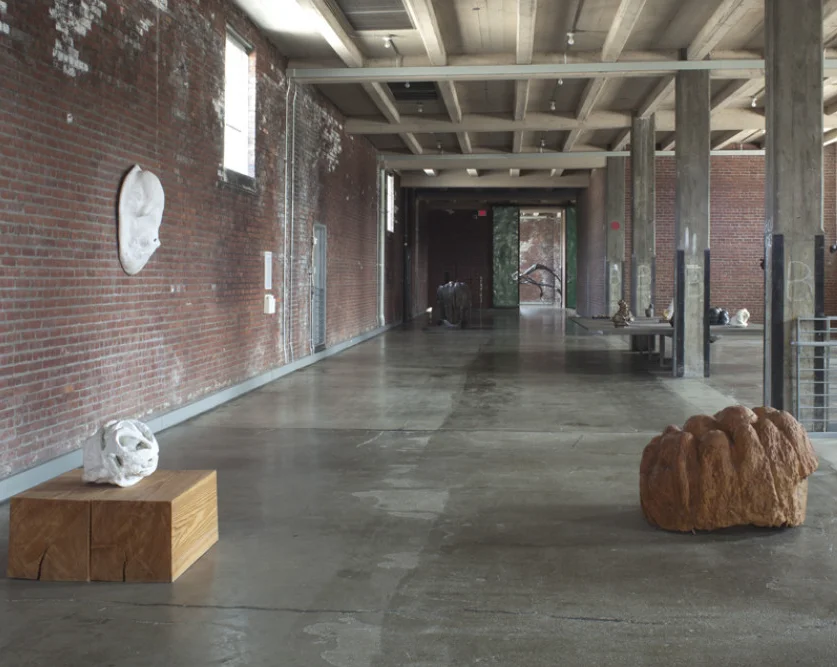
The building amplifies this. Robert Irwin's transformation of the former factory retained its industrial character while creating vast galleries illuminated entirely by natural light. He also rejected a hierarchical or strictly chronological layout, allowing artworks to establish relationships through space rather than through a conventional museum timeline.
The displays evolve. As of August 2026, Dia lists long-term presentations including Louise Bourgeois, John Chamberlain, Michael Heizer, Roni Horn, Tehching Hsieh, Donald Judd, On Kawara, Sol LeWitt, Agnes Martin, Hélio Oiticica, Gerhard Richter, Richard Serra, Robert Smithson, Lee Ufan and Lawrence Weiner, among others. Newly opened long-term displays include Alighiero Boetti, Bridget Riley and Richard Tuttle.
Worth travelling for?
I would give this one of the highest Artlovers ratings. It isn't simply a permanent collection you visit because you happen to be nearby: Dia Beacon is a reason to make the trip from New York City to the Hudson Valley.
The works, architecture, scale and natural light are inseparable. Many of these artists can be seen in MoMA or other major museums, but seeing a Richard Serra or Donald Judd here is a fundamentally different experience.