At a glance
Independence needed a new visual language — and across West Africa, architecture became a tool for imagining newly liberated nations.
Why go
You'll see
Pace of visit
Don't miss

Artlovers Tip
One of MoMA’s most important art-history corrections of 2026.
Inside the exhibition
Key Movements
Medium
Description
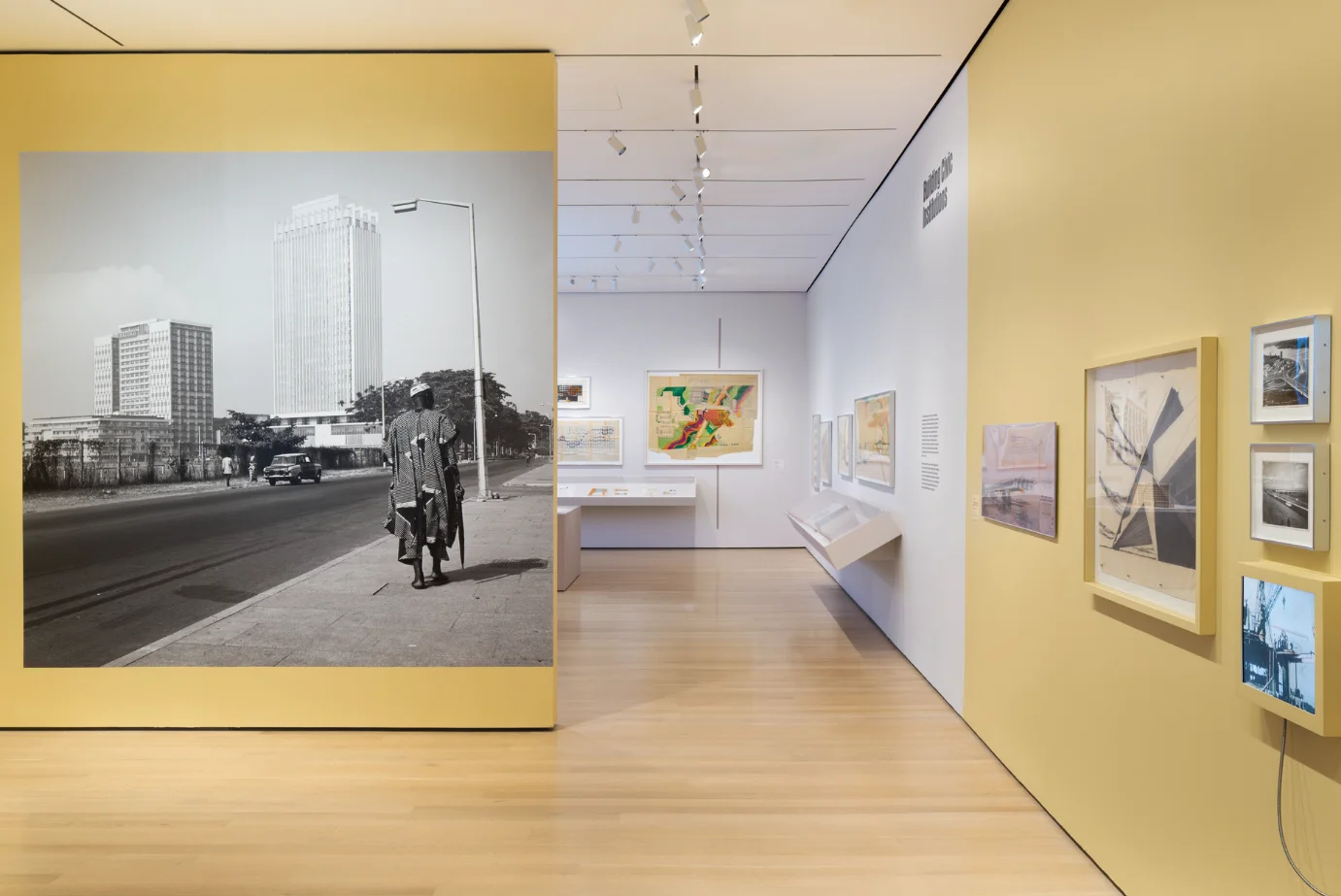
Architects of Liberation examines the extraordinary architectural experimentation that accompanied decolonisation in West Africa. Newly independent nations needed universities, cultural institutions, government buildings and civic spaces capable of expressing a future distinct from colonial rule. Architecture became political: modernist forms were adapted to climate, local materials, Pan-African ideals and the ambitions of new states. With hundreds of drawings, photographs, models and films, the exhibition expands the conventional geography of modernism and asks who has historically been included in its story.
The architects represented include African practitioners alongside international figures working within rapidly changing political contexts. Rather than presenting one signature artist, the exhibition reveals architecture as a collective instrument through which governments, architects and communities attempted to build independence into physical form.
Architects of Liberation: Modernism in Western Africa
Hours & rating from Google