At a glance
Spanning two gallery spaces, this exhibition pairs Yoshitomo Nara's latest atmospheric portraits and large-scale bronze sculptures with formative works from the artist’s own collection.
Why go
You'll see
Japanese Neo-Pop · Figurative painting · Drawing · Sculpture
New portrait paintings · Large-scale white bronze heads · Monochrome drawings · Early works from the 1980s · Translucent acrylic washes.
Childhood and isolation · Innocence and rebellion · Emotional resistance · Music and counterculture · Memory · Vulnerability · Individual freedom
Pace of visit
The show is divided between two neighboring locations on 19th and 20th Street, requiring a short walk to see both the sculptures and paintings.
Don't miss
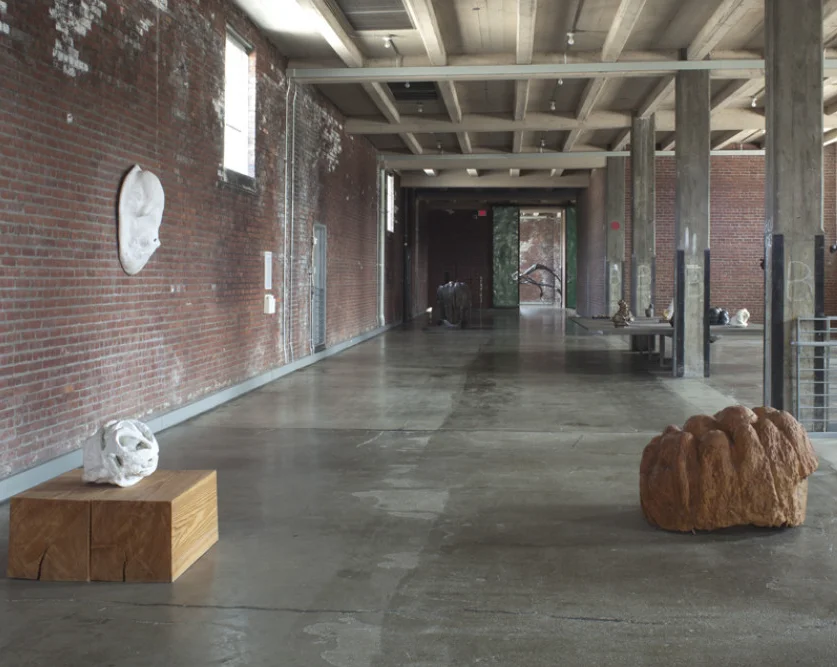
- The thirteen white-coated bronze heads on 19th Street, which Nara modeled after the snow-covered trees of his northern Japanese childhood.
- The early works: Compare their sharper, more confrontational energy with the emotional complexity of the new paintings.
- The eyes: Nara uses tiny adjustments in direction, colour and shape to transform an apparently simple face into suspicion, sadness or resistance.
- The drawings: Often more spontaneous than the paintings, they reveal the importance of punk, folk and rock culture within his imagination.
- The sculptures: Walk around them. Their physical presence can shift the figures from fictional characters into strangely independent beings.

Artlovers Tip
Look closely at the eyes in the newest paintings; the layering of translucent acrylic creates a watery, shimmering effect that signals a shift toward a more emotive, uncertain tone.
Inside the exhibition
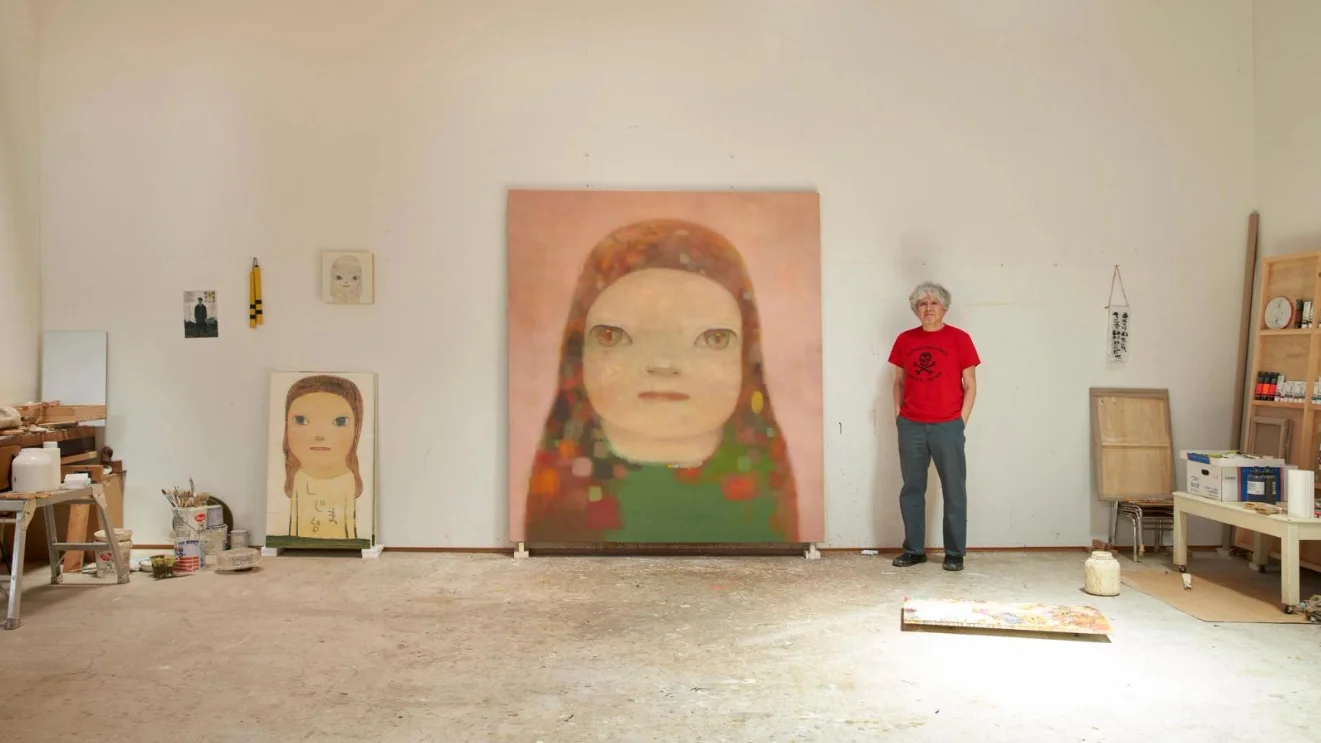
Meet the artist
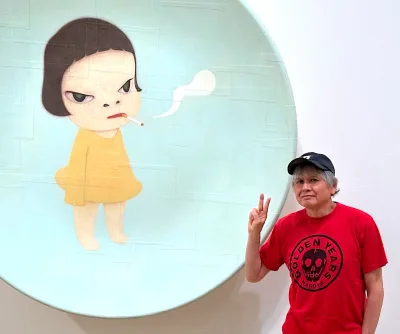
Description
David Zwirner’s first exhibition with Yoshitomo Nara combines historical perspective with a view of where his practice is moving now. Rather than functioning as a conventional retrospective, it places new paintings and drawings beside recent sculptures and a selection of early works chosen by the artist.
This structure is particularly revealing for an artist whose imagery appears instantly recognisable. Nara has returned repeatedly to children and solitary figures, but their emotional register has never remained fixed. Over time, aggressive gestures and mischievous expressions have given way to subtler psychological states.
Presented across the gallery’s 19th and 20th Street spaces, the exhibition offers enough room to compare media and periods. The paintings create concentrated encounters; the drawings bring us closer to Nara’s private visual vocabulary; and the sculptures give his imagined characters an unexpected weight and autonomy.
Yoshitomo Nara was born in Hirosaki, Japan, in 1959. Growing up in relative isolation, he found companionship in music—particularly Western rock, folk and punk—and the emotional independence associated with those cultures became central to his art.
After studying at Aichi University of the Arts, he attended the Kunstakademie Düsseldorf from 1988 to 1993, where he studied under Neo-Expressionist painter A. R. Penck. His years in Germany strengthened the mixture of European painting, Japanese popular culture and music found throughout his practice.
Nara became internationally recognised for images of children with oversized heads and penetrating eyes. Although frequently associated with Japanese Neo-Pop, his work is more personal and psychologically charged than its graphic clarity initially suggests. His characters are not simply symbols of childhood: they embody loneliness, resistance, vulnerability and the determination to remain emotionally independent.
Worth travelling for?
A rewarding stop for viewers who want to see the latest direction of Nara's work beyond his most famous tropes, offering significant scale and technical variety.
Experience as an Artlover
Start at the 20th Street gallery to see the detailed evolution of the paintings and drawings, then walk to 19th Street to experience the physical presence of the monumental white sculptures.
Yoshitomo Nara
Artlovers relevance
Plan your visit
Hours & rating from Google