At a glance
A deep look into the sophisticated visual languages and living traditions of the Indigenous communities inhabiting the rugged coastlines between Alaska and Washington State.
Why go
This project brings together significant ancestral objects and contemporary works rarely seen in Europe, highlighting the enduring sovereignty and creative resilience of the Haida, Tlingit, and Coast Salish peoples.
You'll see
Intricately carved cedar poles · Ceremonial masks and regalia · Chilkat weaving · Contemporary sculpture · Archival photography
Pace of visit
The exhibition pairs historical artifacts with modern artistic responses, requiring a steady pace to appreciate the layered cultural narratives.
Don't miss
The display of ceremonial masks, which illustrates the complex social structures and oral histories passed down through generations of Northwest Coast families.

Artlovers Tip
Pay close attention to the contemporary works at the end of the circuit; they provide essential context on how traditional motifs are being reclaimed to address modern environmental and social issues.
Inside the exhibition
Description
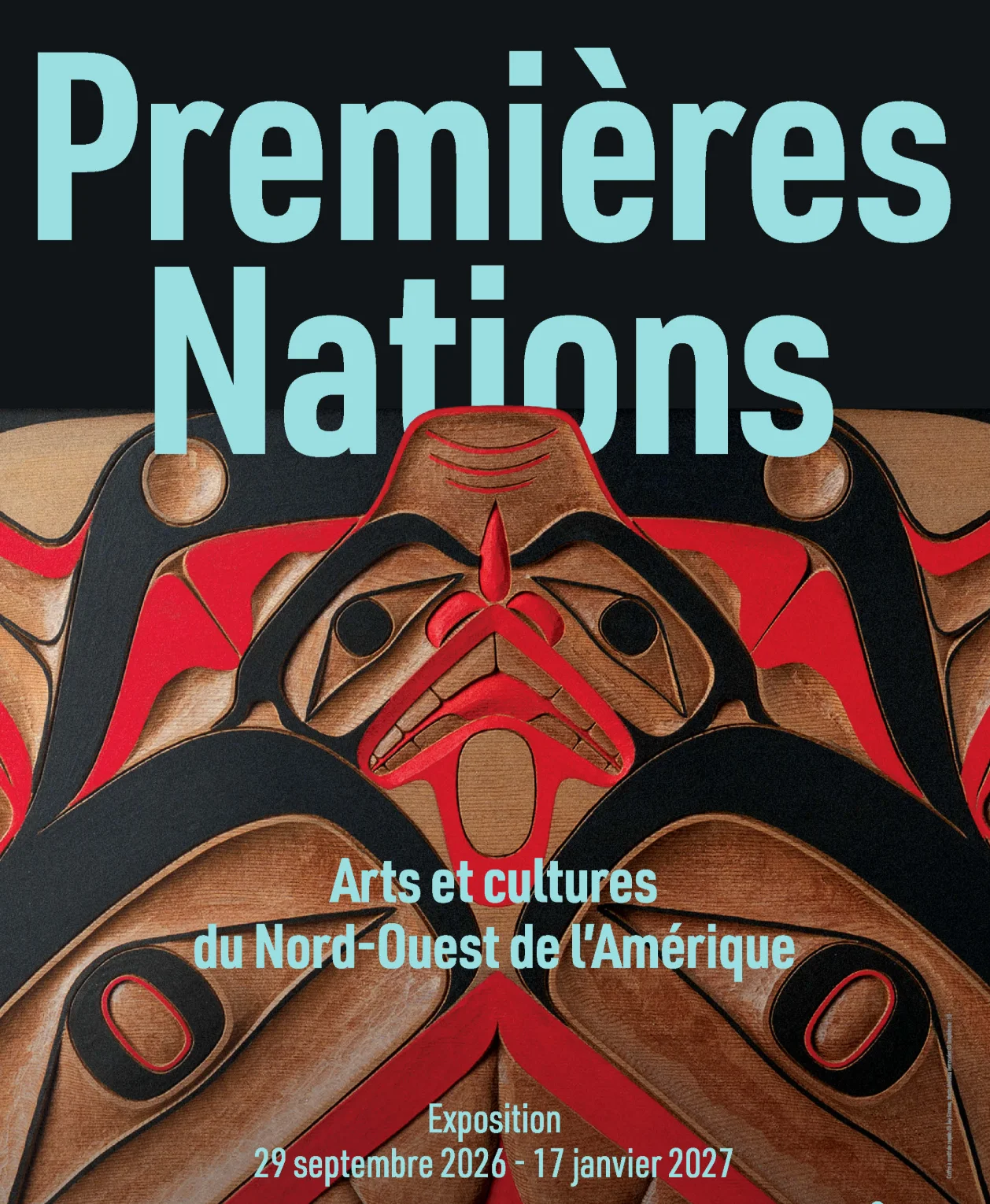
First Nations: Arts and Culture of the Northwestern United States at the Musée du Quai Branly — Jacques Chirac in Paris, France, presents a comprehensive survey of the aesthetic and spiritual heritage of Indigenous nations. The exhibition explores how these cultures have maintained their identities through artistic expression, spanning from the early 19th century to the present day. Visitors encounter a landscape of monumental carvings and delicate textiles that define the Pacific Northwest aesthetic.
The selection features a wide range of media, including towering cedar sculptures, intricate basketry, and the iconic bold-line formline painting characteristic of the region. Significant loans from North American institutions are displayed alongside the museum's own collection, tracing the evolution from functional community objects to contemporary political and environmental commentary. The layout emphasizes the connection between the art and the specific geography of the rainforests and fjords that shape these traditions.
This presentation matters because it moves beyond the ethnographic lens to frame these works as part of a continuous, evolving artistic canon. By placing historical potlatch items next to works by living artists, the Musée du Quai Branly highlights the survival of these cultures despite centuries of colonial pressure. It offers a rare opportunity for European audiences to engage with the specific symbolism and intellectual depth of the Northwest Coast's First Nations.
Worth travelling for?
A substantial and culturally vital exhibition for those interested in the intersection of indigenous sovereignty, sophisticated craftsmanship, and the survival of ancestral artistic traditions.
Experience as an Artlover
The museum is open daily except Mondays, with late-night openings until 10:00 PM on Thursdays. Given the popularity of major temporary exhibitions at Quai Branly, booking a timed entry slot online in advance is highly recommended.
First Nations: Arts and Culture of the Northwestern United States
Artlovers relevance
Plan your visit
Hours & rating from Google