At a glance
Madrid through its contradictions: thirty photographs reveal a city built between centre and periphery, wealth and precarity, memory and constant reinvention.
Why go
You'll see
Pace of visit
Best for
Don't miss

Artlovers Tip
Don’t look for “the Madrid” of the exhibition. Look for several Madrids at once.
Stand between two photographs that seem unrelated and ask what connects them: space, class, architecture, memory, absence? The exhibition becomes much stronger when you read it as a network rather than as thirty individual images.
It makes you look at Madrid differently once you leave the museum.
Artlovers relevance
Inside the exhibition
Meet the artist
Key Movements
Description
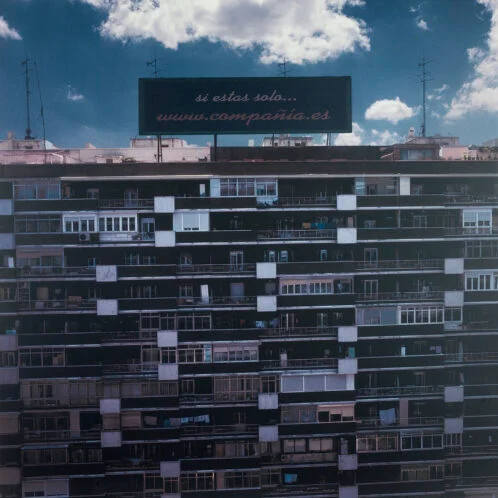
Topografía de un contraste approaches Madrid not through a chronological history but as a map of tensions. Centre and outskirts, modernity and tradition, economic power and precariousness, institutional culture and counterculture are treated not as temporary problems but as forces that have continually shaped the city's identity.
Photography becomes a particularly effective way of revealing those layers. Architecture records ambition and transformation; interiors preserve private memory; streets reveal everyday behaviour; peripheral spaces expose the less visible consequences of metropolitan growth. Rather than attempting to resolve Madrid’s contradictions, the exhibition makes them coexist within the same visual field.
The photographers come from different generations and approaches. Alberto García-Alix brought an intensely personal, often raw vision to post-Transition Madrid; José Manuel Ballester frequently investigates architecture and altered urban space; Ángel Marcos examines landscape, power and contemporary territory; while figures such as Ramón Masats and Chema Prado add other documentary and subjective perspectives on the city.
Topografía de un contraste — Una lectura de Madrid a través de la fotografía
Hours & rating from Google