Beauty, youth, death, desire — Baldung painted the human body as if it were haunted by time.

Inside the exhibition
German Renaissance, with strong links to Albrecht Dürer, humanist culture, allegory, mythology, Christian imagery, and late medieval vanitas themes.
Hans Baldung Grien was one of the central figures of German Renaissance painting and worked in Dürer’s workshop in Nuremberg, where he was probably his most ambitious apprentice.
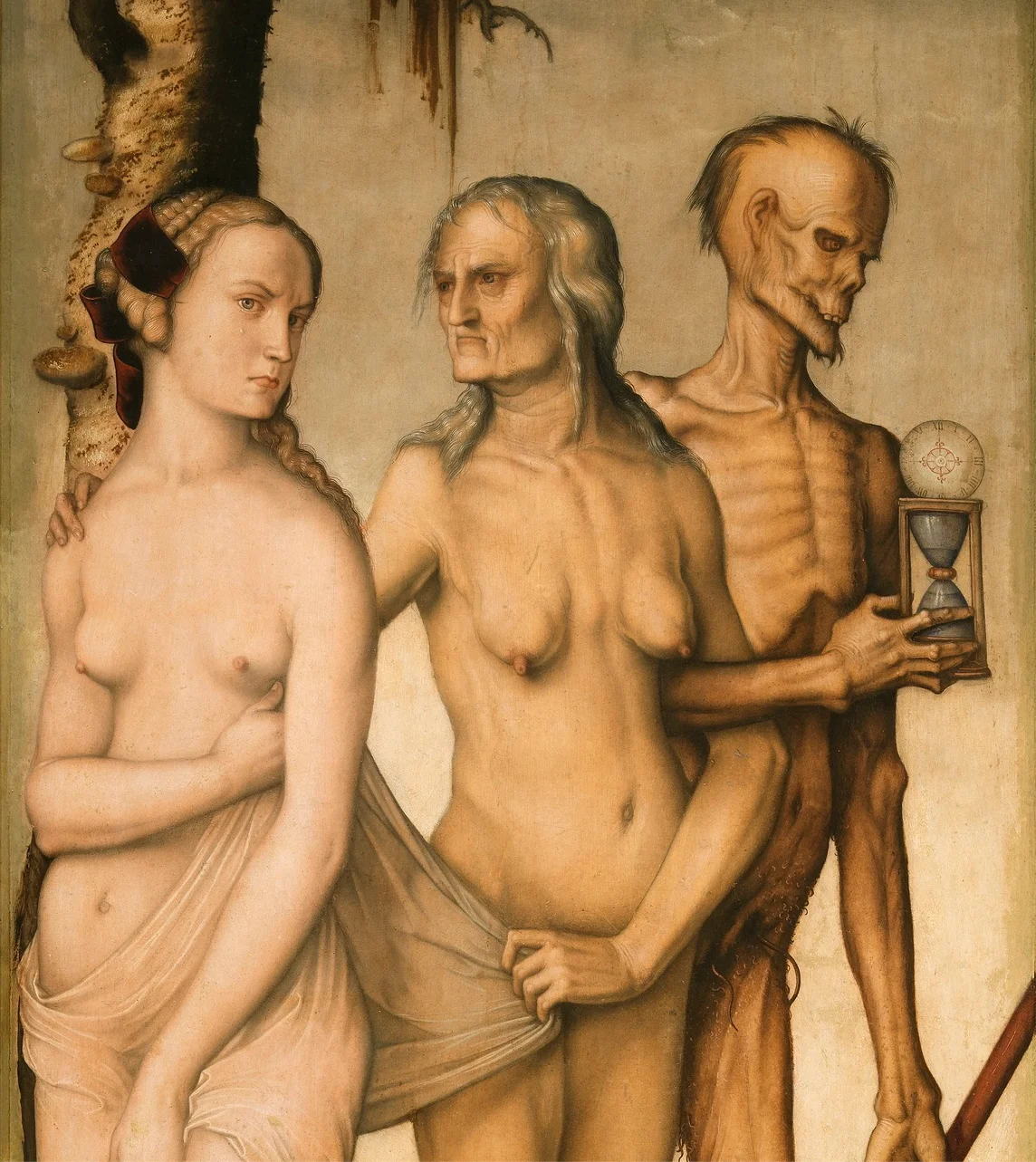
This exhibition focuses on two extraordinary paintings from the Prado collection: Harmony / The Three Graces? and The Ages and Death, both dated around 1541–1544 and considered among Baldung’s final works.
You’re watching:
Idealized beauty placed against decay and mortality
The female body as allegory, desire, warning, and philosophical image
A visual contrast between eternal beauty and earthly life
A wintery, almost Bosch-like landscape of time, age, and death
A dialogue with Dürer, Cranach, nature studies, and classical motifs within a Christian visual world.
The exhibition also includes a section dedicated to findings from the recent restoration of the two Prado paintings, revealing details about Baldung’s creative process and allowing visitors to better appreciate botanical details and tonal contrasts between the two panels.
Worth travelling for?
Yes — especially if you love Renaissance art with a darker, more psychological edge.
Because Baldung is not the calm, balanced Renaissance you might expect. His work is strange, intelligent, seductive, and unsettling. These paintings transform the familiar theme of vanitas — beauty, time, death — into something visually and intellectually daring.
It matters because the exhibition helps place the Prado’s two panels within the broader world of German Renaissance art, without simply reconstructing a historical context. Instead, it lets you enter the artistic landscape around Baldung at the end of his career.
Experience as an Artlover
Start by looking at beauty first — then let death enter the scene.
Compare the two panels as a pair: one speaks of ideal beauty, the other of time and decay.
Pay attention to skin, plants, gestures, and tonal contrast.
Think of Baldung not only as Dürer’s follower, but as a more provocative and psychologically daring artist.
Don’t rush the restoration details — they are key to understanding how the paintings were made.
Hans Baldung Grien
Hours & rating from Google