Early abstraction, spiritual modernism, symbolism, geometric abstraction, organic abstraction and esoteric visual language.

Inside the exhibition
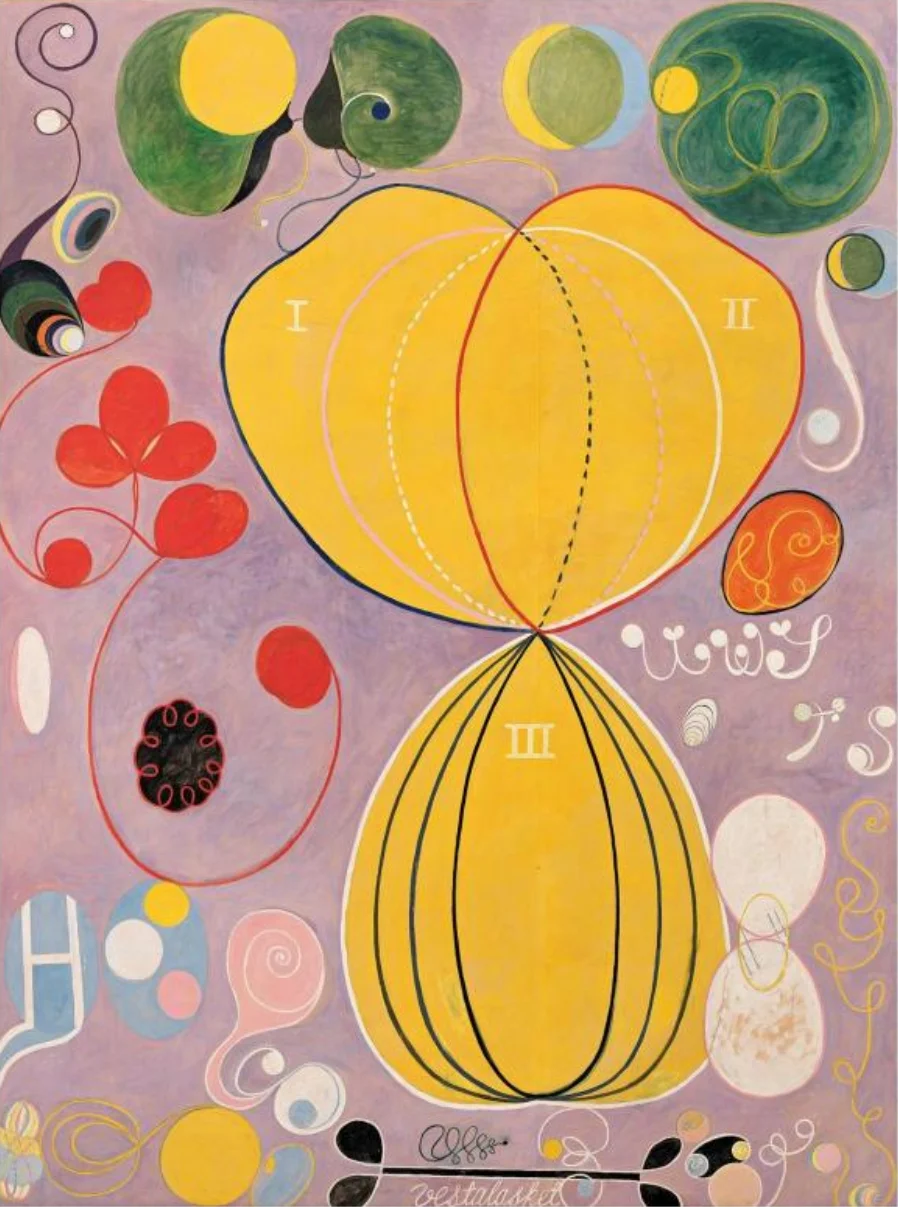
Hilma af Klint began making radical abstract works from 1906, before artists usually placed at the beginning of abstraction such as Kandinsky or Malevich. Her work connects modern painting with spiritualism, Theosophy, science, geometry and a search for realities beyond the visible.
Paintings for the Temple is Hilma af Klint’s visionary cycle created between 1906 and 1915. It includes 193 works conceived for an imagined spiritual temple — not a conventional building, but a space for transformation, knowledge and inner evolution.
You’re watching:
- Monumental compositions filled with circles, spirals, diagrams and biomorphic forms
- Colour used as energy, not decoration
- Abstract painting before abstraction became an accepted modernist language
- Works shaped by spiritual research and collective practice with other women
- The Ten Largest, a monumental series connected to stages of life and human development.
The exhibition feels less like a retrospective and more like entering a symbolic system: part painting, part cosmology, part secret language.
Worth travelling for?
Yes — absolutely. This is one of those exhibitions that can change how you tell the story of modern art.
Because Hilma af Klint forces us to rethink the chronology of abstraction. Her paintings were made outside the usual male-dominated narrative of modernism, and many were kept away from public view for decades. She requested that her work not be shown publicly until after her death, believing the world was not ready for it.
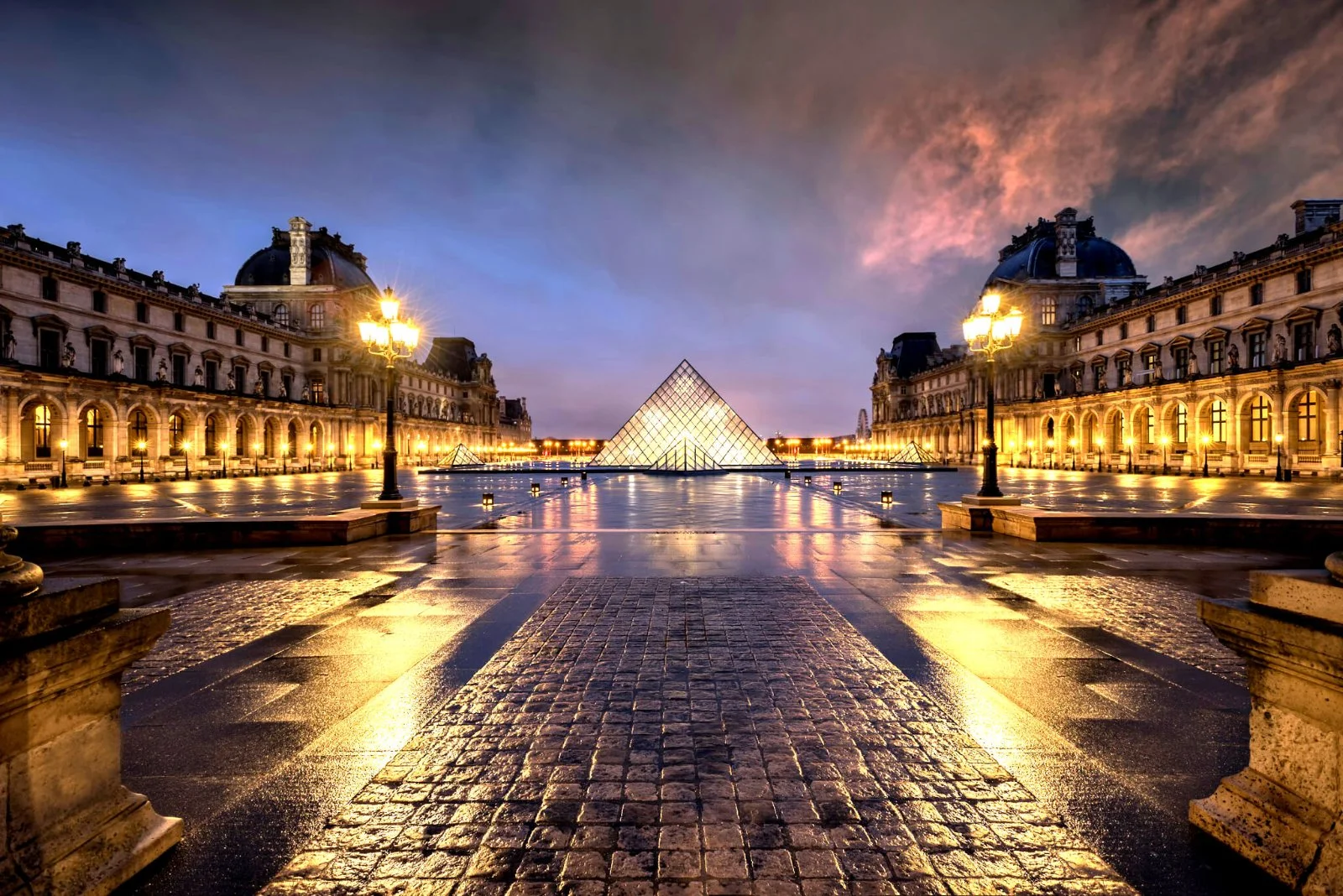
Paris + Grand Palais + Hilma af Klint’s temple cycle is a major Artlovers moment: not just because the works are beautiful, but because they ask a deeper question — how many histories of art were invisible simply because the world was not ready to see them?
Experience as an Artlover
Don’t rush to “decode” every symbol — let the paintings work like visual music.
Look for repeated forms: spirals, circles, crosses, plants, bodies, diagrams.
Stand back from The Ten Largest first — scale matters.
Then move closer and notice how colour, line and symbol create rhythm.
Think of the exhibition not as “abstract art”, but as a temple of ideas: life, evolution, energy, spirit, matter and transformation.
Hilma af Klint: Paintings for the Temple (1906–1915)
Hours & rating from Google