Ancient Assyrian art and Mesopotamian heritage: palace reliefs, royal imagery, cuneiform culture, imperial propaganda, archaeology and ancient Near Eastern visual culture.

Inside the exhibition
“I am Ashurbanipal, king of the world, king of Assyria.”
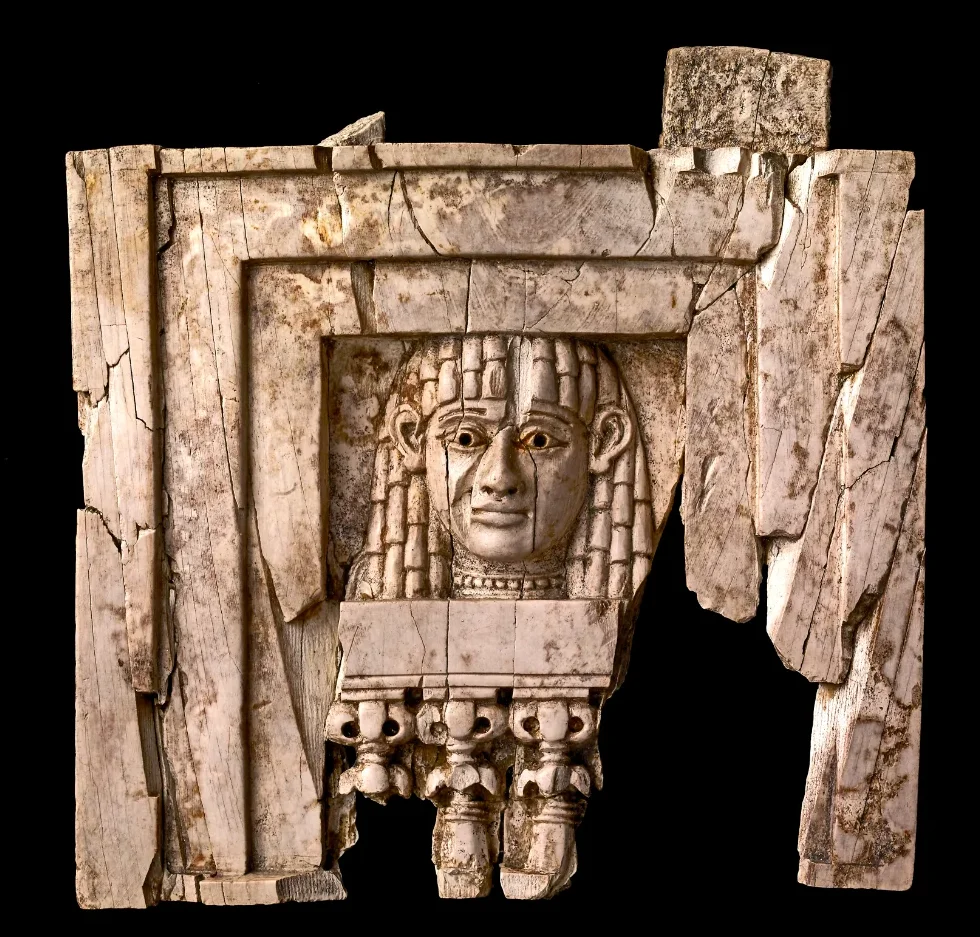
Come and discover the life of one of the most powerful leaders the world has ever known. Ruling from 669 to 631 BC, Ashurbanipal didn’t just expand the Assyrian Empire to its greatest heights—he was also a man with a great thirst for knowledge. In his palace, he built a massive library of clay tablets, driven by the ambition to collect every piece of information in existence. His reign sparked a golden age of art and trade that connected cultures across the Mediterranean and the Middle East.
This exhibition, featuring remarkable objects from the British Museum, explores the many layers of this complex ruler. Beyond his historical feats, it highlights why preserving our cultural heritage is so vital, helping us all understand the incredible story of humanity and saving it for those who come after us.
You’re watching:
- A king shown as warrior, hunter, scholar and ruler
- Objects connected to Assyrian court culture and imperial power
- The world of Nineveh, one of the great centres of the ancient Near East
- Cuneiform writing and the idea of knowledge as authority
- Heritage that survives through archaeology, museum collections and preservation
The exhibition also highlights why protecting cultural heritage matters today: these objects are not only ancient remains, but keys to understanding human history.
Worth travelling for?
If you love ancient history, archaeology, mythology, power, and lost civilizations.
Ashurbanipal matters because he was not only a conqueror. He was also associated with one of the great intellectual projects of antiquity: the gathering of written knowledge in Nineveh, remembered through thousands of cuneiform tablets. Contemporary coverage of the exhibition notes that the show brings together 158 objects from the British Museum and presents his double image as warrior and learned ruler.
This is a strong stop in Madrid if you want something different from painting galleries: ancient empire, political image-making, written memory, and the fragile survival of cultural heritage.
Experience as an Artlover
Look at Ashurbanipal as a constructed image of power, not only as a historical figure.
Pay attention to writing: cuneiform is not background detail; it is authority, memory and control.
Notice how kingship is staged through hunting, war, ritual and knowledge.
Think about Nineveh as a real city, not a myth — a capital whose remains connect to present-day Iraq.
Use the educator service if available; CaixaForum lists in-room educators daily during set hours, included with the ticket.
Asurbanipal
Hours & rating from Google