Contemporary figurative painting with a strong dialogue with classical European portraiture, Surrealist imagery, feminist reinterpretation, and art-historical appropriation.

Inside the exhibition
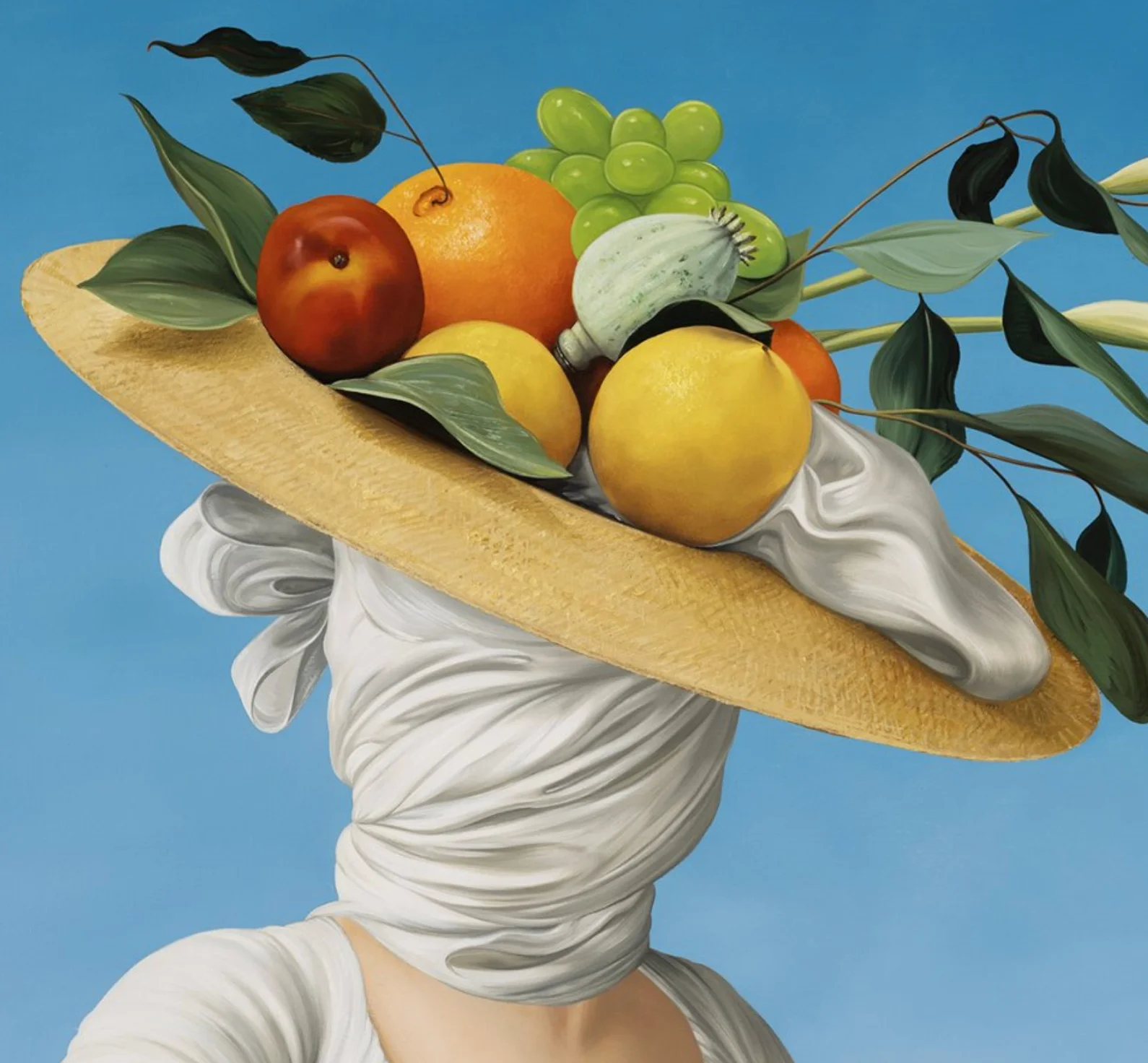
Ewa Juszkiewicz uses traditional painterly technique to revisit the visual codes of female portraiture — but then disrupts them: faces are hidden behind hair, fabric, fruit, vegetation or strange sculptural forms.
Polish artist Ewa Juszkiewicz (b. 1984) invites us to take a fresh, curious look at the classic portraits we’ve seen in galleries for centuries. Based in Gdańsk, Ewa reimagines the way women were traditionally painted, bringing these historical figures into our modern world and offering us a brand-new way to connect with them.
Her work is a stunning blend of elegant, old-school techniques and bold, unexpected ideas. The results are paintings that feel both familiar and daring, encouraging us to rethink old traditions and what it truly means to be beautiful today.
This monographic exhibition presents a selection of works by Ewa Juszkiewicz — born in Gdańsk, Poland, in 1984 — and marks her first solo museum presentation.
You’re watching:
- Women from historical portrait traditions reimagined through a contemporary gaze
- Classical-looking compositions interrupted by surreal concealment
- Faces replaced or obscured, making identity harder to fix
- Beauty turned into something strange, elegant, disturbing and resistant
- A conversation with the long history of how European painting constructed femininity
The effect is powerful because the paintings seduce you with familiarity — then refuse to give you the image you expect.
A few fun facts: In May 2022, her 2019 painting Portrait of a Lady (After Louis Leopold Boilly) sold for an incredible $1.56 million at auction in the U.S. More recently, in 2023, her unique style caught the eye of Louis Vuitton; she collaborated with the fashion house to design a luxury handbag for the fifth edition of their celebrated Artycapucines collection.
Worth travelling for?
Because Juszkiewicz doesn’t reject the museum tradition. She enters it, studies it, borrows its language — and then changes the rules from inside.
Her work asks: what happens when the woman in the portrait no longer offers her face to be consumed? What if beauty becomes a mask, a trap, a refusal, or a transformation?
In the Thyssen, where classical and modern painting already live side by side, her works feel especially sharp: they turn art history into something alive, uncomfortable and open again.
Experience as an Artlover
Look first at the painting as if it were an old master portrait.
Then notice the disruption: what hides the face? Hair, fabric, fruit, vegetation?
Ask what changes when identity is withheld.
Compare elegance with discomfort — that tension is the point.
Think about how many female portraits in art history were made to be looked at, judged, idealized or possessed.
Ewa Juszkiewicz
Hours & rating from Google