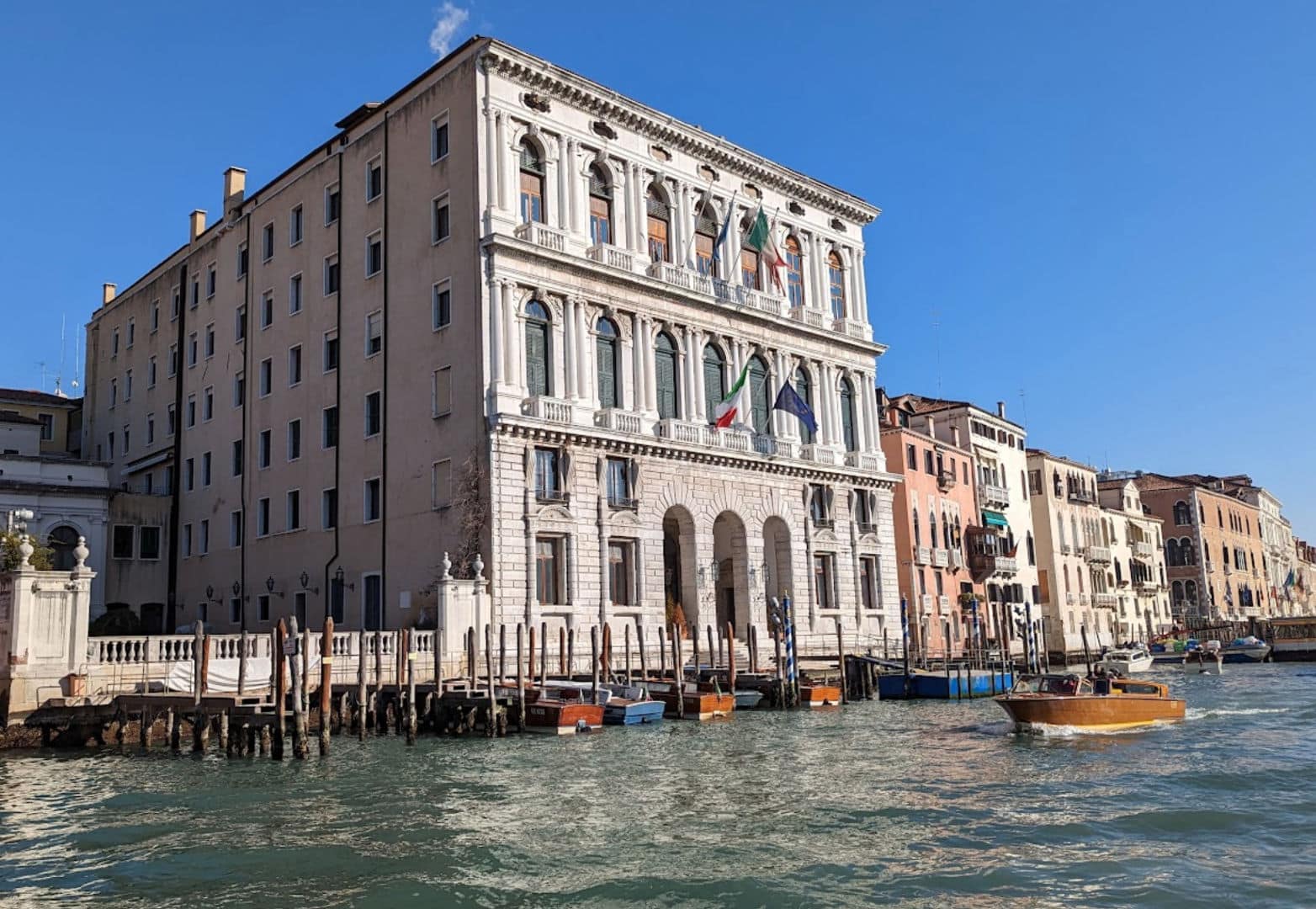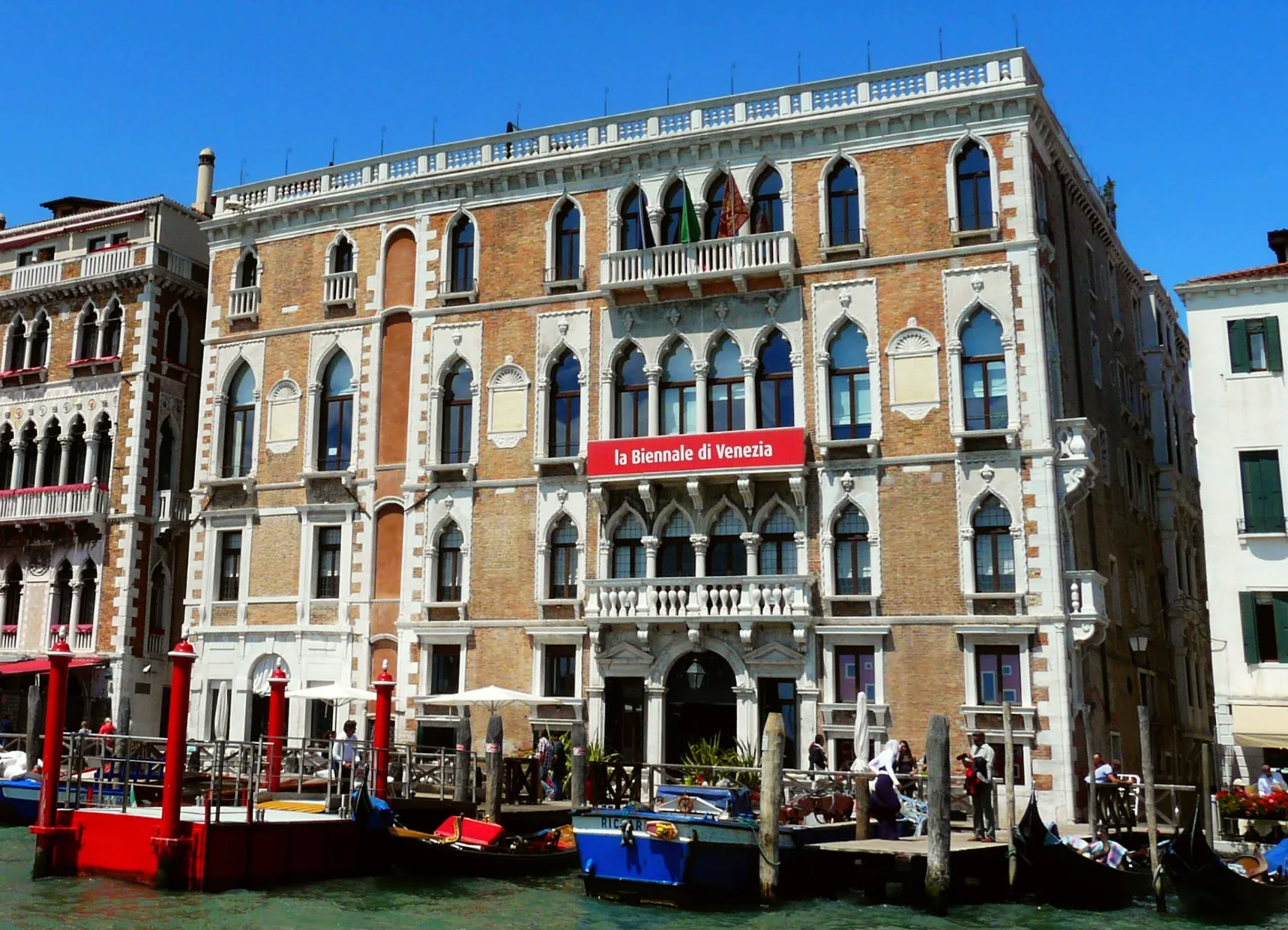
The official home of La Biennale di Venezia inside a late-Gothic palace on the Grand Canal. Ca’ Giustinian is not a traditional museum — it is the institutional heart of the Biennale, where Venice’s contemporary art machine has one of its most symbolic addresses.
At Ca’ Giustinian, do not expect a permanent collection or a regular museum route. The experience is more about context: Biennale headquarters, architecture, occasional cultural activity, and the feeling of standing at one of the symbolic addresses of Venice’s art world.
You may encounter:
- The institutional headquarters of La Biennale di Venezia
- A historic late-Gothic palace setting
- The Lions & Books Biennale bookshop
- Art and architecture catalogues connected to Biennale exhibitions
- Occasional talks, meetings or cultural events depending on the programme
- A strategic location near San Marco, the Grand Canal and Biennale routes

List Ca’ Giustinian as “Biennale headquarters / cultural venue”, not as a museum. It works best as a contextual stop for serious Biennale visitors — especially if they want catalogues, information, or a sense of where the institution is rooted in the city.
This is a short, context-based visit, usually around 15–30 minutes if you are stopping for the bookshop or to see the building from outside. It is not a dense exhibition stop unless a specific event or programme is taking place.
For the full Biennale experience, direct visitors toward Giardini, Arsenale and the official collateral venues across the city.
About
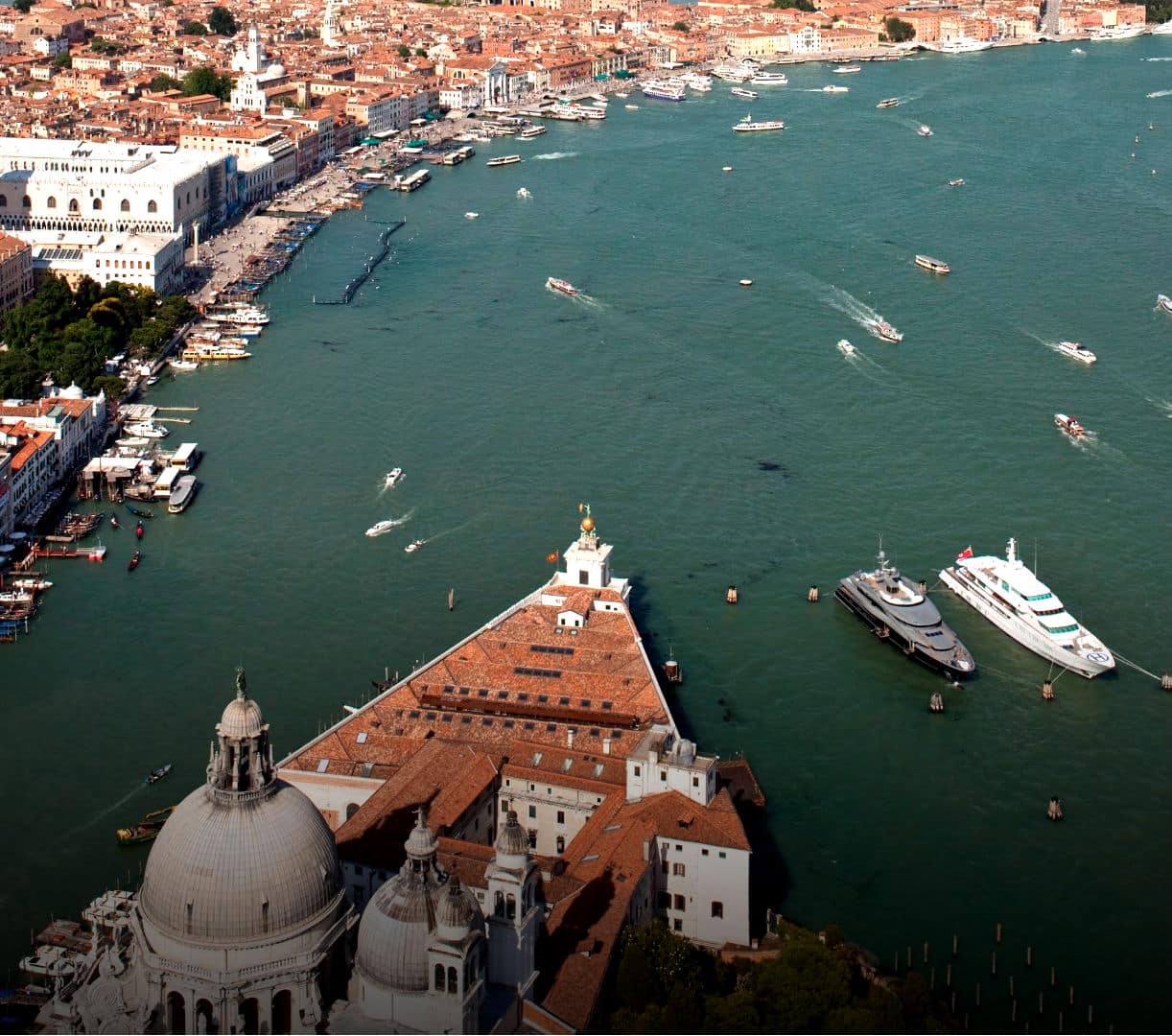
Ca’ Giustinian is located in San Marco, overlooking the Bacino di San Marco near the beginning of the Grand Canal. It is a historic Venetian palace and, since its restoration, has housed the organizing offices of La Biennale di Venezia. The official Biennale page also notes the Lions & Books bookshop on the ground floor, dedicated to Biennale catalogues, art publications and design objects.
The building is especially relevant because it connects Venice’s architectural past with the city’s most important contemporary cultural institution. Sources describe it as a late-Gothic palace and the institutional headquarters of the Biennale — more a cultural nerve centre than an exhibition venue you visit like a museum.
Worth the trip
Yes — but mainly for Biennale-minded travelers.
What makes Ca’ Giustinian special is not a collection, but its role. Venice is full of palaces, but this one carries the administrative and symbolic weight of the Biennale — the event that turns the city into one of the world’s great contemporary art maps.
For Artlovers, it is worth including as a smart contextual marker: the place where Venice’s historic fabric meets the machinery of global contemporary art. Not a must-see museum, but a meaningful address for understanding how the Biennale lives inside the city.
© Google Ca’ Giustinian