The Venice Biennale 2026 is not just an exhibition — it’s where art, power, and the world’s conflicts meet.

You can visit most of the controversial pavilions — including Austria, the United States, Israel, and many national pavilions — but Russia is the special case: it is symbolically present, yet practically not open to the general public. To plan your visit properly, buy a ticket for Giardini + Arsenale, check the official programme on the same day, and leave some flexibility in your schedule, because this edition may include temporary closures, protests, or access changes.
Inside the exhibition
Get ready for the Biennale Arte 2026!
This year, Venice transforms into a vibrant global stage, hosting over 80 countries in their unique national pavilions across the Giardini, the Arsenale, and the city’s winding historic streets. It is a wonderful opportunity to experience diverse art from every corner of the world in a truly magical setting.
Beyond the main pavilions, the whole city will buzz with creative energy through various "Collateral Events."
You can explore everything from intimate pop-up galleries to major exhibitions at legendary landmarks like the Peggy Guggenheim Collection and Palazzo Grassi. Whether you are an art enthusiast or a curious traveler, there is so much to discover from May all the way through November. We can’t wait for you to join us!
6 Artworks That Define the 2026 Venice Biennale’s Main Exhibition:
- Cauleen Smith, The Wanda Coleman Songbook, 2024
- Maria Magdalena Campos-Pons, Anatomy of the Magnolia Tree for Koyo Kouoh and Toni Morrison, 2026
- Tiona Nekkia McClodden, Ruinous, 2026
- Alfredo Jaar,The End of the World, 2023–24
- Walid Raad, Postscript to the Arabic Edition, 1938–2025
- Kaloki Nyamai, Kwata Kau, Ithyonze nitwavika vaa, and Ithyonze nitwavika vaa, all 2026
The 10 Best National Pavilions at the 2026 Venice Biennale
- The Bahamian pavilion
- Artists: John Beadle and Lavar Munroe
- Venue: San Trovaso Art Space, Dorsoduro
The Austrian pavilion
- Artist: Florentina Holzinger
- Venue: Austrian Pavilion, Giardini della Biennale
The Holy See pavilion
- Artists: Several
- Venue: The Mystical Garden of the Discalced Carmelites, Cannaregio and Santa Maria Ausiliatrice Complex, Castello
The Saudi Arabian pavilion
- Artist: Dana Awartani
- Venue: Campo della Tana, Arsenale
The Moroccan pavilion
- Artist: Amina Agueznay
- Venue: Arsenale, Artiglierie
The Belgian pavilion
- Artist: Miet Warlop
- Venue: Belgian Pavilion, Giardini della Biennale
The Argentinian pavilion
- Artist: Matías Duville
- Venue: Arsenale
The Indian Pavilion
- Artists: Alwar Balasubramaniam, Ranjani Shettar, Sumakshi Singh, Skarma Sonam Tashi, and Asim Waqif
- Venue: Isolotto, Arsenale
The Japanese pavilion
- Artist: Ei Arakawa-Nash
- Venue: Giardini
The German pavilion
- Artists: Sung Tieu and Henrike Naumann
- Venue: German Pavilion, Giardini de
Worth travelling for?
The Venice Biennale 2026 confirms something very Artlovers: art is no longer something we observe silently from outside the world; it happens inside its conflicts.
This edition asks whether museums, pavilions, and biennales can still speak about beauty when the world around them is marked by war, censorship, vulnerable bodies, ecological crisis, and propaganda.
Perhaps that is why In Minor Keys works so well as a title: this is not a Biennale of grand certainties, but one of discomfort, political noise, and small signals.
A Biennale that is not only visited — it is discussed.
Experience as an Artlover
The most controversial exhibitions / performances
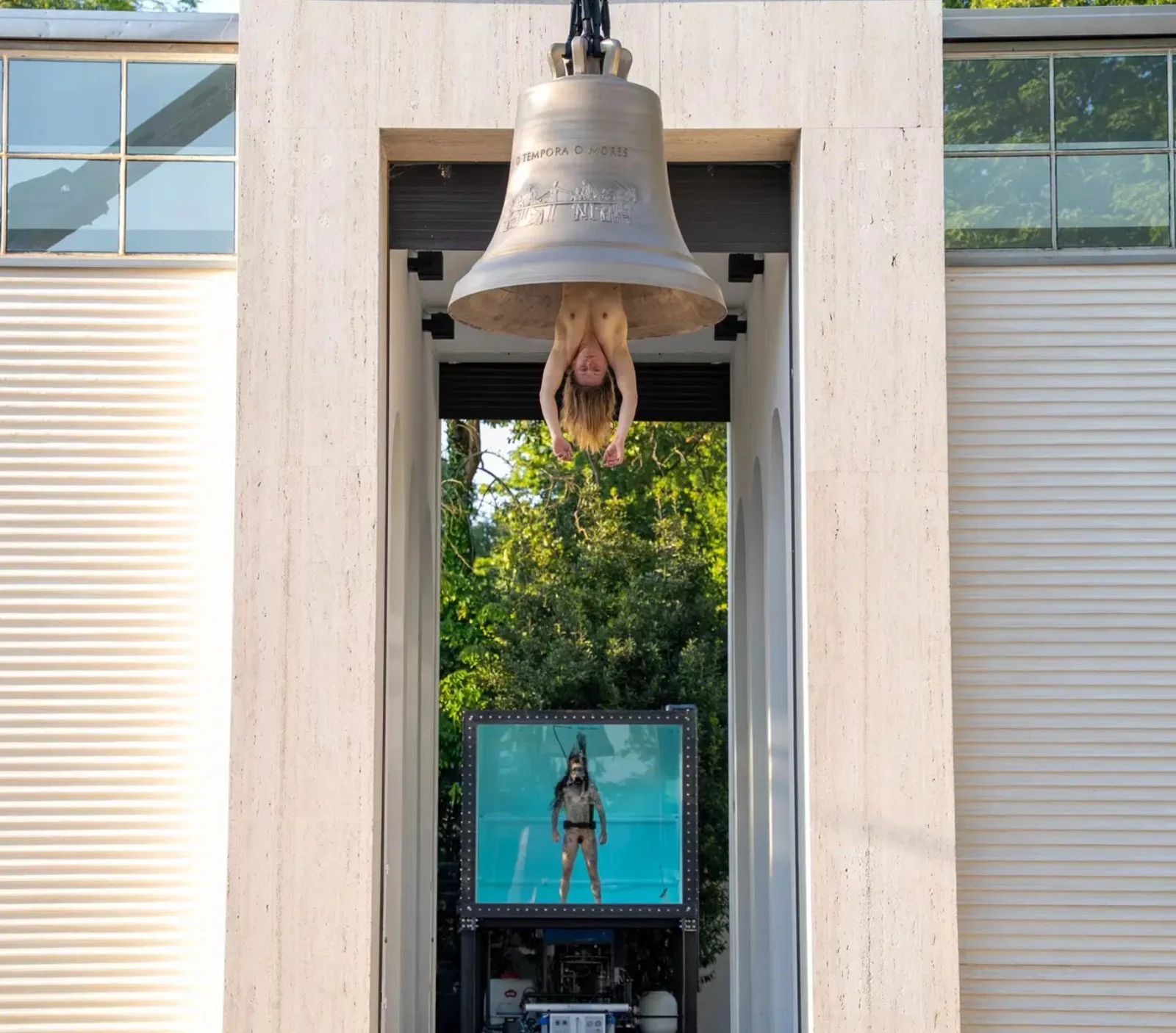
1. Austria — Florentina Holzinger, Seaworld Venice
- Probably the most viral and scandalous performance of this edition. It includes nudity, jet skis, suspended bodies, tanks filled with water filtered from urine, and a mix of circus, ritual, ecological critique, and bodily feminism.
- It is provocative, but not empty provocation: it speaks about sustainability, female bodies, invisible labor, and the relationship between water, waste, and spectacle.
2. Russia — the return of the Russian Pavilion
- The controversy here is not so much about the artwork itself, but about the institutional gesture: allowing Russia to return to the Biennale after years of absence due to the war in Ukraine.
- The pavilion was closed to the general public, although it was visible during the preview days. It became a symbol of one of the central questions of this Biennale: can art remain neutral when the world is at war?
3. Israel — a presence under protest
- The Israeli Pavilion also became a focus of protests and debates about whether an artist can represent a State in a context of war.
Some voices defended artistic freedom; others argued that national representation cannot be separated from politics.
4. United States — Alma Allen, Call Me the Breeze
- The work itself — biomorphic sculptures in wood, stone, and bronze — appears formally calm. The controversy came from the process: institutional changes, criteria linked to “American values,” and criticism over whether the pavilion reflected a cultural agenda.
It is an interesting case because it shows that, in Venice, even an “apolitical” artwork can become political.
5. Eccentric pavilions: Denmark, Luxembourg, Japan, Malta
- Among the most talked-about proposals are almost absurd or surreal projects: Denmark with a kind of high-tech sperm bank, Luxembourg with a singing “turd,” Japan with fake babies that visitors must take care of, and Malta with a life-size chocolate Russell Crowe.
- More than political scandal, the controversy here is aesthetic: is this deep art, viral spectacle, or a contemporary theme park?
61ª Venice Biennale
Hours & rating from Google