Baselitz turns the body into an icon — raw, fragile, monumental, and surrounded by gold.

Inside the exhibition
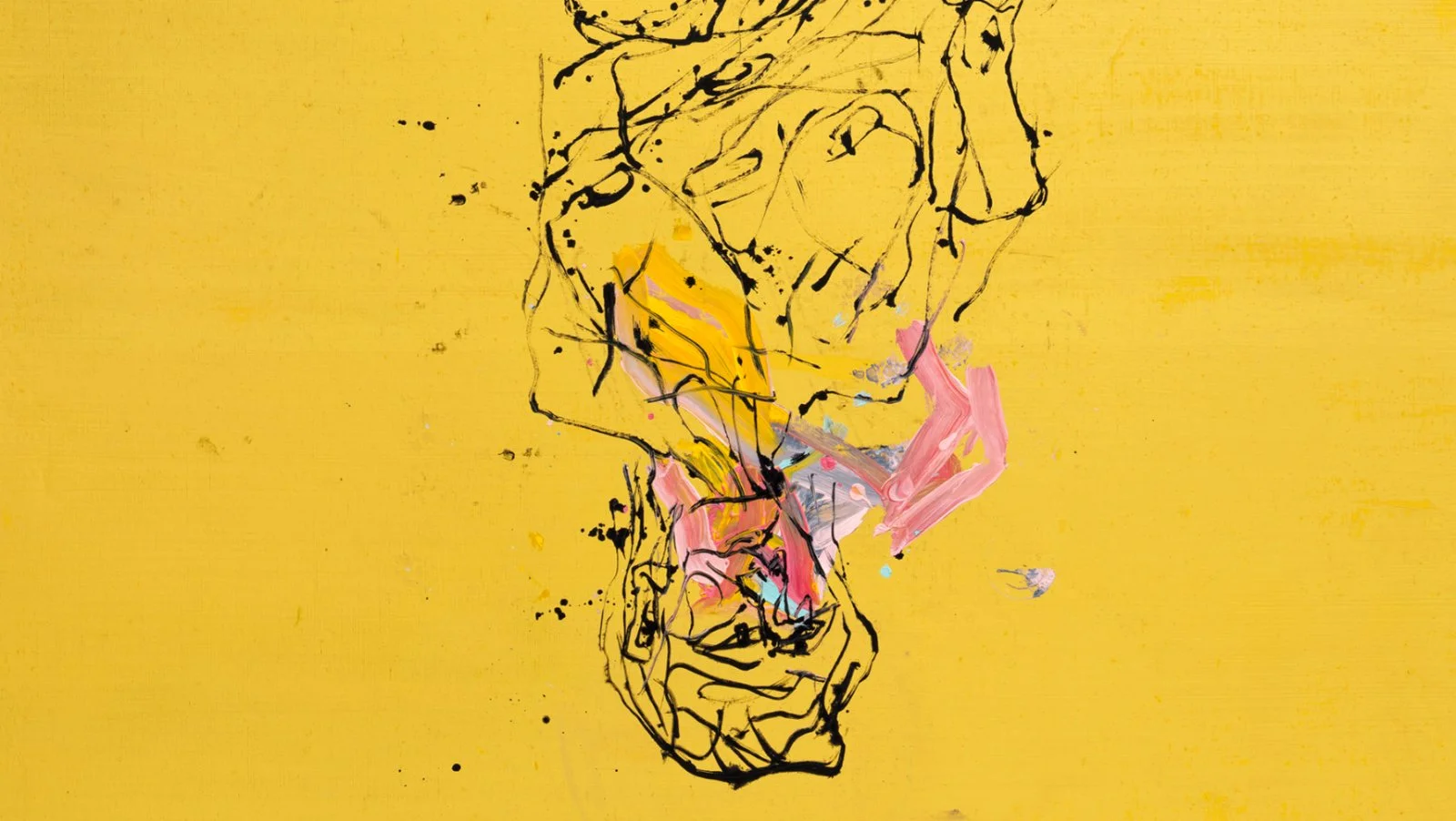
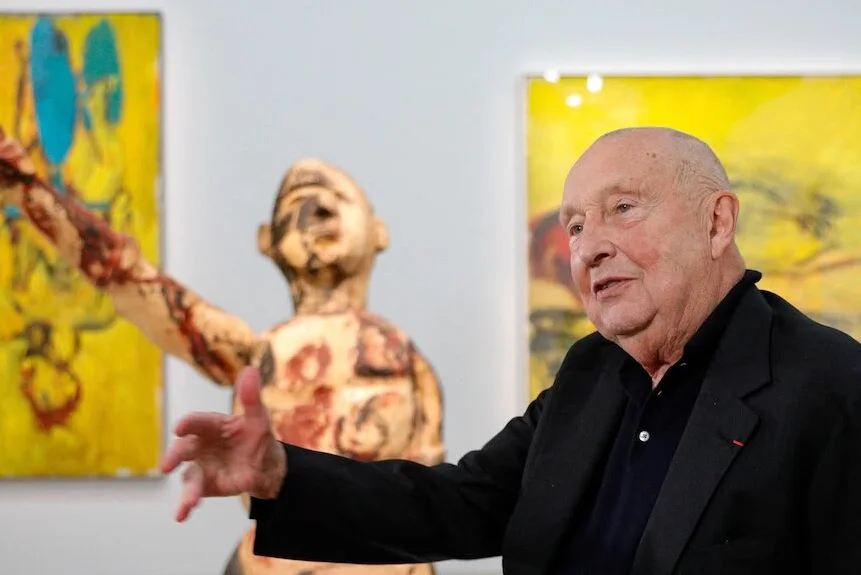
This exhibition features Georg Baselitz’s most recent series of large-scale paintings. The works utilize golden planes that create a flatness reminiscent of medieval icons or the gilded backgrounds of Northern Renaissance art, offering no illusion of depth. The paintings include larger-than-life self-portraits and depictions of the artist’s wife, Elke. Baselitz employs techniques such as sharp line drawing, diluted black paint resembling ink, and thick, viscous brushstrokes to create spectral portraits and marbled effects that reference Japanese calligraphy and Hokusai’s work.
Contemporary figurative painting, neo-expressionism, and late-career monumental self-portraiture.
In Eroi d’Oro, Baselitz’s recent large-scale paintings use golden grounds that recall medieval icons and the gilded backgrounds of Northern Renaissance painter Stefan Lochner, while the figures remain rough, exposed, and almost spectral.
This exhibition presents Georg Baselitz’s most recent series of large-scale paintings, where bodies appear suspended over flat golden surfaces. There is no illusionistic depth: the gold becomes a field, a sacred surface, almost a stage for memory and vulnerability.
You’re watching:
- Larger-than-life self-portraits
- Depictions of Elke, Baselitz’s wife and lifelong model
- Bare bodies drawn with sharp, linear intensity
- Spectral figures painted with diluted black paint, close to ink
- Echoes of Japanese calligraphy and Hokusai’s portraits
- Thick, viscous brushstrokes that gather on the figures in marbled, variegated color effects
The result feels strange and powerful: part icon, part ghost, part body, part memory.
Worth travelling for?
Georg Baselitz passed away on April 30, 2026, just days before the opening of Eroi d’Oro in Venice.
Seeing these recent works now feels like encountering one of his last artistic statements — a meditation on the body, age, memory, and what remains after a lifetime of painting.
Because Baselitz is not using gold as decoration. He uses it to charge the paintings with history, ritual, and mortality. The official text notes that although gold has long carried different meanings in his practice, his paintings have never before resembled icon painting so directly.
It matters because Eroi d’Oro shows a late Baselitz that is still radical: monumental but fragile, ancient-looking but contemporary, personal but almost mythic.
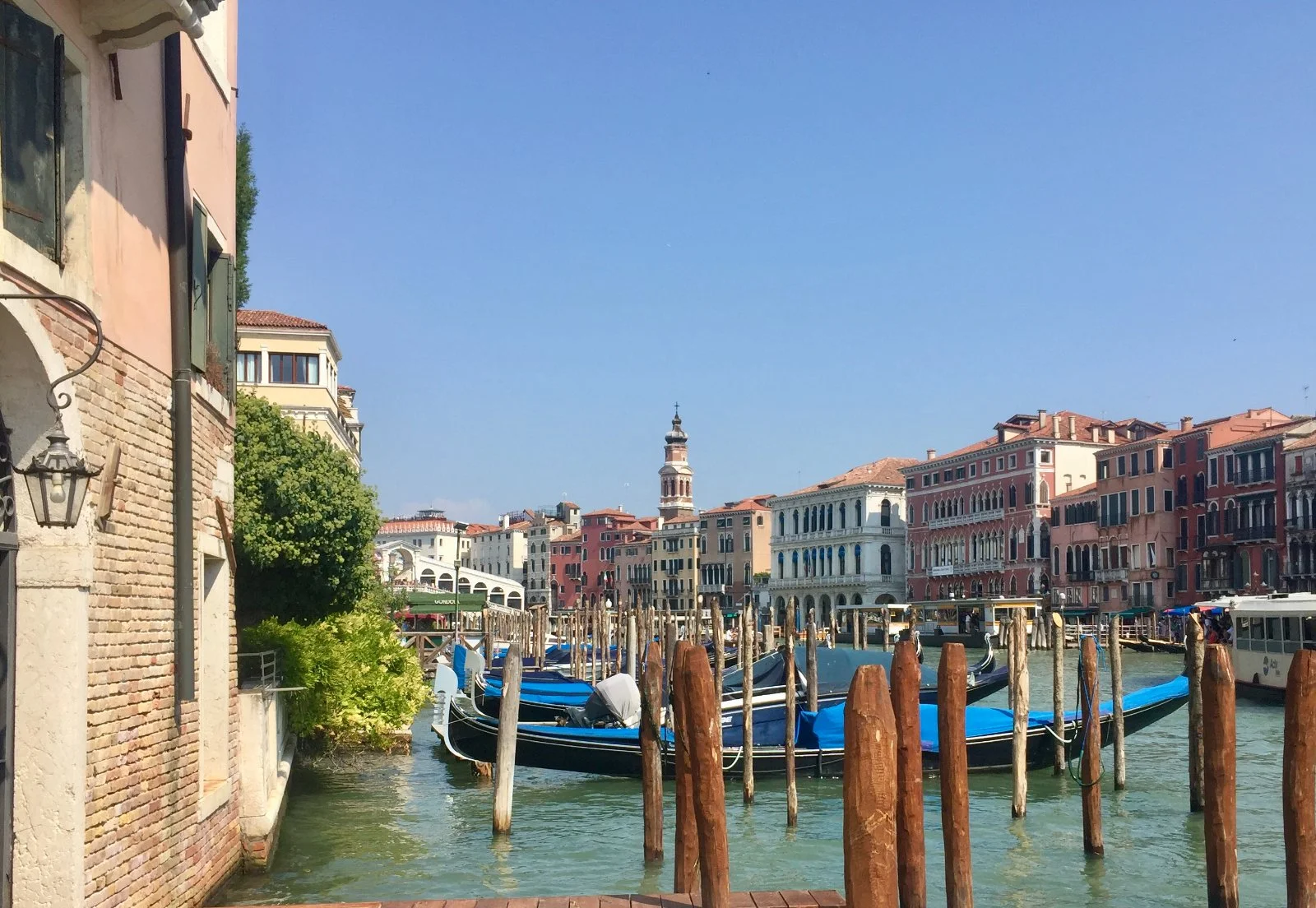
And in Venice, on the Island of San Giorgio Maggiore, the exhibition gains an extra layer — the city itself becomes part of the gold, reflection, and memory.
Experience as an Artlover
Stand back first → the scale and gold fields need distance
Then move closer → the bodies become raw, almost drawn into existence
Look at the tension between sacred gold and exposed flesh
Think of the figures less as portraits and more as apparitions
Spend time with the works of Elke → they bring intimacy into the monumentality
Georg Baselitz. Eroi d’Oro
Hours & rating from Google