At a glance
Before Warhol and Indiana became Pop icons, William John Kennedy photographed them inside the moment when their visual language was still taking shape.
Why go
You'll see
Pace of visit
Don't miss

Artlovers Tip
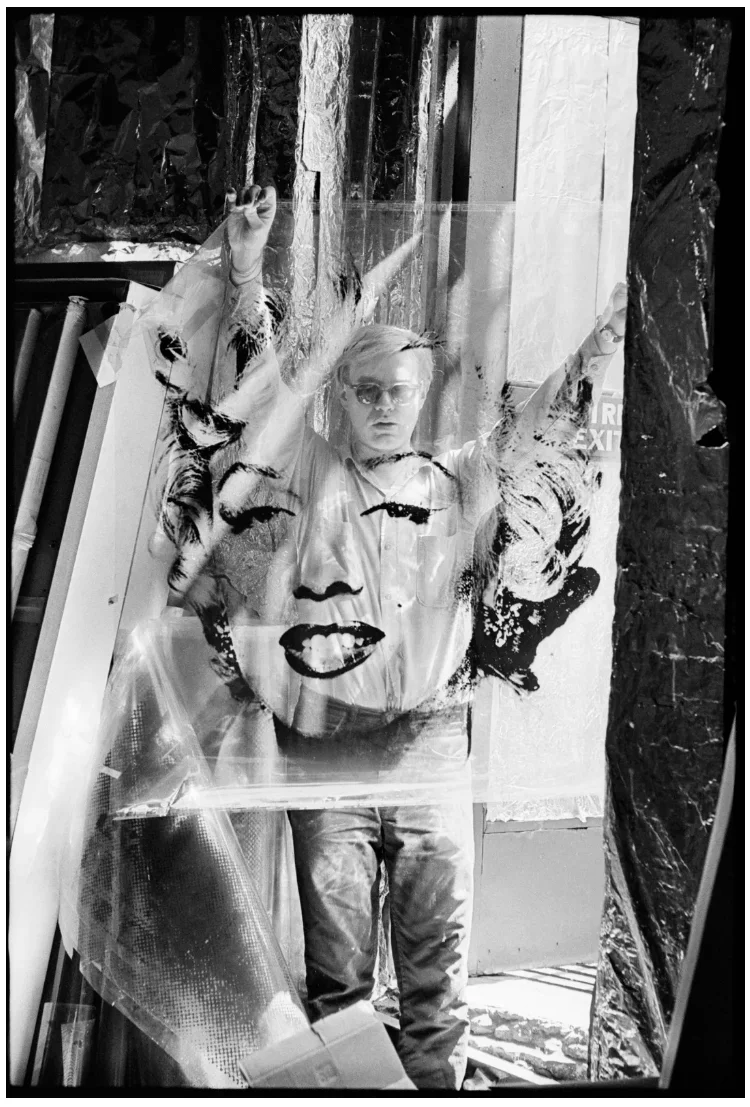
Look at the works as evidence of an art movement being invented in real time. Warhol and Indiana had not yet become the polished icons we know today — Kennedy caught them when Marilyn, Flowers and LOVE were still part of an evolving studio practice rather than art-history shorthand.
Small in scale, but historically fascinating. The attraction is not simply seeing photographs of Warhol and Indiana; it is seeing how close Kennedy was to the exact moment when two artists and a new visual culture were becoming iconic.
Inside the exhibition
Meet the artist
Key Movements
Medium
Genre
Description
Warhol / Indiana: On the Origins of Pop brings together original photographs William John Kennedy made during an unusually privileged year inside the emerging New York Pop scene. Kennedy first became close to Robert Indiana, who then introduced him to Warhol in 1963. Instead of photographing either artist against a neutral background, Kennedy repeatedly integrated them with the artworks being created around them: Warhol appears behind Marilyn acetate and alongside Flowers and Race Riot imagery, while Indiana is photographed in his studio with the forms and words that would soon become central to his reputation. The photographs therefore work simultaneously as portraiture, documentary evidence and an unusually intimate record of Pop before it became Pop mythology.
William John Kennedy (1930–2021) was a New York-based photographer and LIFE contributor whose largely private archive of Warhol and Indiana remained unseen for decades. His photographs from 1963–64 have since entered collections including The Andy Warhol Museum, Whitney Museum of American Art, Detroit Institute of Arts and Newfields / Indianapolis Museum of Art. The Warhol Museum acquired 100 Kennedy photographs in 2012, describing the archive as rare and historically significant.