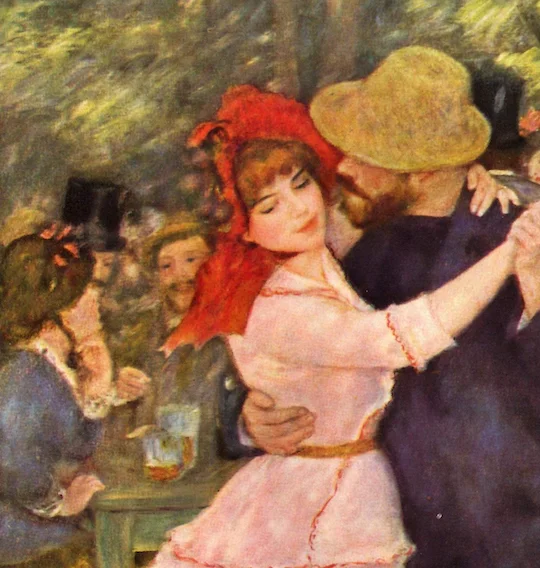
Renoir turns modern life into a celebration of connection — lovers, friends, families and strangers caught in the fleeting joy of being together.
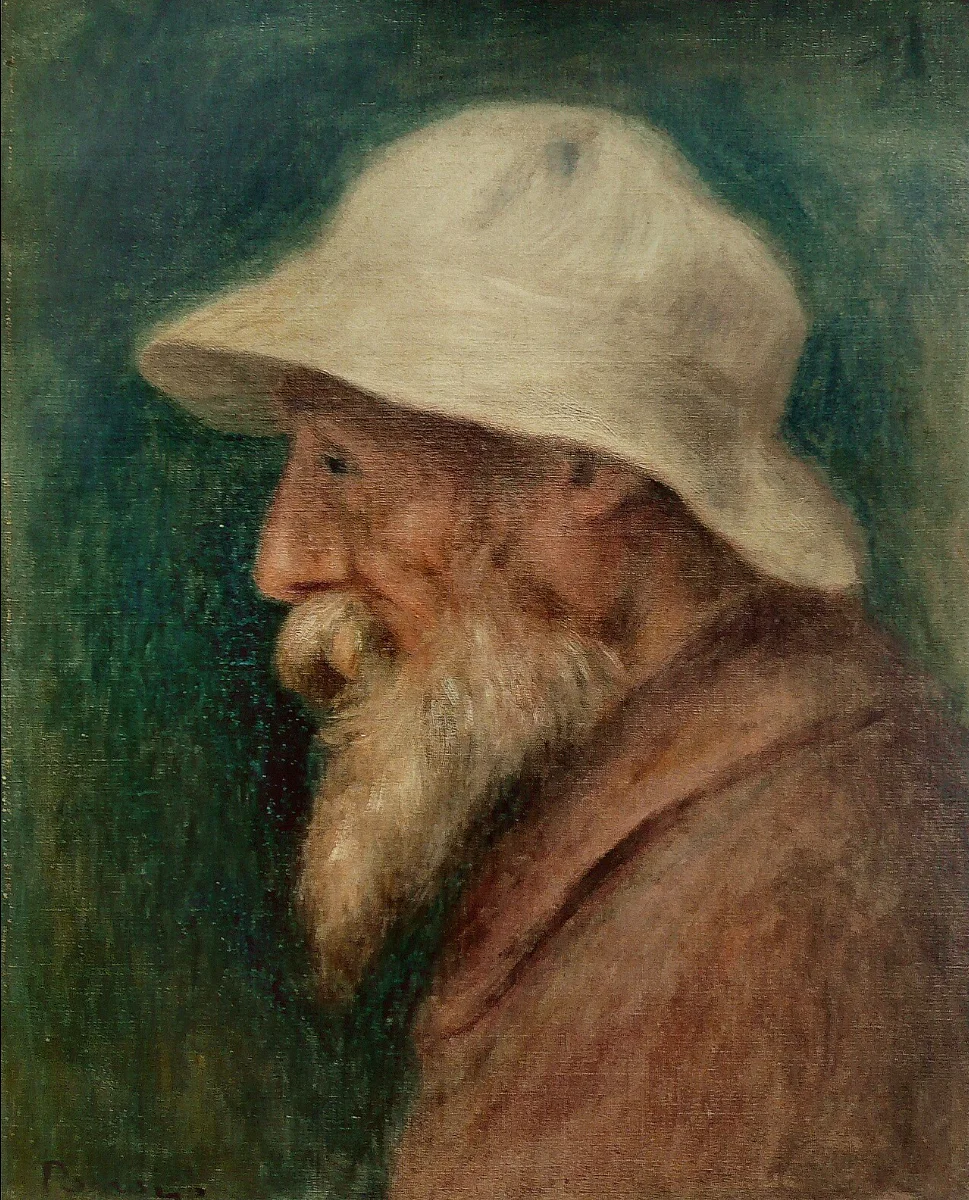

Look beyond the couples. Renoir’s idea of love includes friendship, family, flirtation, conversation and simply being together. Notice how he uses light and colour to make social connection feel almost tangible.
Inside the exhibition
Renoir and Love is presented at the National Gallery, London, from 3 October 2026 to 31 January 2027. With approximately 45 paintings, it is the most significant UK exhibition of Pierre-Auguste Renoir’s work for 20 years and his first dedicated exhibition at the National Gallery since 2007.
The exhibition concentrates on the crucial period between the mid-1860s and mid-1880s, when Renoir was developing his Impressionist language. More than a third of the paintings he produced during these two decades depict modern love and social interaction.
Rather than treating love simply as romance, the exhibition explores the many ways Renoir represented human connection: affection, seduction, conversation, male friendship, café and theatre sociability, dancing, flirtation and parenthood. These subjects allowed him to paint modern Paris as a place of pleasure, movement and social exchange.
The exhibition also captures an important moment of transition in Renoir’s career. By the early 1880s, he began moving away from the Impressionist fascination with fleeting light towards more solid and sculptural compositions. Yet his interest in friendship, intimacy and joy in nature remained central.
Among the highlights are Dance at the Moulin de la Galette (1876), Dance at Bougival (1883), Dance in the Country (1883), The Promenade (1870) and The Conversation (1878).
The exhibition is organised jointly by the Musée d’Orsay, the National Gallery and the Museum of Fine Arts, Boston, and forms part of a three-city presentation following its Paris showing and ahead of its Boston presentation.
Worth travelling for?
A beautiful and highly accessible Renoir exhibition. Its strength is the simple but powerful idea behind it: instead of seeing Renoir only as a painter of light and Impressionist pleasure, you see him as a painter of human connection — and why that made his paintings so enduringly joyful.
Renoir and Love
Hours & rating from Google