At a glance
Henry Moore exactly where he wanted sculpture to be: outdoors, monumental and in conversation with the landscape.
Why go
You'll see
Pace of visit
Best for
Don't miss

Artlovers Tip
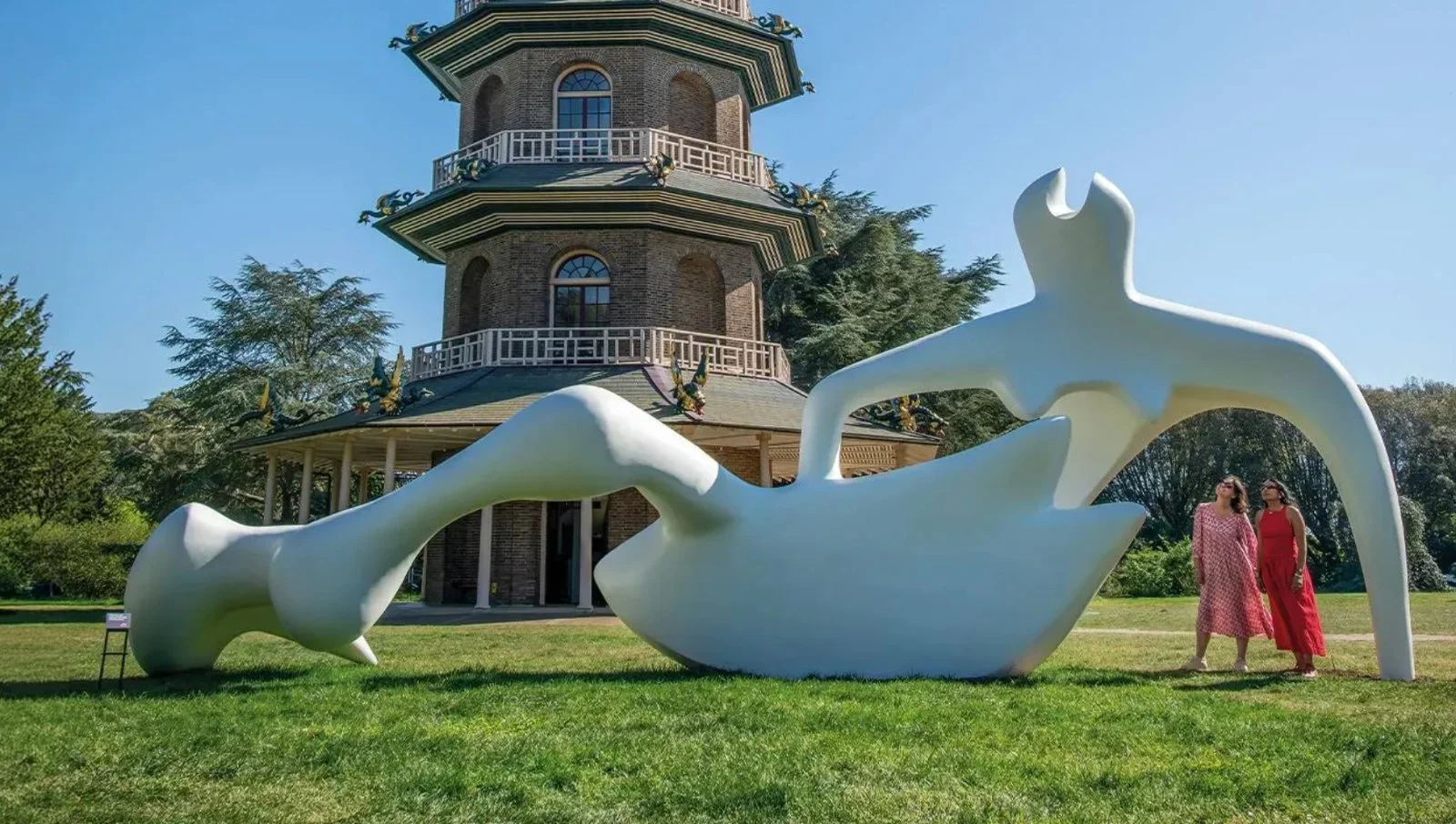
Don't photograph the first Moore you see and move on. Walk around it. Find the opening in the sculpture, look through it and notice how Moore turns the surrounding trees, sky and landscape into part of the work.
If you can choose the conditions, go when the light is lower — morning or late afternoon. These sculptures change dramatically with shadow, weather and season.
This is one of those exhibitions where the setting changes the art. You can see a Henry Moore in almost any major modern-art museum, but seeing 30 monumental works across Kew reveals something a white gallery cannot: why Moore believed sculpture needed landscape.
Inside the exhibition
Meet the artist
Key Movements
Medium
Description
Monumental Nature explores one of the fundamental relationships in Henry Moore’s work: sculpture and the natural world. Rather than placing his bronzes against the neutral background of a museum, Kew allows them to inhabit landscape — something Moore himself believed could amplify sculpture’s visual and emotional power.
The exhibition spans almost seven decades and places 30 monumental sculptures throughout the Gardens and Temperate House. Their rounded bodies, openings, hollows and bone-like structures enter into dialogue with trees, plants, changing light and Kew’s historic architecture. Indoors, the exhibition expands the story through drawings, prints, carvings and models, showing how Moore developed ideas by closely observing natural forms.
There is also a contemporary layer to the presentation: Kew considers Moore’s fascination with nature from the perspective of today's climate and biodiversity crises, asking what his work can tell us about humanity’s place within interconnected natural systems. The exhibition is organised with the Henry Moore Foundation.
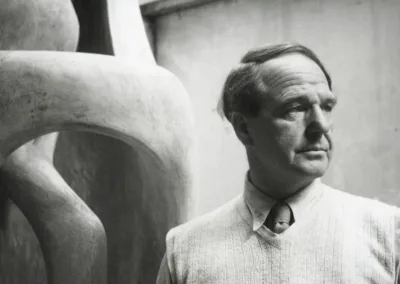
Henry Moore (1898–1986) was one of the most influential British sculptors of the 20th century and a central figure in the international development of modern sculpture.
He is best known for monumental bronzes based on the human body — particularly his recurring reclining figures, mothers and children, and abstracted organic forms. Bones, stones, shells and landscapes frequently provided starting points, but Moore transformed them into a highly recognisable language of solids and voids.
Crucially, Moore did not think of monumental sculpture as something that belonged only inside museums. Landscape was part of the artwork. That makes Kew an unusually appropriate place to encounter him.