At a glance
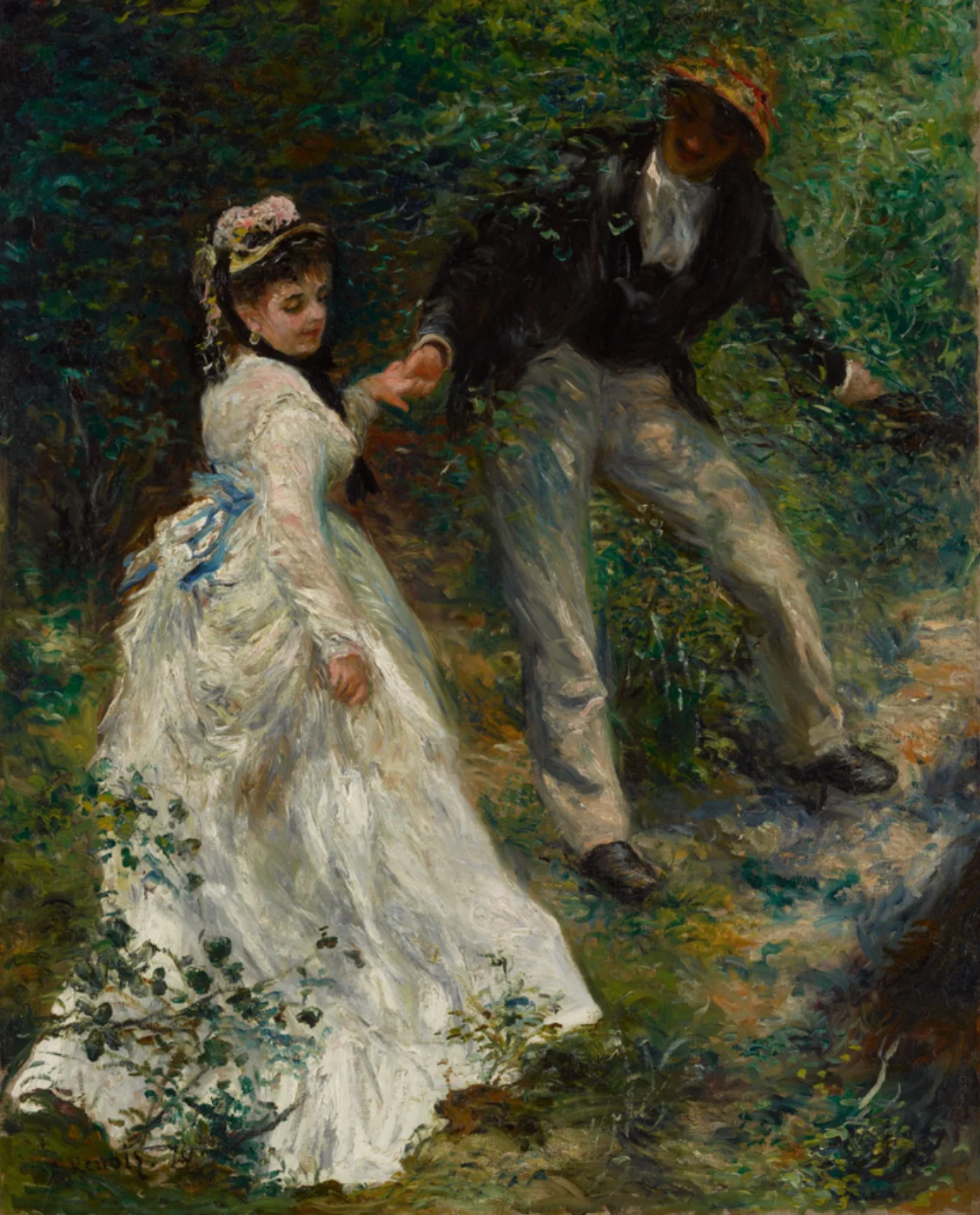
Love, sunlight, bodies, glances, dance halls, gardens. Renoir painted modern life as if joy itself could be radical.

Artlovers Tip
Artlovers relevance
Inside the exhibition
Meet the artist
Description
Impressionism, modern life painting, 19th-century Parisian social scenes, and a renewed dialogue with the French tradition of fêtes galantes.
The exhibition focuses on Renoir between the mid-1860s and 1885, when he developed his luminous, fluid painting style and explored new subjects around relationships, leisure and social life.
This exhibition re-reads Renoir through one central force: love — not only romantic love, but connection, attraction, friendship, family, sociability and pleasure.
You’re watching:
- Couples, friends and families in modern Parisian spaces
- Dance halls, gardens, restaurants, theatres and open-air leisure scenes
- A world of gestures, glances, closeness and shared light
- Renoir’s modern take on human connection, without turning it into melodrama
- Major works from a decisive period in his career, including large scenes of convivial modern life such as Dance at the Moulin de la Galette and Luncheon of the Boating Party.
The show asks you to look again at paintings that may seem familiar — and notice how modern they really were: public spaces, shifting social codes, desire, consent, class, leisure and the new freedom of urban life.
Worth travelling for?
Yes — especially if you want to rediscover Renoir beyond the cliché of “pretty” Impressionism.
Renoir is often reduced to beauty, happiness and soft colour. This exhibition makes a stronger case: joy can also be a serious subject. His scenes of modern love and sociability were not just decorative — they were part of a new way of painting contemporary life.
It also matters because this is a major moment for Renoir in France: the Musée d’Orsay notes that some of Renoir’s and Impressionism’s greatest masterpieces are being brought together in France for the first time since the last major Renoir retrospective in Paris in 1985.
Paris, Orsay, Renoir, spring/summer 2026 — this is the kind of exhibition that turns a museum visit into a full art-travel moment.
Experience as an Artlover
Don’t look only at the romance — look at the social choreography.
Notice hands, glances, distance between bodies and who looks at whom.
Pay attention to setting: theatres, dance halls, gardens and restaurants are part of the story.
Compare intimacy with public life: many of these scenes unfold in shared spaces.
Look for the tension between joy and reality — Renoir celebrates pleasure, but the exhibition also invites us to think about class, gender and the limits of freedom in 19th-century society.
Renoir and Love: A Joyful Modernity (1865–1885)
Hours & rating from Google