At a glance
A deep dive into Picasso’s structural logic, revealing how his spatial innovations and cubist fragmentation provided the blueprints for the 20th century’s most radical buildings.
Why go
Timed to coincide with Barcelona’s status as World Capital of Architecture, this is the first major study of Picasso as a spatial visionary. It connects his radical Cubist techniques directly to the urban theories that defined the modern era.
You'll see
Cubist spatial studies · Guernica pavilion documents · Virtual museum installation · Le Corbusier correspondence · Catalonian Architects’ College friezes
Pace of visit
The archival documents and digital installations invite a slower, more analytical pace than a standard gallery walk.
Don't miss
The virtual reality project that uses Picasso’s aesthetic to construct a digital museum space that never existed in reality.

Artlovers Tip
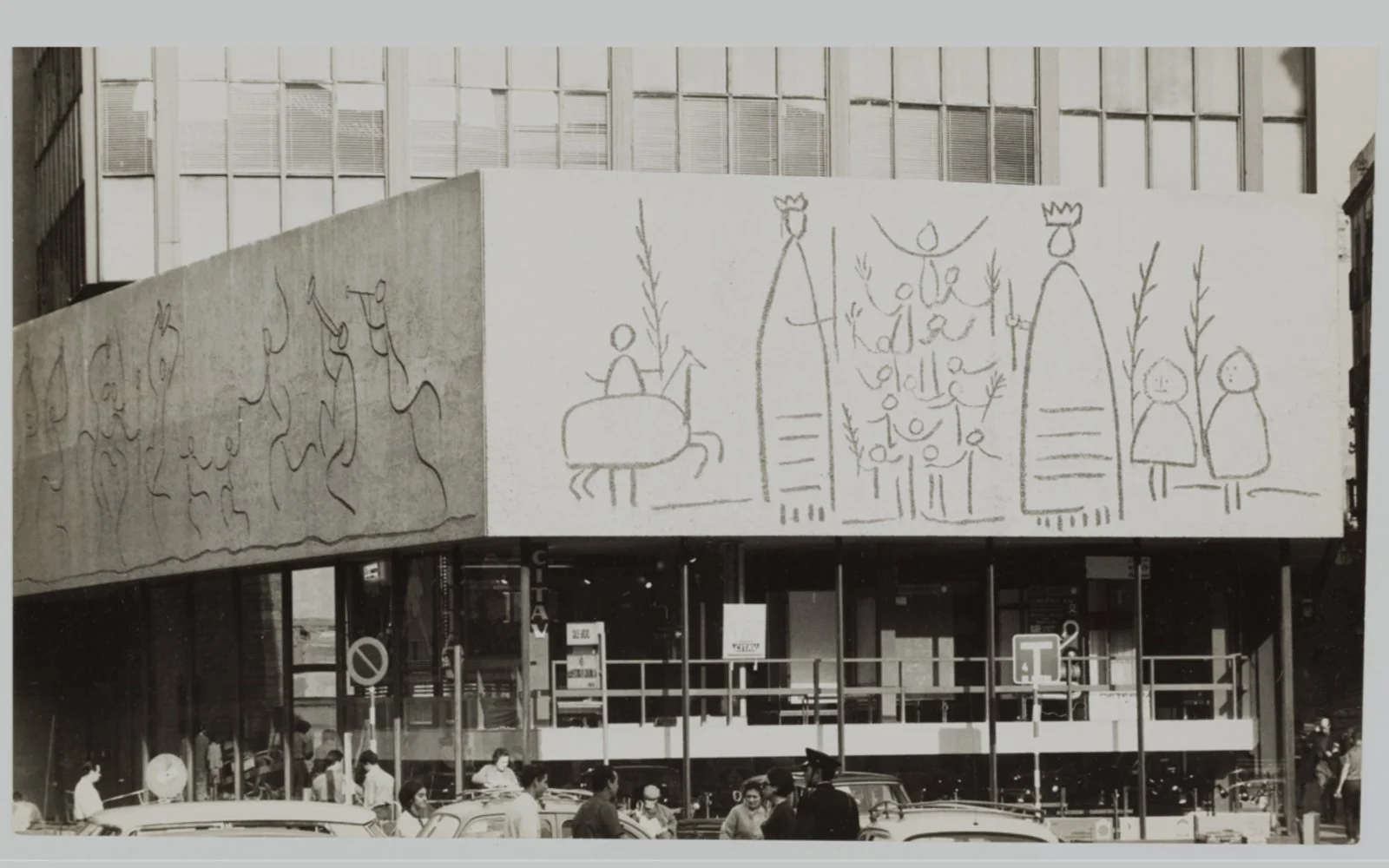
After the museum, walk ten minutes to Plaça Nova to see Picasso’s original sand-blasted friezes on the façade of the Architects' College building.
Inside the exhibition
Meet the artist
Description
Picasso and Architecture at the Museu Picasso Barcelona frames the 20th century’s most famous painter as a revolutionary spatial thinker. Presented as a centerpiece of the Barcelona 2026 World Capital of Architecture program, the show looks at how Pablo Picasso’s work influenced and was influenced by the built environment. It occupies the museum's historic medieval palaces in Barcelona, Spain, providing a contrast between Gothic heritage and modern innovation.
The exhibition features a curated selection of paintings, sketches, and rare archival correspondence between the artist and architects like Le Corbusier. It highlights key moments where Picasso’s art met physical structure, such as the 1937 Paris International Exhibition and the design of the Spanish Pavilion that first housed Guernica. A dedicated section uses digital modeling to visualize an imaginary museum based on the artist’s unique geometric logic.
By focusing on techniques like fragmentation, transparency, and assembly, the curatorial team illustrates how Cubism provided a new toolkit for the architects of the modern age. This study moves away from the typical biographical narrative to show how Picasso helped dismantle classical perspectives and redefine the urban landscape. It is an intellectual presentation that clarifies the artist’s enduring impact on the shape of contemporary cities.
Worth travelling for?
A sophisticated, research-heavy show for those who want to see the structural logic behind Picasso’s distortion, rather than just his life story.
Experience as an Artlover
The museum offers free admission on Thursday, Friday, and Saturday evenings from 19:00 to 21:00, though pre-booking is essential. Standard entry includes both the temporary exhibition and the permanent collection.
Picasso and Architecture
Artlovers relevance
Plan your visit
Hours & rating from Google