At a glance
When language collapses, thread becomes testimony.

Artlovers Tip
Inside the exhibition
Description
Official Collateral Event of the 61st International Art Exhibition — La Biennale di Venezia 2026.
This is one of the most emotionally direct exhibitions of Venice 2026.
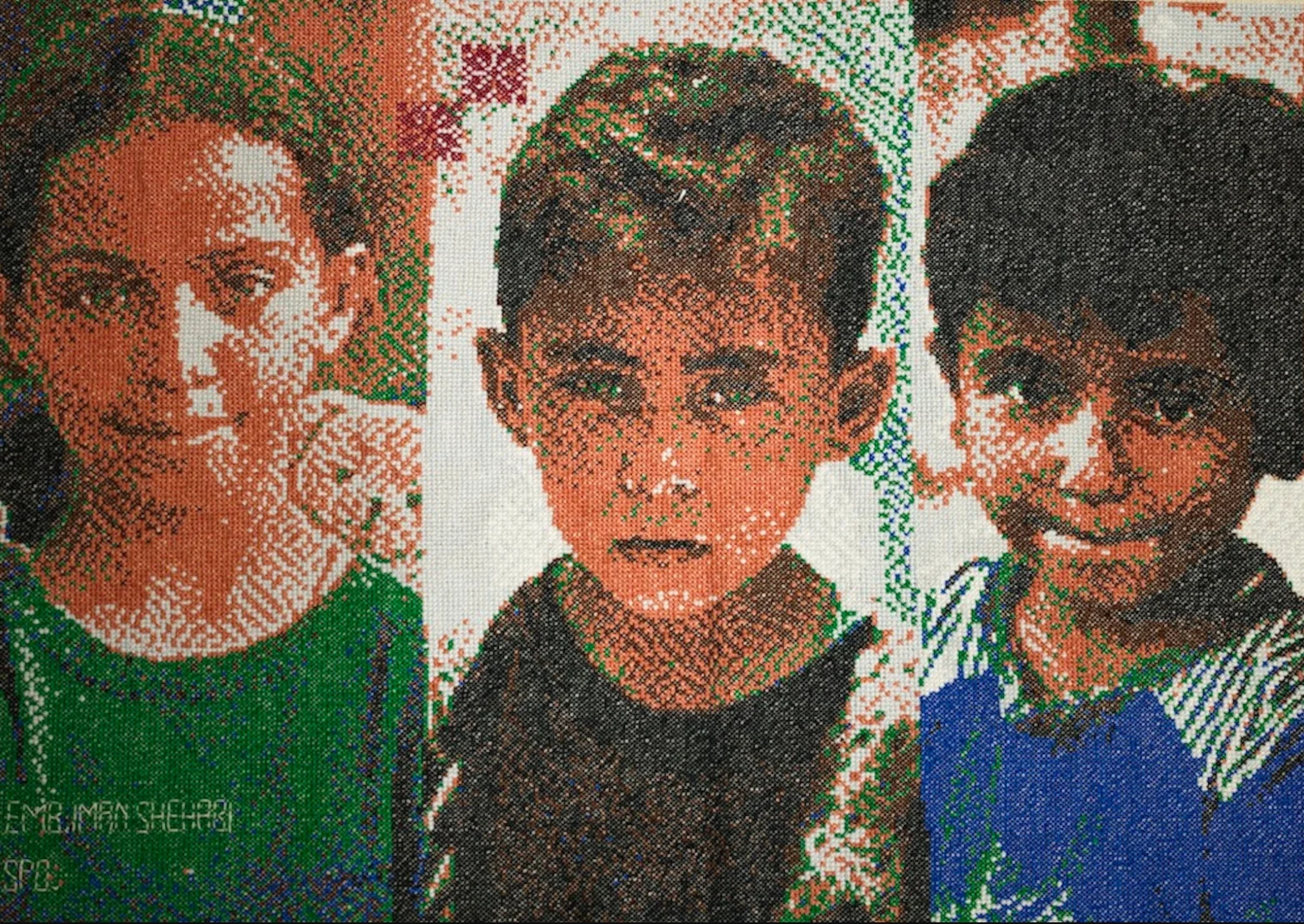
At its centre is The Gaza Genocide Tapestry: a collective textile work made of 100 hand-stitched panels using tatreez, the traditional Palestinian embroidery practice. The work documents the destruction of Gaza since October 2023 through thread, pattern, memory, and collective labour.
The panels were created by Palestinian women across occupied Palestine, refugee camps and the diaspora — from the West Bank to Lebanon and as far as New Zealand. Together, they form a visual archive of loss, displacement, destroyed neighbourhoods, erased landmarks, and lives taken.
This is not embroidery as decoration. It is embroidery as witness.
Worth travelling for?
Because this exhibition shows what art can do when facts are not enough and words fail.
Gaza — No Words — See the Exhibit transforms a heritage language into a contemporary act of resistance, mourning and memory. Tatreez, traditionally used to carry identity and belonging, becomes here a record of trauma and survival.
It is also politically significant within the Venice Biennale context: Palestine does not have an official national pavilion, so this official collateral event becomes one of the key spaces where Palestinian voices are present in Venice 2026.
For Artlovers, this is worth the trip because it reminds us that art is not only beauty, market, or spectacle. Sometimes art is the place where humanity keeps evidence.
Experience as an Artlover
Do not rush this exhibition.
Look close first: the stitches, the patience, the hand, the time. Then step back and let the image appear. That movement — from thread to image, from craft to testimony — is the emotional core of the show.
This is not a comfortable visit. It should not be. It asks you to look, to stay, and to understand that each panel is not an abstract tragedy, but a human record.
Gaza—No Words—See the Exhibit
Artlovers relevance
Plan your visit
European Cultural Centre (ECC) - Palazzo Mora
Venice, Italy