At a glance
London’s Tube becomes a city-wide contemporary-art space — where stations, tunnels, maps and even daily commutes turn into unexpected encounters with art.
Why go
You'll see
Pace of visit

Artlovers Tip
Don’t make a separate trip for every work. Build the art into your route. Art on the Underground is most interesting when you encounter a commission between two other destinations and suddenly realise the commute itself has become part of the cultural experience.
For families, the free Spaghetti Map is especially useful: it links six permanent artworks across the network and turns the Underground into a playful art trail.
Artlovers relevance
Inside the exhibition
Key Movements
Genre
Description
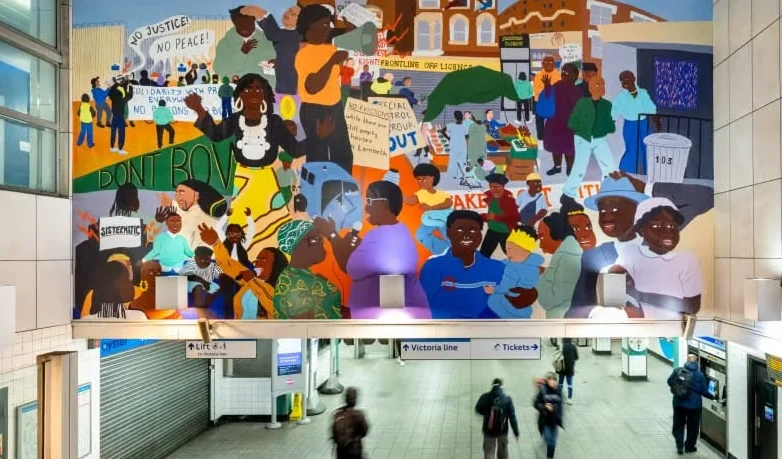
Art on the Underground treats London’s transport network as a constantly changing public-art platform. Rather than placing conventional artworks inside stations, artists are commissioned to respond directly to movement, architecture, local communities, transport histories and the social life of the city. Works can appear as monumental murals, sound pieces, map covers, architectural interventions or permanent installations — often encountered accidentally by commuters who may never have intended to visit an art exhibition.
The 2026 programme brings together artists with very different practices. Phoebe Boswell works across drawing, film and installation around migration, identity and collective memory. Ellen Gallagher is known for layered paintings and works on paper exploring race, mythology and Atlantic histories. Ain Bailey uses sound and composition to investigate memory and place. Caroline Walker is a Scottish figurative painter known for images of women at work and in private spaces. Hurvin Anderson explores memory, diaspora and belonging through painting.
Worth travelling for?
The city becomes the museum, movement becomes part of the visit, and contemporary art appears in places you would normally pass through without looking. It is less “worth the trip” than worth building into the trip.