A painting that feels less like an image and more like standing inside pure energy.
Dates
Meet the artist
More details
- Movement
- Abstract Expressionism
- Medium
- Oil Painting
- Genre
- Abstract
- Dimensions
- 269.5 × 530.8 cm
The story behind it
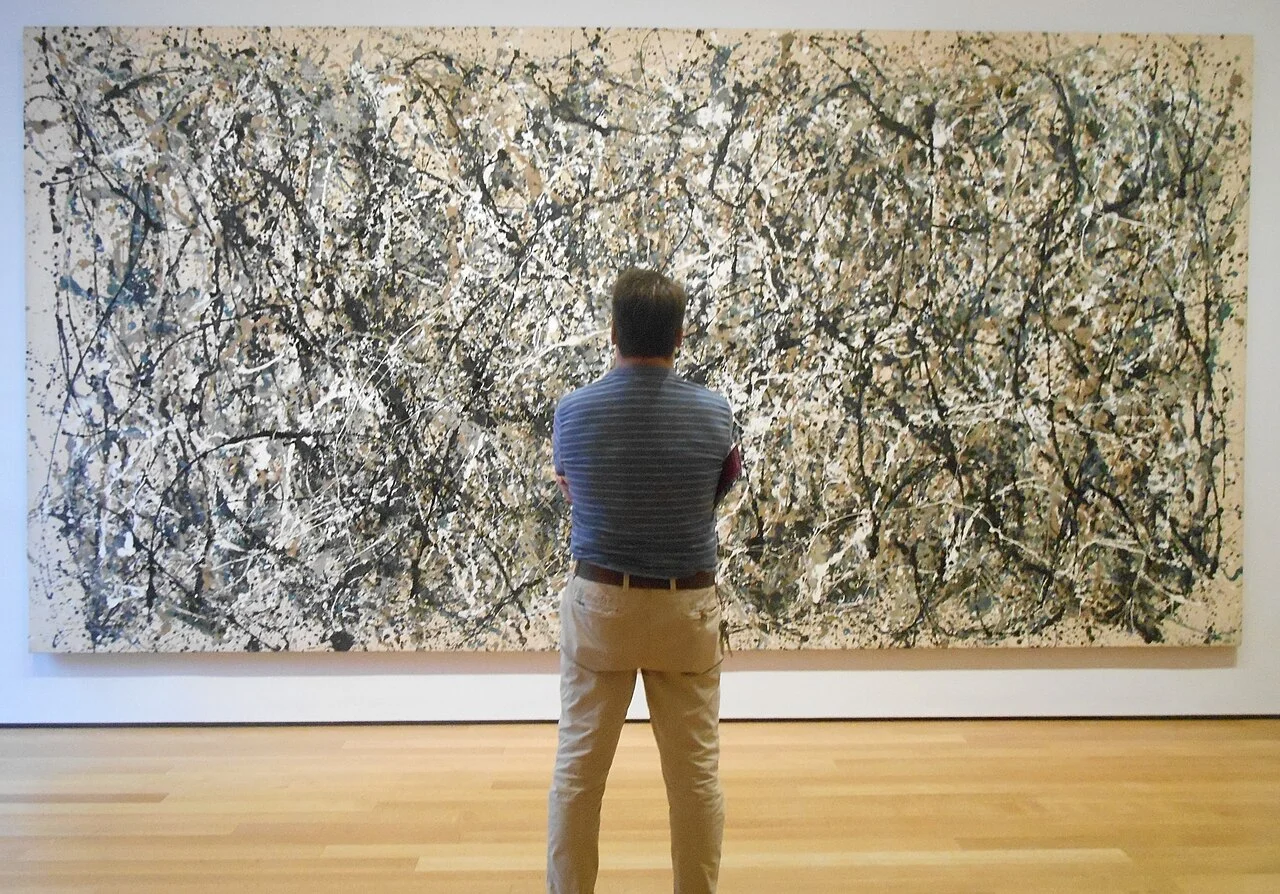
Jackson Pollock's "One: Number 31, 1950" is a monumental abstract expressionist painting that explodes with energy and dynamism. Rather than depicting a recognizable subject, Pollock created a complex web of dripped, poured, and flung paint across a vast canvas. The intertwined layers of vibrant colors – primarily yellows, reds, blues, and silvers – create a visual tapestry that invites viewers to immerse themselves in its swirling depths. The scale of the work, spanning nearly nine feet in height and seventeen feet in width, further amplifies this immersive experience, encouraging a physical and emotional response to the artwork.
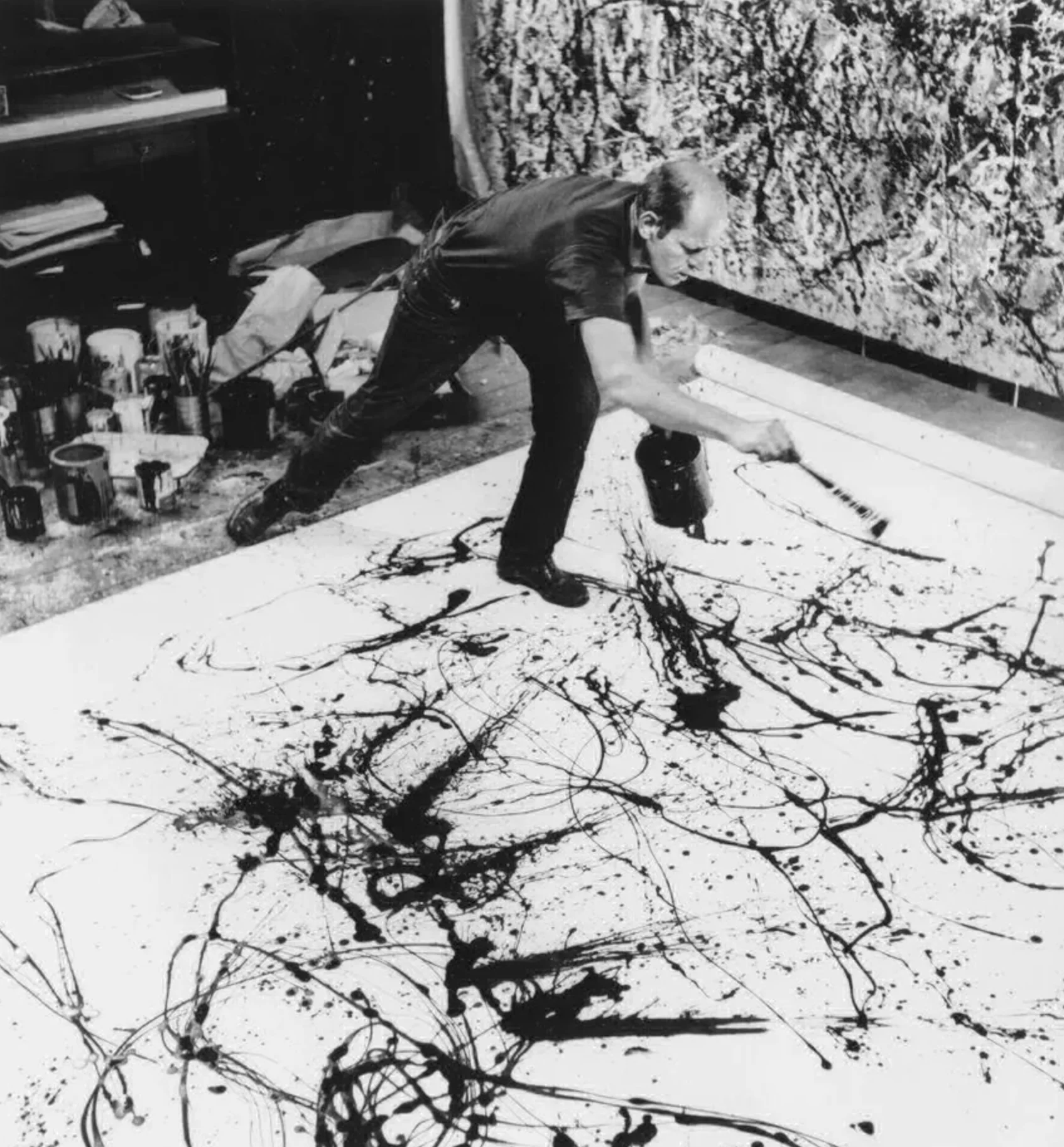
This painting holds significant historical importance as a prime example of Abstract Expressionism, a movement that redefined art in the mid-20th century. Pollock's radical technique, often referred to as "drip painting" or "action painting," involved placing the canvas on the floor and using sticks, brushes, or even directly pouring paint from cans. This innovative approach liberated the artist from traditional painting methods and allowed for a more spontaneous and intuitive process. "One: Number 31, 1950" showcases this revolutionary technique, reflecting the postwar anxieties and existential questioning that characterized the Abstract Expressionist movement. It pushed the boundaries of what painting could be, influencing generations of artists to come.
Look closer
Pollock placed the canvas on the floor and moved around it physically while painting, dripping industrial enamel paint from sticks, brushes, and hardened brushes. Critics initially mocked the work as chaotic, but Pollock radically transformed painting into a record of movement, time, and physical presence.
Clement Greenberg, an art authority at Pollock's time, writing on avant-garde painting, mentioned that Jackson Pollock had noticed Janet Sobel's painting in the 1940s. Pollock "'admitted that these pictures had made an impression on him'". From then on, Sobel’s practice was mostly framed in relation to Pollock’s career, so that by the time of her death in 1968, she was little more than an anecdote, primarily known as the self-taught “housewife” who happened to have dripped paint on a canvas before him. Know Janet here!
Worth the journey?
Yes — absolutely worth the trip. Reproductions flatten the experience completely. In person, the scale overwhelms you and reveals extraordinary depth, texture, and complexity. The painting changed the center of modern art history from Europe to New York and redefined what painting itself could be.
Beyond its historical context, "One: Number 31, 1950" matters because it challenges viewers to engage with art on a purely visual and emotional level. There is no narrative to decipher, no hidden meaning to uncover. Instead, the painting invites us to experience the raw energy and emotion of the artist's process. It is a testament to the power of abstraction to evoke feeling and provoke thought. The artwork serves as a compelling demonstration of how non-representational forms and colors can communicate ideas and emotions, solidifying Pollock's legacy as a pivotal figure in modern art history.
See it like an Artlover
Stand far away first to absorb the full scale and rhythm, then slowly move closer until the painting almost fills your field of vision. Let your eyes wander without searching for a subject — the experience is about immersion rather than interpretation.
Artlovers Tip:
Don’t ask “what is it supposed to represent?” Instead, focus on how the painting affects your body and attention. The closer you look, the more the drips and lines feel surprisingly controlled, almost musical. It’s less chaos than choreography.
One: Number 31, 1950
Hours & rating from Google