A painting that doesn’t show you something — it makes you stand inside a feeling.
Dates
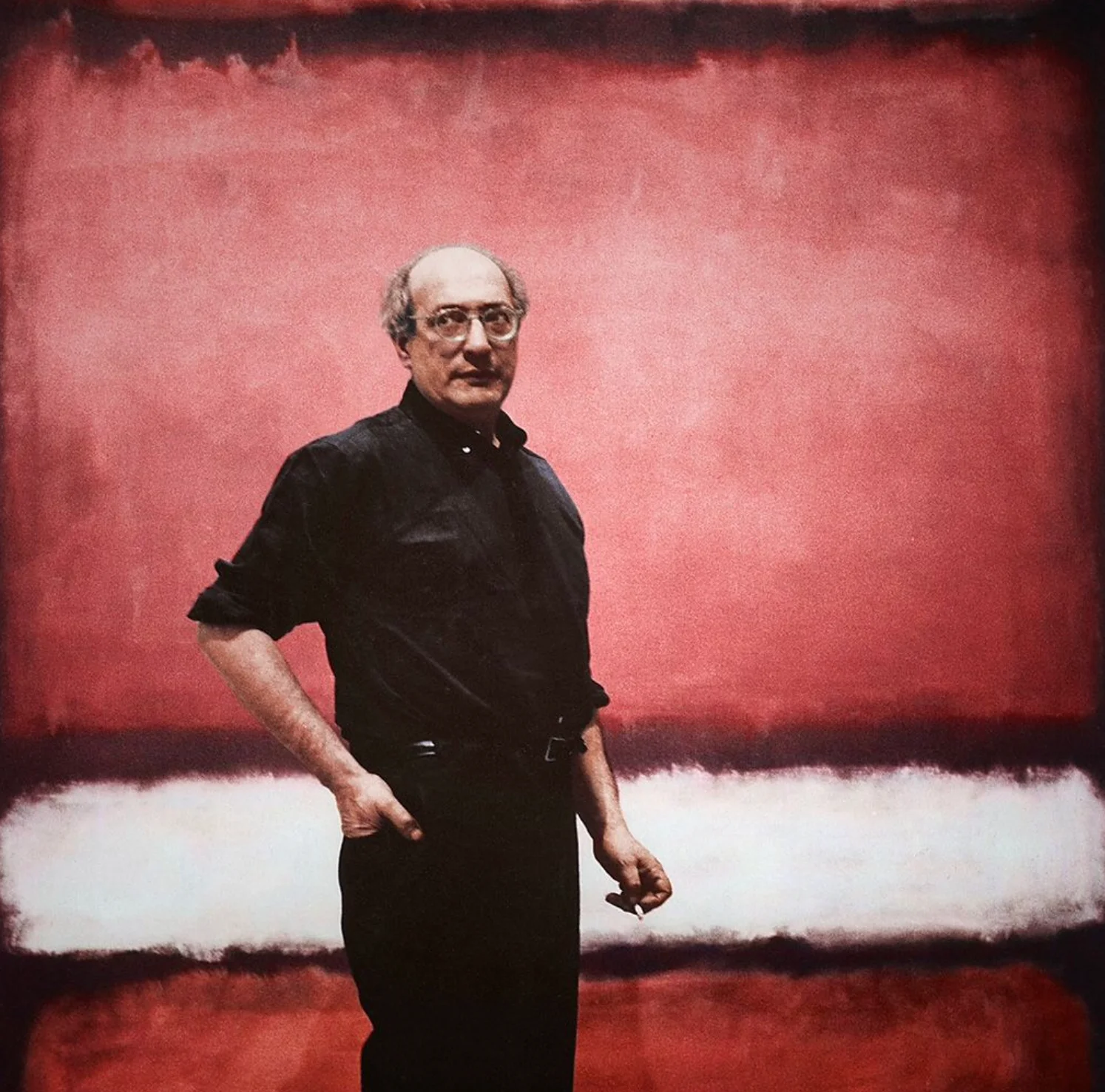
Meet the artist
More details
- Original title
- No. 61 (Rust and Blue) [Brown Blue, Brown on Blue]
- Movement
- Abstract Expressionism, Color Field
- Medium
- Oil Painting
- Genre
- Abstract
- Dimensions
- 292.74 × 233.68 cm
The story behind it
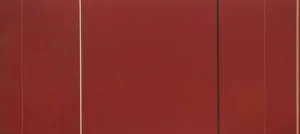
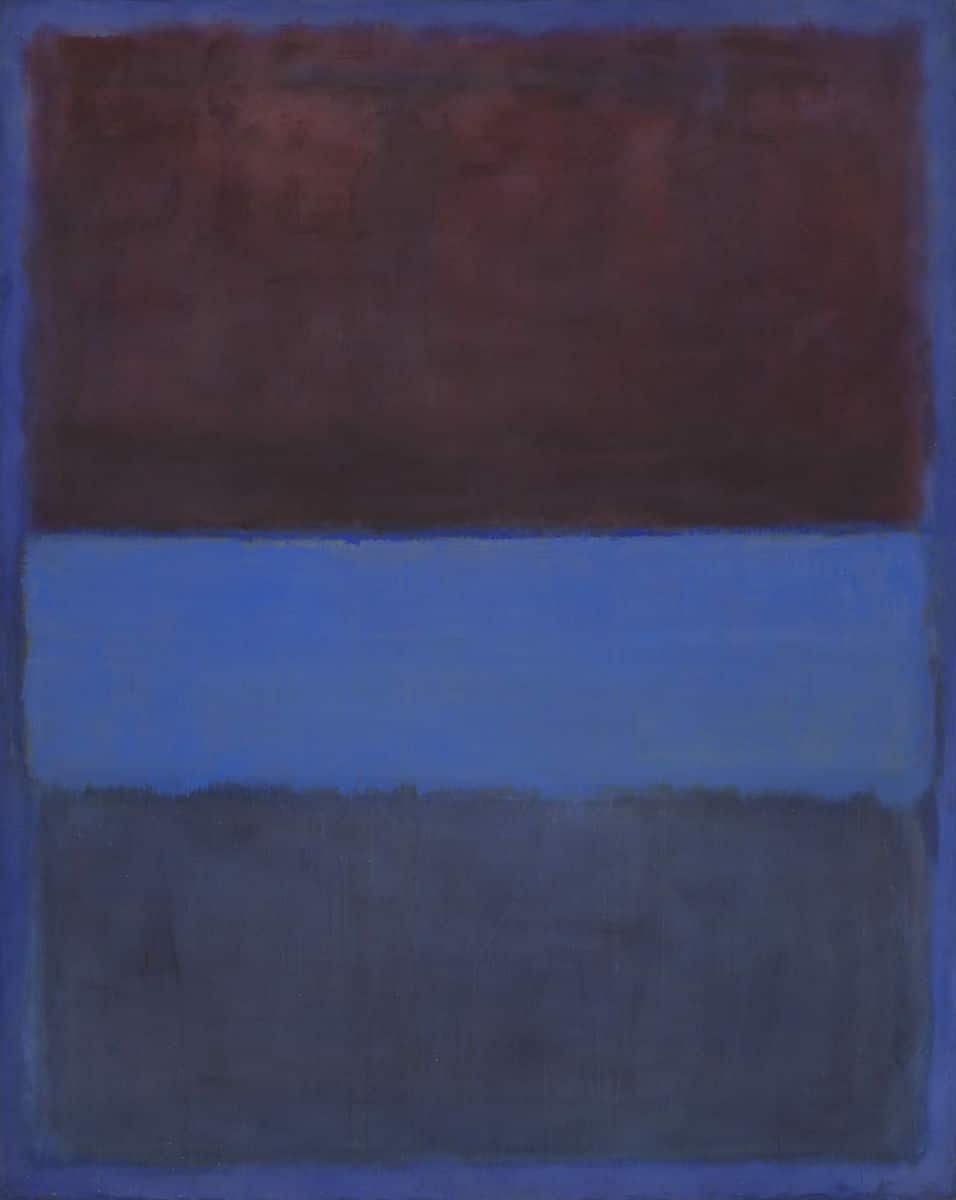
No. 61 (Rust and Blue) is a 1953 painting by the Russian-American Abstract Expressionist artist Mark Rothko. The work is an example of the Color Field movement, featuring large expanses of color defined by soft, hazy edges rather than sharp lines. The composition consists of stacked rectangular forms in shades of rust and blue that appear to float against a darker background.
The painting reflects Rothko's interest in the emotional and spiritual power of color. By using a large-scale canvas and layered pigments, Rothko sought to create an immersive experience for the viewer, inviting contemplation and a sense of the sublime.
The work is considered a prime example of his mature style, where representational elements are entirely abandoned in favor of pure abstraction.
You are watching:
Large floating fields of rust, blue, brown and shadow seem to hover over the canvas. There is no figure, no landscape, no story — only color, scale, silence and tension.
Look closer
On May 2026, Rothko’s No. 15 (Two Greens and Red Stripe) sold at Christie’s New York for $98.3 million — a new auction record for the artist.
Painted in 1964, it belongs to that intense late moment when Rothko’s colors were becoming darker, quieter, more spiritual — just a few years before his death in 1970.
Collectors buy Rothko for many reasons: prestige, rarity, investment potential… but also because his paintings have become symbols of postwar modern art itself. And that’s the paradox: huge sums are paid for works that, in the end, are about silence, vulnerability, and human emotion.
Worth the journey?
Seeing a real Mark Rothko in person is almost a rite of passage for anyone who loves modern art.
Reproductions flatten them. Screens kill them.
But standing in front of a Rothko — at full scale — is completely different. The color surrounds you, the edges vibrate, and the painting becomes less an object and more an emotional space.
If you ever have the chance, visiting the Rothko Chapel is probably the ultimate Rothko experience.
It’s not just a museum visit — it’s a space designed entirely around contemplation, silence, and emotion. The paintings surround you like a presence rather than objects on a wall. You stop “looking at art” and start feeling immersed inside it.
And maybe that’s why Rothko still matters so much today: in a world of noise, speed, and screens, his work forces you to slow down and feel something deeper.
But honestly — even outside the Chapel — standing in front of any of Rothko’s monumental canvases can be overwhelming. Their scale, color, and silence hit differently in real life.
See it like an Artlover
Stand close. Let the color fill your vision. Don’t search for an image — wait for a mood.
That’s why works like No. 61 (Rust and Blue) feel strangely intimate despite their massive scale.
They’re not meant to be looked at quickly. They’re meant to be felt slowly.
Because Rothko proves that abstraction can be deeply human. In front of this work, you don’t ask “what is it?” — you ask “what is it doing to me?” That shift is why it still feels radical.
Mark Rothko hated the idea that his paintings were just “decorative.”
He wanted viewers to stand very close to them — so close that the color would completely fill their field of vision. His goal wasn’t abstraction for abstraction’s sake. It was emotion.
Rothko wanted color to become emotional architecture. The painting doesn’t explain itself; it surrounds you. The longer you look, the more the edges vibrate, the layers breathe, and the colors begin to feel almost alive.
No. 61 (Rust and Blue)
Hours & rating from Google