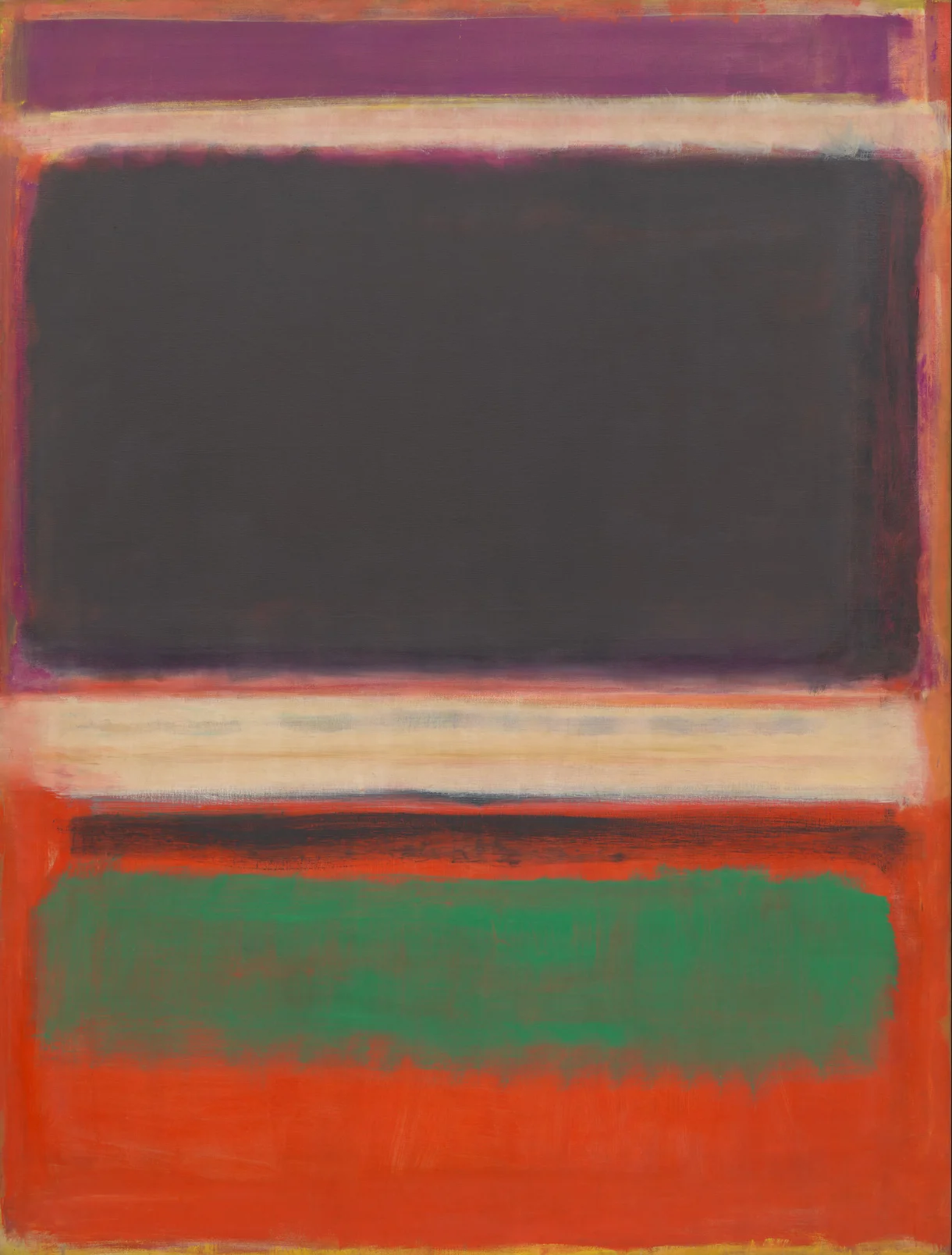
A featured work
A painting that doesn’t show you something — it makes you stand inside a feeling.
More info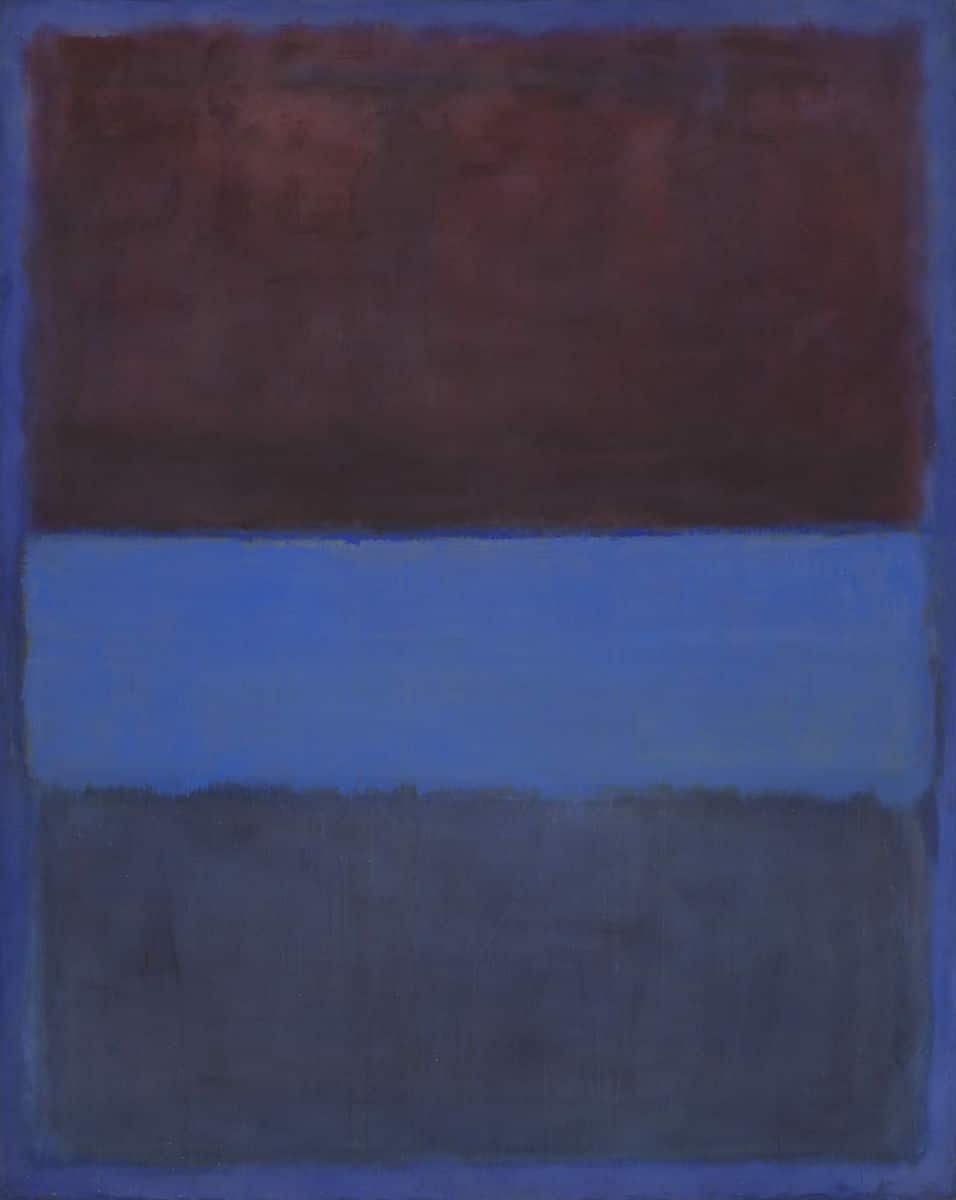
Mark Rothko ©1998 Kate Rothko Prizel & Christopher Rothko / Artists Rights Society (ARS), New York
Mark Rothko did not paint rectangles. He painted silence, tragedy, light and the feeling of standing in front of something larger than yourself.
Key Movements
Abstract Expressionism, Color Field, ModernismA quick note
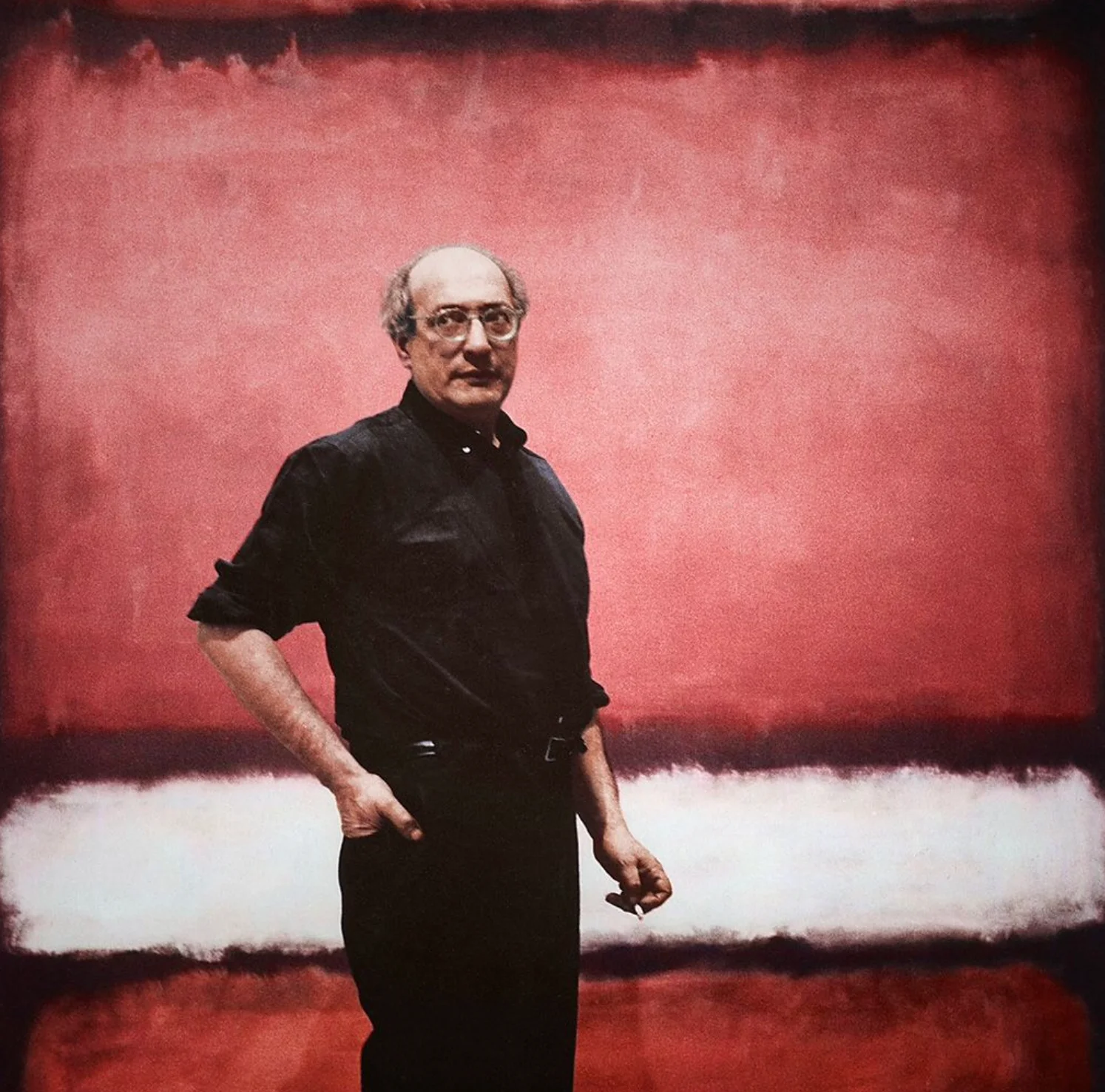
Markus Yakovlevich Rothkowitzm - Mark Rothko was an American painter and one of the central figures of Abstract Expressionism.
He is best known for his large-scale paintings composed of soft-edged rectangles of color, which aim to evoke deep emotional and spiritual responses rather than represent objects.
Rothko believed that color could communicate fundamental human experiences such as tragedy, ecstasy, and silence. His works are meant to be viewed up close, immersing the viewer in fields of luminous, vibrating color.
Although often associated with abstraction, Rothko rejected formal labels and insisted his art was about human emotion, not color theory.
His late works became darker and more somber, reflecting his introspective state of mind.
Where to see him:
Rothko Chapel, Houston This is the ultimate Rothko pilgrimage. The chapel is home to 14 Rothko murals and is designed as a place for contemplation, spirituality and human rights. More.
Tate Modern, London Essential for the Seagram Murals, one of Tate’s most powerful immersive rooms. More.
Most Famous Artworks
- No. 61 (Rust and Blue) — Museum of Contemporary Art, Los Angeles
- Orange and Yellow — Albright-Knox / Buffalo AKG Art Museum
- No. 14, 1960 — San Francisco Museum of Modern Art
- White Center (Yellow, Pink and Lavender on Rose) — private collection
- Black on Maroon — Tate, London
- Red on Maroon — Tate, London
- The Seagram Murals — Tate, London
- Rothko Chapel Paintings — Rothko Chapel, Houston
- Untitled works in the Rothko Room — The Phillips Collection, Washington, D.C.
Did you know?
Although Rothko lived modestly for much of his life, the resale value of his paintings grew tremendously in the decades following his suicide in 1970. His painting No. 6 (Violet, Green and Red) sold in 2014 for $186 million.
Today, Rothko’s paintings are among the most influential and valuable works of 20th-century art, profoundly shaping modern and contemporary painting.
Why are they important?
Rothko changed what a painting could do.He removed figures, stories and obvious symbols, but kept the deepest human emotions: fear, ecstasy, loss, transcendence, intimacy. His canvases are not images to decode. They are spaces to enter.He proved that abstraction could be emotional, spiritual and almost physical. A Rothko does not simply hang on a wall — it changes the temperature of the room.Silence · colour · tragedy · spirituality · light · emptiness · intimacy · transcendence · the sublime · the human conditionRothko wanted painting to be more than decoration. He wanted it to become an experience between artwork and viewer.
Mark Rothko
- Born
- Died
- Nationality
- American, Latvian
Artlovers Tip
On view now
Where to see them now
Plan your visit — these exhibitions are on view now.