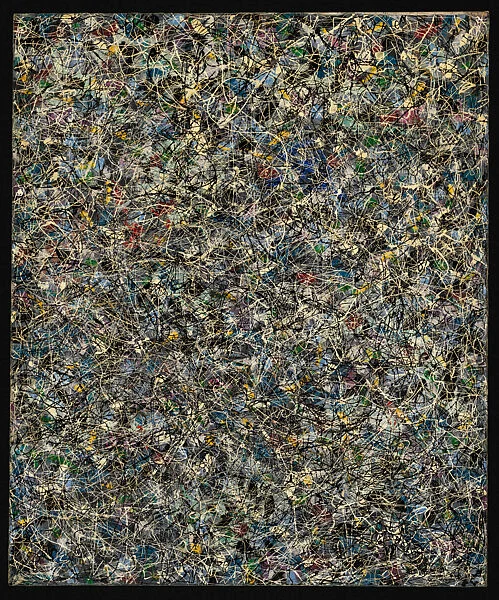
Why it inspires us
“I have no fear of making changes, destroying the image, etc., because the painting has a life of its own.”
At a glance
Pollock didn’t just paint pictures — he turned painting into an act of movement, energy and chance.
Dates
- Born
- Died

Artlovers Tip
Don't stand in front of Pollock looking for the painting. Look for the choreography.
Move your eyes through the lines as if you were following the artist's movements around the canvas. Then step back and let the entire surface become one enormous field of energy.
Top Artwork(s)
- Autumn Rhythm (Number 30), 1950 — Metropolitan Museum of Art, New York
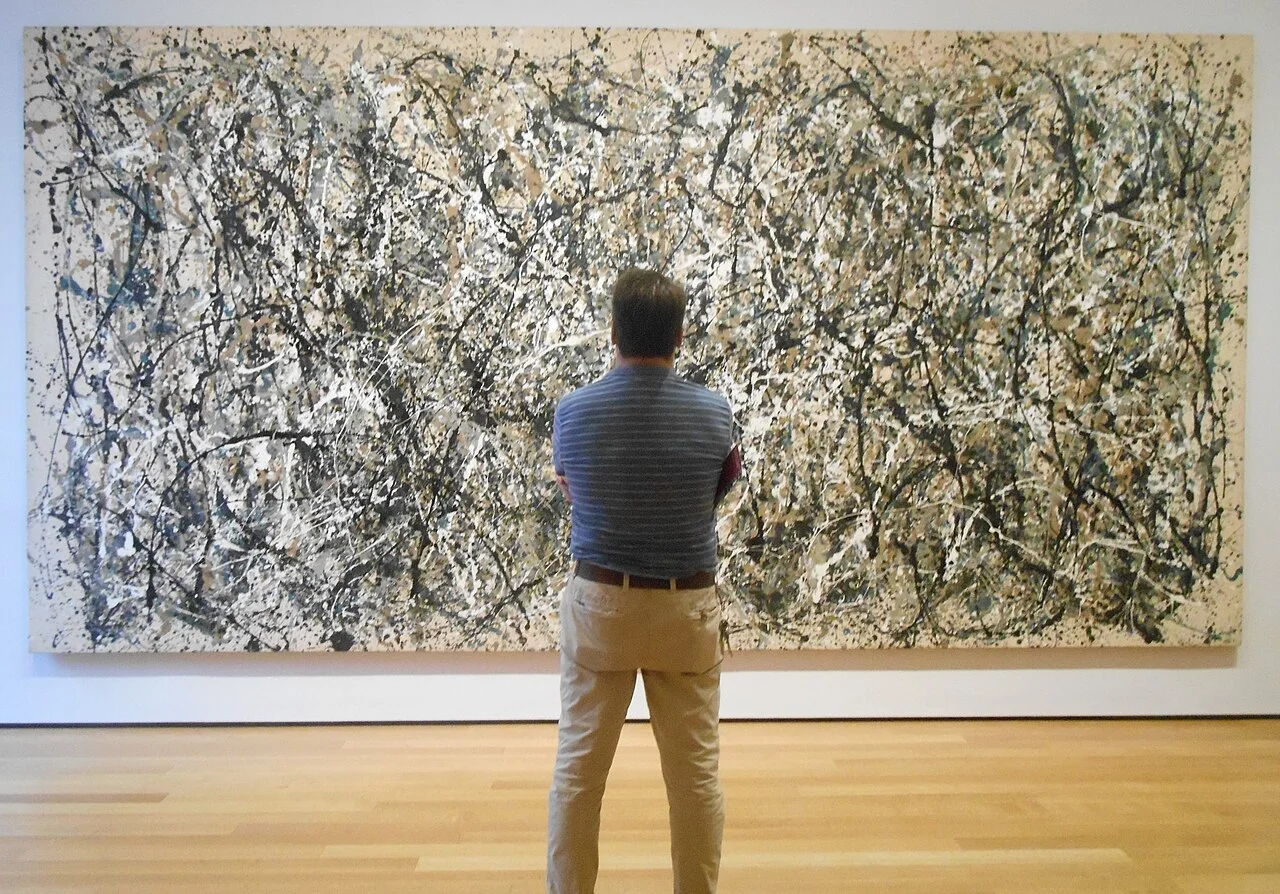
- One: Number 31, 1950, 1950 — MoMA, New York
- Number 1A, 1948, 1948 — Los Angeles County Museum of Art
Start with Autumn Rhythm. Its enormous scale allows you to experience Pollock's painting almost physically: you can imagine the artist moving around the canvas as the lines accumulate.
About the artist
A quick note
Jackson Pollock was one of the most influential American painters of the 20th century and a central figure of Abstract Expressionism. He revolutionized painting with his “drip technique”, in which he poured, splashed, or dripped paint onto canvases laid on the floor.
Known for: Action painting, drip technique
Major works: Number 1A, 1948, Autumn Rhythm, Lavender Mist
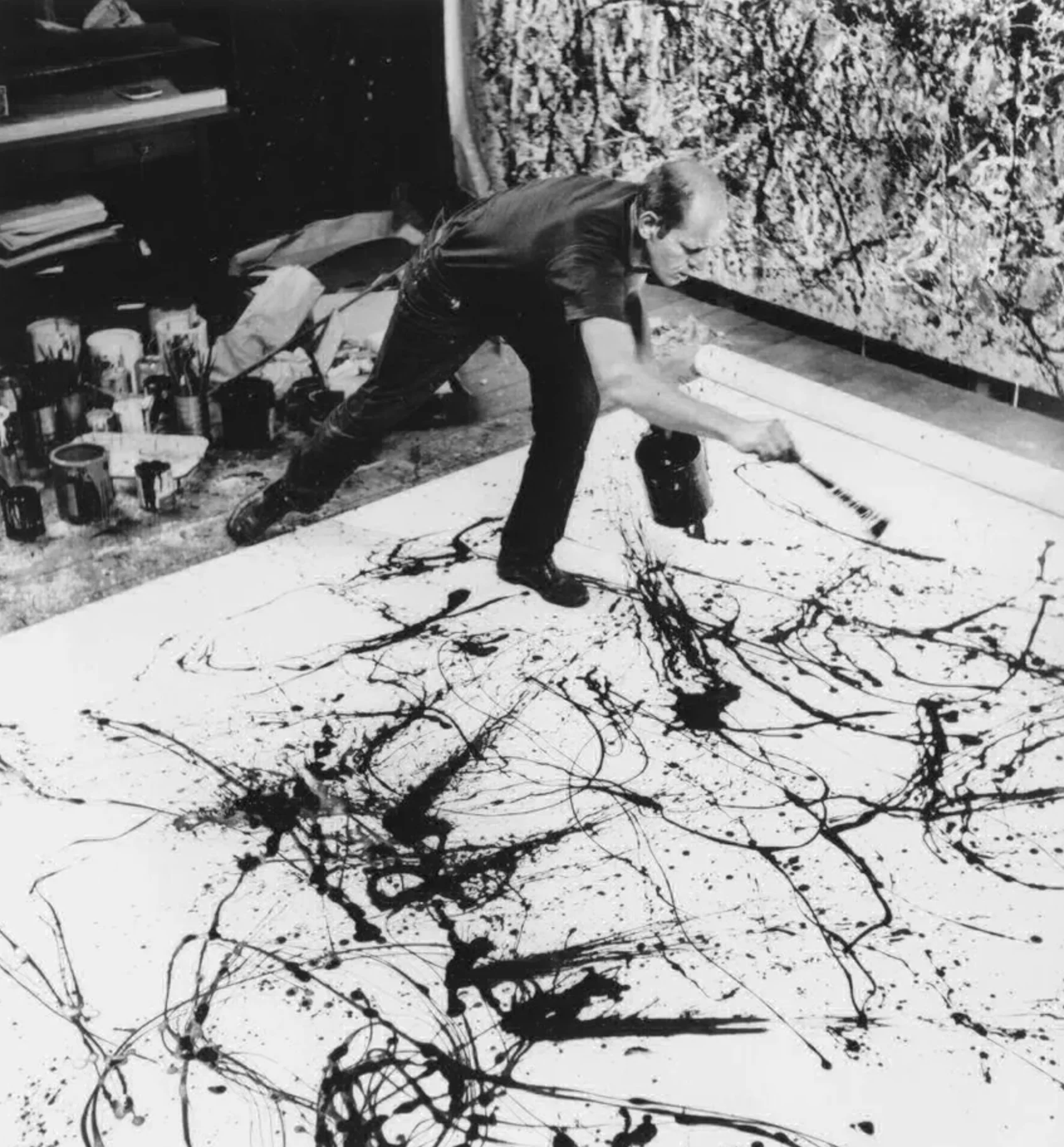
Pollock abandoned the traditional easel. Instead, he placed large canvases on the floor of his studio, walking around them while dripping or pouring paint using sticks, hardened brushes, or directly from the can.
This process became known as Action Painting because the act of painting itself was part of the artwork.
Did you know?
In the late 1990s, physicists noticed something surprising: Pollock’s drip paintings seemed to contain patterns similar to those found in nature. When analyzed mathematically, they showed characteristics of Fractals.
The paradox:
Pollock had no knowledge of fractal mathematics. Yet through intuition and movement, he produced paintings that anticipate scientific discoveries about complexity and pattern.
Pollock's No. 5, 1948 became one of the world's most expensive paintings when it was reportedly sold privately in 2006 for around $140 million — although the exact terms of the transaction were never publicly confirmed.
Why are they important?
Pollock is best known for his drip paintings, created primarily between 1947 and 1952. Instead of applying paint with a brush directly onto a vertical canvas, he moved around the work, allowing paint to fall, splash, pool and weave across its surface.The result was radically different from traditional composition: there was no obvious top or bottom, no single focal point and often no recognisable subject.Pollock helped establish New York as a centre of the international art world and became one of the defining figures of Abstract Expressionism.His influence is enormous. His approach opened the door to artists who treated gesture, process, scale and the physical act of making as central to art.Why he matters today:Pollock's work still resonates because we live in an age fascinated by process — from performance and installation to digital creation and AI. His fundamental question remains relevant:Can the act of creating become the artwork itself?
Jackson Pollock
A featured work
A painting that feels less like an image and more like standing inside pure energy.
Wikimedia Commons
On view now
Where to see them now
Plan your visit — these exhibitions are on view now.