At a glance
Forty years of feminist art collide across generations — not to tell one history, but to imagine many possible futures.
Why go
You'll see
Pace of visit
Don't miss

Artlovers Tip
Don't look for “the feminist message.” Look for the disagreements.
The strength of the exhibition should be precisely that feminism in 1976, 1985 and 2026 does not mean exactly the same thing. Compare how different generations use the body, language, humour, anger and personal experience to challenge power.
Artlovers relevance
Inside the exhibition
Meet the artist
Key Movements
Medium
Description
Feminist Futures Forever begins with a piece of Vienna art history. In 1985, the building now known as Belvedere 21 hosted Kunst mit Eigen-Sinn: Internationale Ausstellung aktueller Kunst von Frauen, an ambitious international exhibition devoted to contemporary art by women. Four decades later, the museum returns to that moment — but deliberately avoids presenting feminism as a finished historical movement.
Instead, artists from the feminist avant-garde are placed alongside contemporary and emerging positions. Their works address gender, sociopolitical structures and ecological questions, showing how feminist practice has expanded and fragmented into multiple, sometimes conflicting perspectives. Even the exhibition architecture, by Dorit Margreiter Choy and Cosma Grosser, questions the supposedly neutral museum space and proposes more domestic, everyday environments in which the works can interact.
There is no single artist here — and that's important. The exhibition deliberately builds a polyphonic history, bringing together canonical figures such as Abramović, EXPORT, Kruger, Sherman, Holzer, Ono, Rosler and Schneemann with artists from different generations and backgrounds. Feminism becomes less a style than a continuously evolving way of questioning who holds power, who gets represented and how society might be organised differently.
Worth travelling for?
For Artlovers, this looks like one of Vienna's key contemporary-art exhibitions of the 2026–27 season. The combination of major names, younger voices and the historical connection to the groundbreaking 1985 exhibition gives it more weight than a conventional thematic group show.
And the title contains the essential idea: feminist art isn't being presented as a chapter of art history that ended — but as an unfinished conversation about the future.
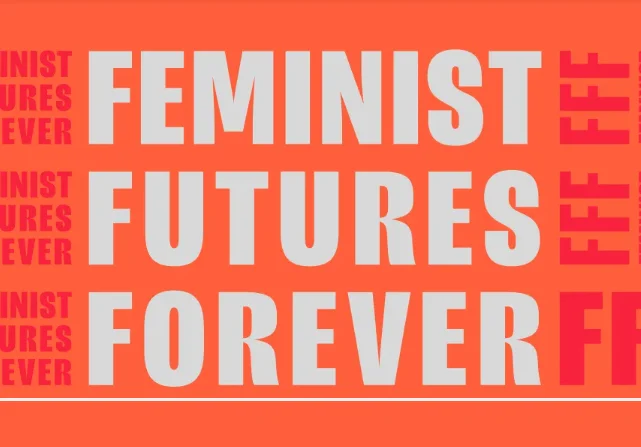
Feminist Futures Forever
Hours & rating from Google