Dates
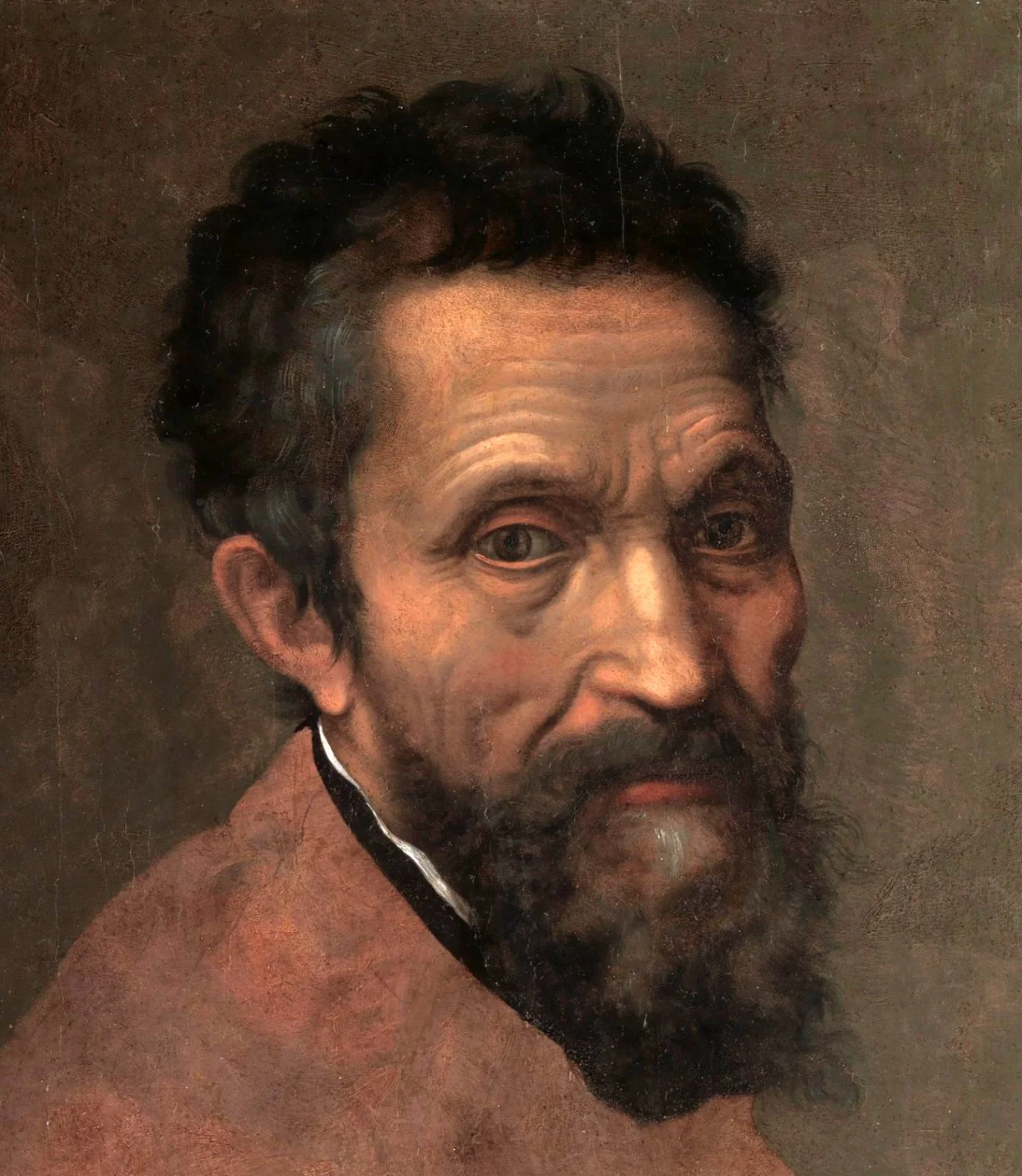
Meet the artist
More details
- Original title
- Il Giudizio Universale
- Movement
- High Renaissance
- Medium
- Fresco
- Genre
- Religious Painting
- Dimensions
- 1370 × 1200 cm
The story behind it
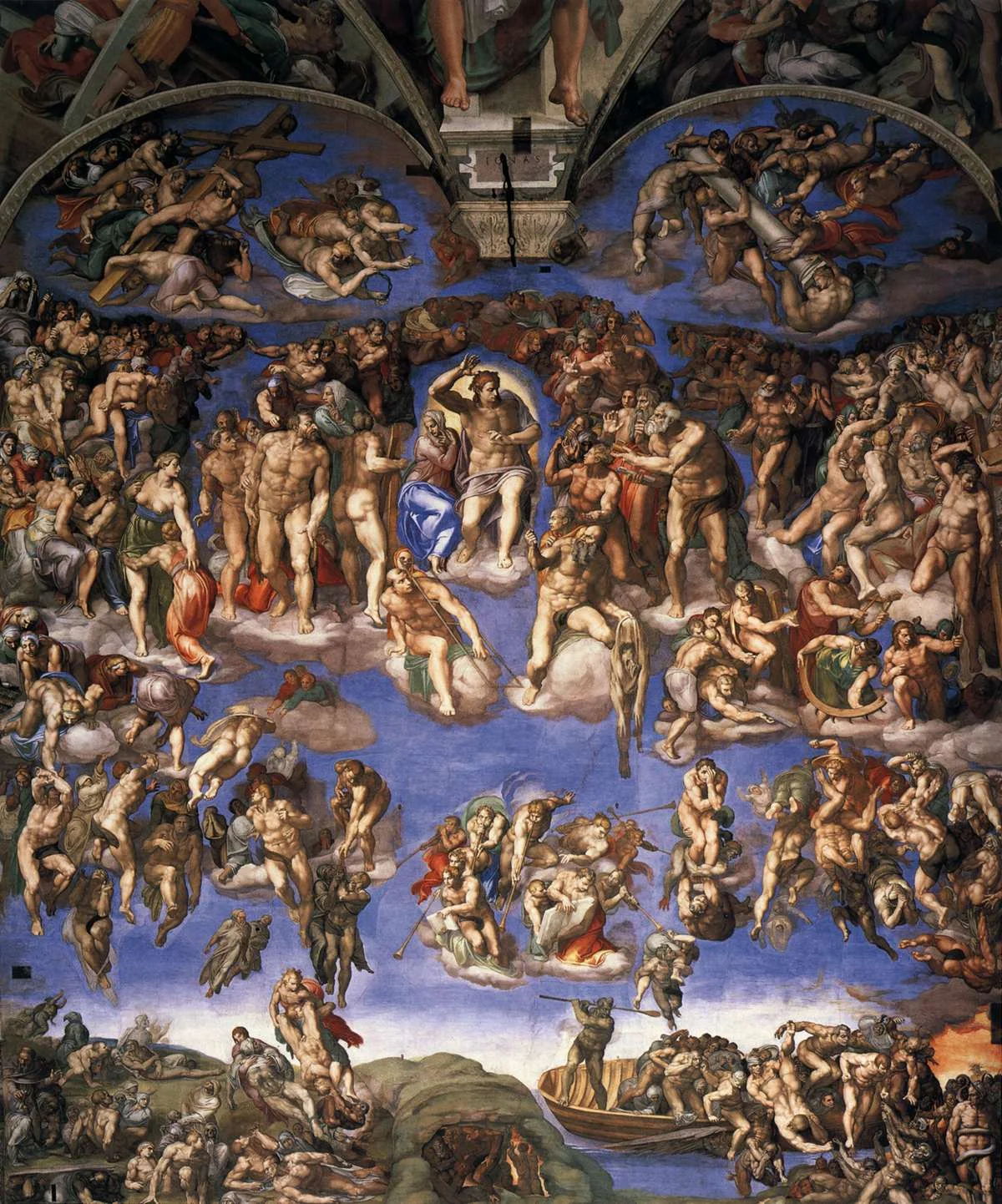
The moment heaven and hell collide—no filters, no mercy.
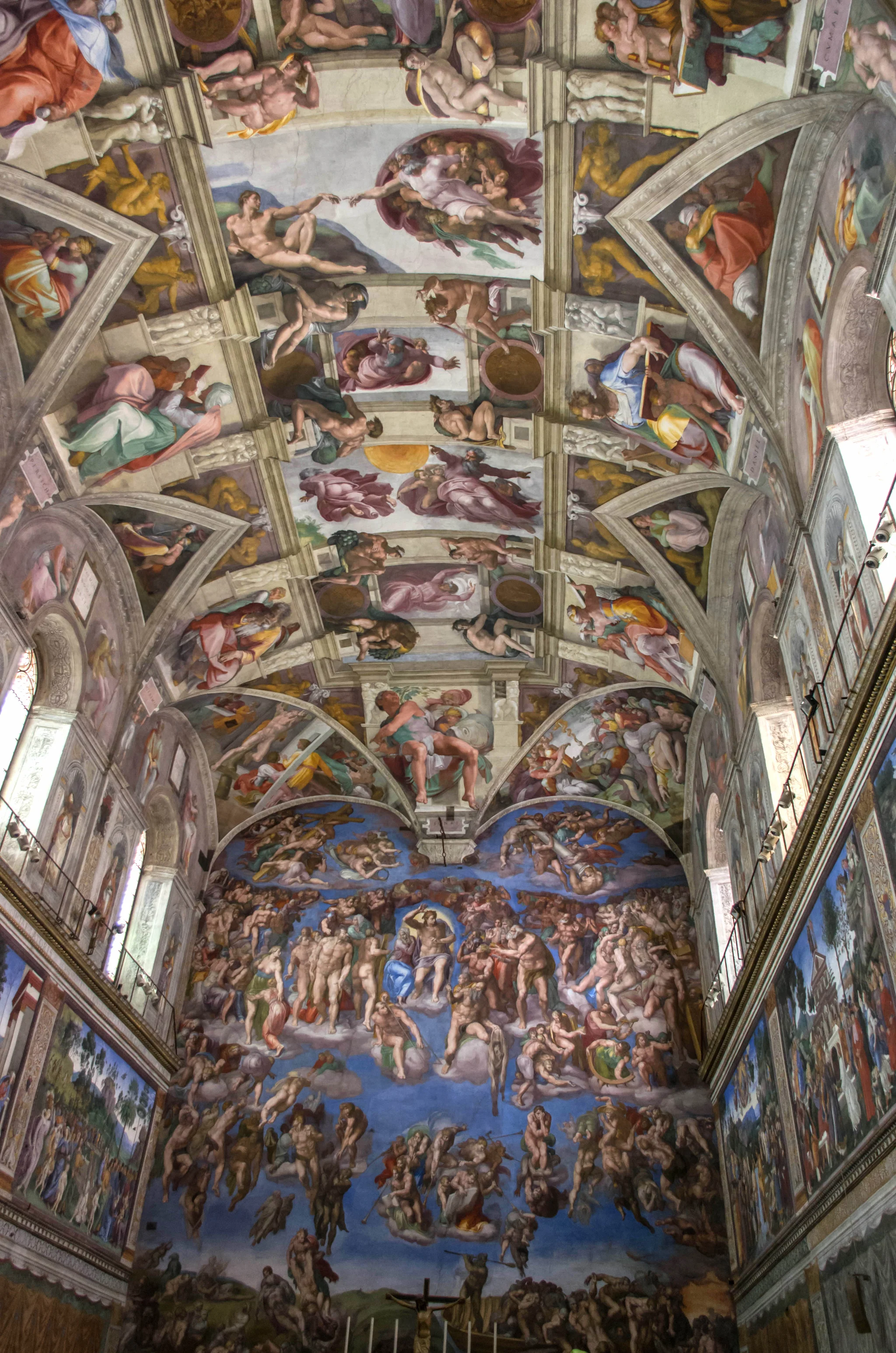
A vast wall filled with bodies in motion. At the center, Christ raises his arm—not gently, but decisively—triggering the final judgment of souls. Around him, saints twist, rise, and fall. The blessed ascend on the left; the damned are dragged down on the right, pulled by demons into chaos. There is no ground, no horizon—only a swirling human storm of muscle, fear, and inevitability.
Michelangelo didn’t paint a calm divine order—he painted anxiety.
Christ looks more like a powerful athlete than a distant god, and almost everyone is naked, which scandalized the Church so much that draperies were later added to cover the bodies.
Because no image captures human fear, judgment, and hope this viscerally.
Standing in the Sistine Chapel, you don’t just look at it—you feel overwhelmed by it. The scale, the tension, the bodies in motion… it’s impossible to translate into a screen.
This isn’t just a masterpiece.
It’s an experience that reminds you why art was once meant to move entire civilizations.
Look closer
The artist hid himself… in a flayed skin
One of the wildest details in The Last Judgment by Michelangelo is easy to miss:
He painted his own face… on a piece of flayed skin.
Look closely at Saint Bartholomew, who is shown holding his own skin after martyrdom
The empty, sagging face in that skin = Michelangelo’s self-portrait
See it like an Artlover
The Last Judgment
Hours & rating from Google