A painting where philosophy becomes drama, resistance, and immortality.
Dates
The story behind it
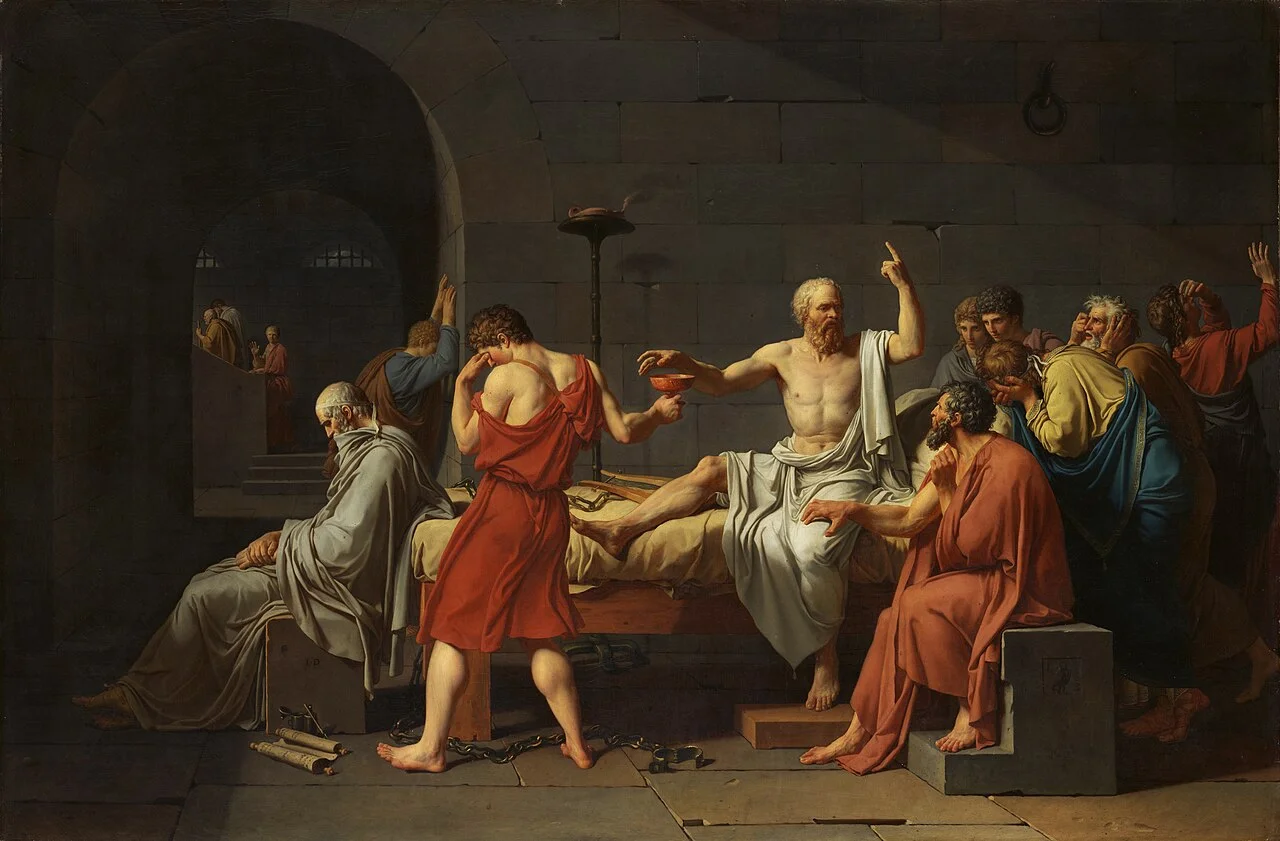
Inside a prison cell, the philosopher Socrates calmly reaches for a cup of poison while continuing to teach his disciples moments before his execution. Around him, his followers collapse into grief and despair, but Socrates remains composed, pointing upward toward the world of ideas and truth.
Look closer
Jacques-Louis David deliberately idealized Socrates as the ultimate symbol of reason and moral conviction. Although Plato was actually much younger at the time of Socrates’ death, David paints him as an old man seated silently at the foot of the bed, emphasizing memory, philosophy, and historical legacy over factual accuracy.
Worth the journey?
Yes — absolutely worth the trip. This is one of the defining masterpieces of Neoclassicism and one of the clearest examples of how painting can express ideas, not just emotions. The work still resonates because it asks timeless questions about truth, integrity, sacrifice, and the courage to defend one’s beliefs.
See it like an Artlover
First focus on Socrates himself rather than the surrounding drama. His calm posture completely transforms the emotional meaning of the scene. Then slowly explore the reactions of the disciples — fear, sorrow, disbelief — which create a powerful contrast between philosophy and human emotion.
Artlovers Tip:
Pay special attention to the gesture of Socrates’ raised finger. It directs the entire composition upward, toward thought, truth, and immortality of ideas. The painting becomes much more powerful when you realize David is not painting death — he is painting intellectual conviction overcoming fear.
Death of Socrates
Hours & rating from Google