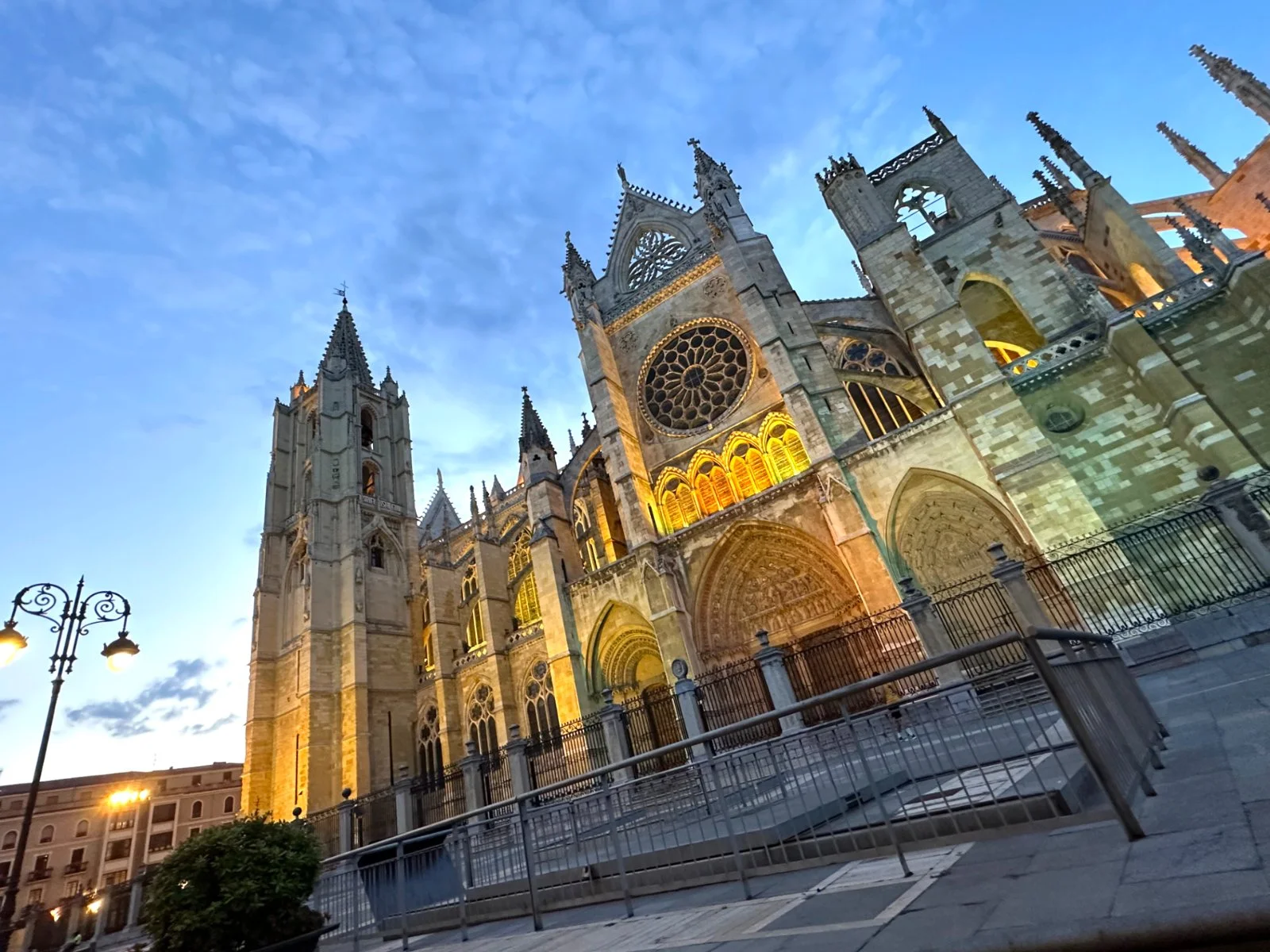
Tucked beside León’s Gothic cathedral, this 19th-century mansion preserves the quiet pulse of a family caught between tradition and the dawn of modernity. It is a portal into the private world of the Spanish Enlightenment.
- The Enfilade: The sequence of reception rooms on the first floor, designed for 19th-century social gatherings, showcasing the luxury and social status of the Sierra-Pambley family.
- Sargadelos and English Ceramics: A stunning collection of daily-use tableware in the second-floor dining room, reflecting the cosmopolitan tastes of a progressive merchant family.
- The Master Bedroom: A rare look at 19th-century privacy, centered around a grand marriage bed and a dedicated dressing room filled with period grooming artifacts.
- Sala Cossío: A dedicated space explaining the family’s educational foundation, which brought pioneering pedagogical methods to rural Spain.

Book the last tour of the morning to witness the sun hitting the glassware in the second-floor dining room, turning the crystal into a prism of 19th-century light.
About the venue
About
Entering the Museo Sierra Pambley feels less like a gallery visit and more like arriving for a soirée where the hosts have just stepped out. The 1848 house retains its original wallpaper, furniture, and French clocks, creating a sensory archive of the 19th-century bourgeoisie. As you walk through the enfilade of reception rooms, the scent of waxed wood and the soft creak of floorboards ground you in a time of radical intellectual change.
You're watching the interplay of light through lace curtains, illuminating a collection of scientific instruments and fine Sargadelos china that speak of a household obsessed with progress. The movement here is slow and deliberate, a choreographed journey from public opulence to the intimate corners of the family's daily life.
Worth the trip
- Preservation: It is one of the few examples of a 19th-century Spanish bourgeois residence kept entirely intact with its original furnishings.
- Enlightened History: The house tells the story of the Giner de los Ríos circle and the Institución Libre de Enseñanza, vital for understanding modern Spanish education.
- Gothic Contrast: Its location offers a fascinating dialogue between the solemn Gothic stone of León Cathedral and the domestic warmth of the Enlightenment.