The place where architecture becomes myth. The Acropolis of Athens is not just an archaeological site — it is one of the most powerful encounters with beauty, democracy, proportion, power, and time in the world.
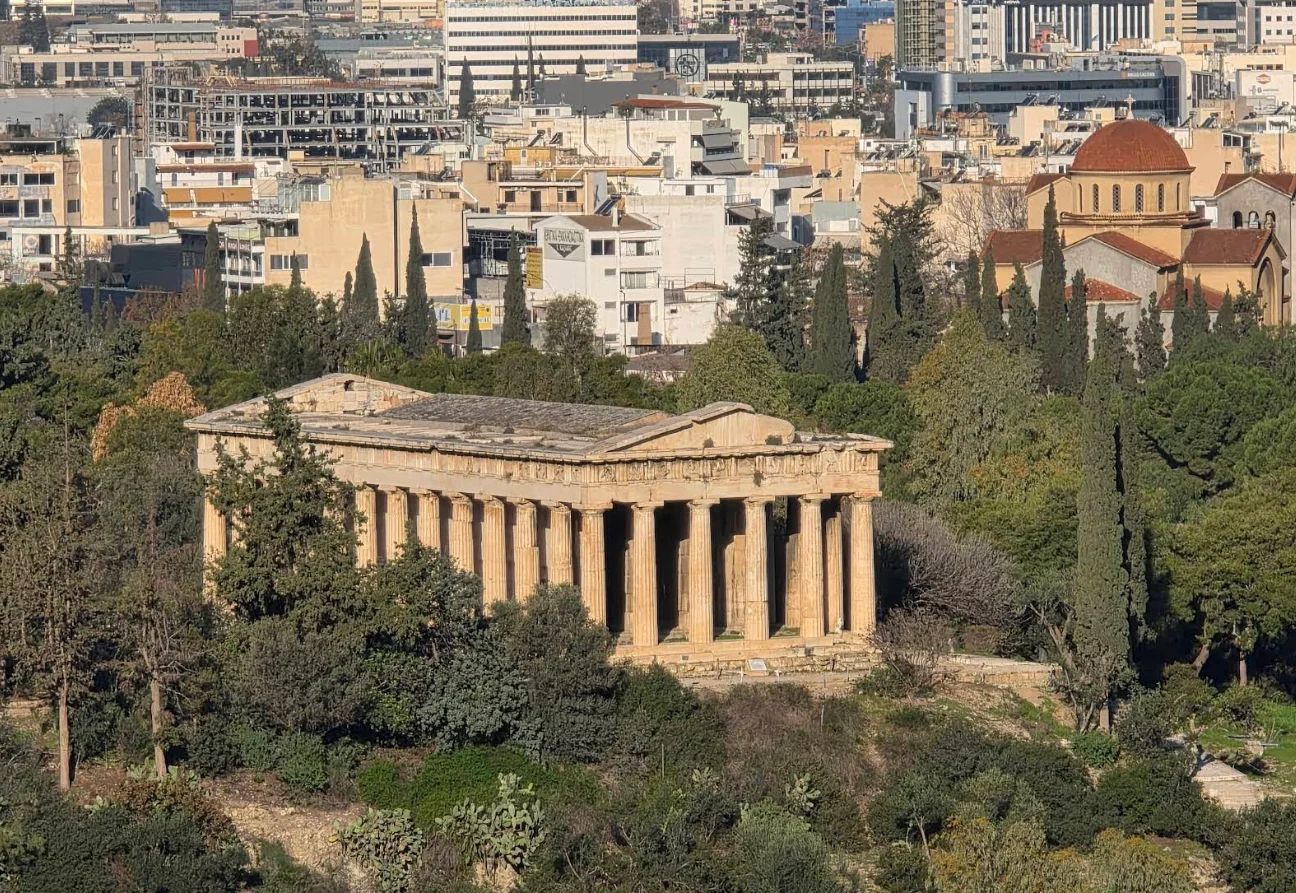
This is one of those places where the approach matters. You climb slowly, the city spreads below you, and then the marble begins to appear: columns, fragments, steps, shadows, scaffolding, restoration, and the feeling that history is still being held together in real time.
You’ll experience:
- The Parthenon, dedicated to Athena
- The Erechtheion, with its famous Caryatid porch
- The Propylaea, the monumental entrance
- The Temple of Athena Nike
- Panoramic views over Athens
- The dialogue between the archaeological site and the modern city below

For Artlovers, the Acropolis is essential because it turns travel into something bigger than sightseeing. You are not just looking at ancient Greece — you are standing inside one of the origins of how we imagine art, public space, democracy, and beauty. The site is generally listed by the Greek Ministry of Culture as open 08:00–20:00 in summer and 08:00–17:00 in winter, with last entry shortly before closing, but always check before visiting because seasonal schedules can change. The best time to go is early morning or late afternoon, especially in spring or autumn. Summer midday can be extremely hot, bright and crowded. Wear good shoes, bring water, and don’t rush: this is not a place to “complete,” it is a place to absorb. Pair it with the Acropolis Museum, which houses finds from the Acropolis and its slopes and culminates in the Parthenon Gallery, designed around the sculptures of the Parthenon.
About
Rising above Athens on a rocky hill, the Acropolis is the city’s ancient sacred centre and one of the great symbols of classical Greece. Its most famous monuments — the Parthenon, the Erechtheion, the Propylaea, and the Temple of Athena Nike — were mainly built in the 5th century BC, during the golden age of Athens. UNESCO describes the Acropolis as one of the great monuments of world heritage, recognized as a World Heritage Site in 1987.
For Artlovers, the Acropolis is not only about ruins. It is about understanding how stone, proportion, light, myth and civic ambition shaped the visual language of the Western world.
Worth the trip
Absolutely. The Acropolis is one of the strongest art and architecture reasons to travel anywhere in the world.
What makes it special is not only its age or fame, but its presence. The Parthenon is damaged, incomplete, restored, debated and still overwhelming. That is part of its power: it reminds you that civilization is fragile, beauty is political, and architecture can become an idea that lasts for 2,500 years.
© Acropolis Museum