At a glance
Beyond the Ben-Day dots: a colourful, technically revealing survey of how Roy Lichtenstein transformed printmaking into a defining language of Pop Art.
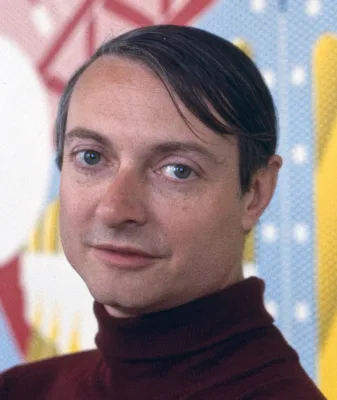
Meet the artist
Why go
Approximately 50 works trace five decades of Lichtenstein’s printmaking, from early experiments of the late 1940s to highly complex, large-scale prints of the 1990s.
Many are being publicly displayed for the first time following the Roy Lichtenstein Foundation’s donation of 33 prints to the museum. Together, they demonstrate that his apparently mechanical images were the result of elaborate experimentation, close collaboration with specialist printers and, sometimes, dozens of separate printing stages.
You'll see
- Comic-book imagery, speech bubbles and melodramatic close-ups
- Lichtenstein’s signature Ben-Day dots and saturated primary colours
- Screenprints, lithographs, etchings, woodcuts and linocuts
- Still lifes, interiors and monumental brushstroke motifs
- Pop reinterpretations of modern masters and art-historical styles
- Printed paper plates, wallpaper and other objects that blur art and decoration
- Two paintings: Hopeless and Mirror #2
Pace of visit
The display contains around 50 works across six sections. It is medium-density but technically detailed; allow longer if you read the explanations of the different printing processes.
Don't miss
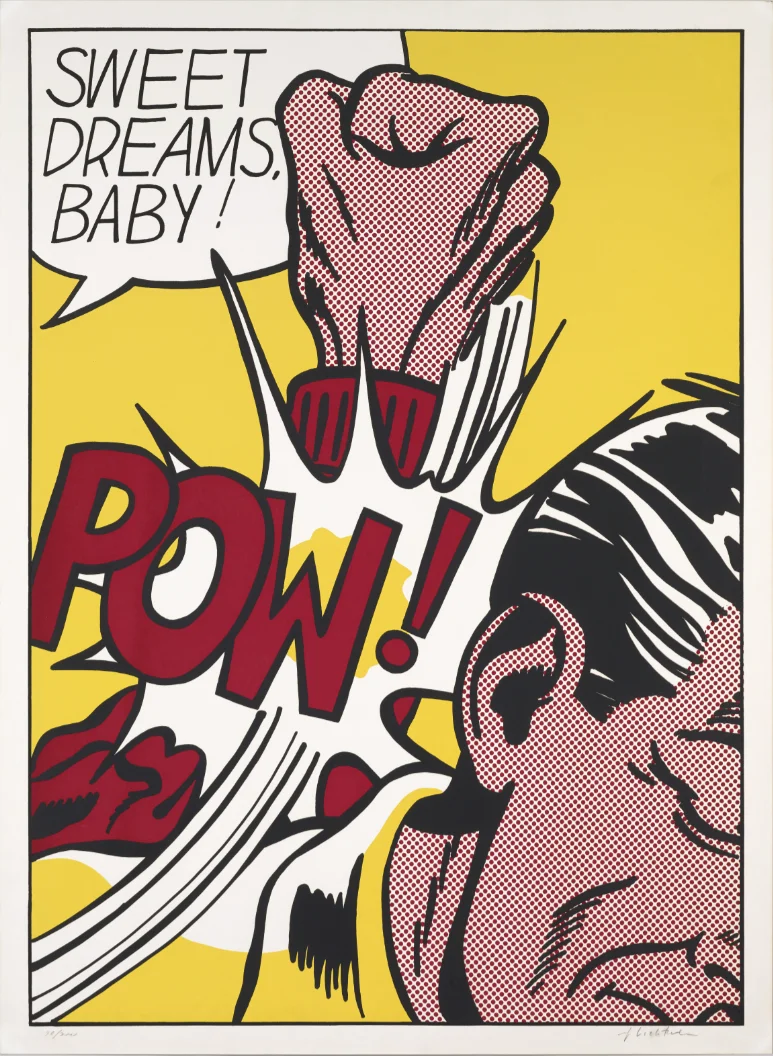
- Sweet Dreams, Baby! (1965) — the exhibition’s punchy title work and a classic example of Lichtenstein’s transformation of comic-book drama.
- Portrait (1989) — created through an 18-stage process combining lithography, woodcut, screenprinting and specially developed wax printing.
- Paper Plates (1969) — Pop Art entering the world of inexpensive domestic objects.
- The Sower (1985) — Lichtenstein’s irreverent reinterpretation of Van Gogh.
- Entablature VI (1976) — an architectural motif turned into a pattern of repetition and surface.
- Wallpaper with Blue Floor Interior (1992) — a monumental work that dissolves the boundary between image, decoration and room.
- Hopeless (1963) — one of the two paintings completing the print-focused display.

Artlovers Tip
Recommended — an excellent specialist exhibition rather than a full retrospective.
The exhibition is more substantial than its playful title suggests. Its real achievement is showing the technical sophistication beneath Lichtenstein’s cool, mass-produced appearance.
Look beyond the subject matter and move close enough to compare the surfaces. Lichtenstein deliberately combined glossy, matte, flat and relief-like areas—effects that reproductions rarely capture.
The exhibition ends with the Lichtenstein Lounge, where visitors can browse publications and experiment with dots, grids and brushstroke forms.
Inside the exhibition
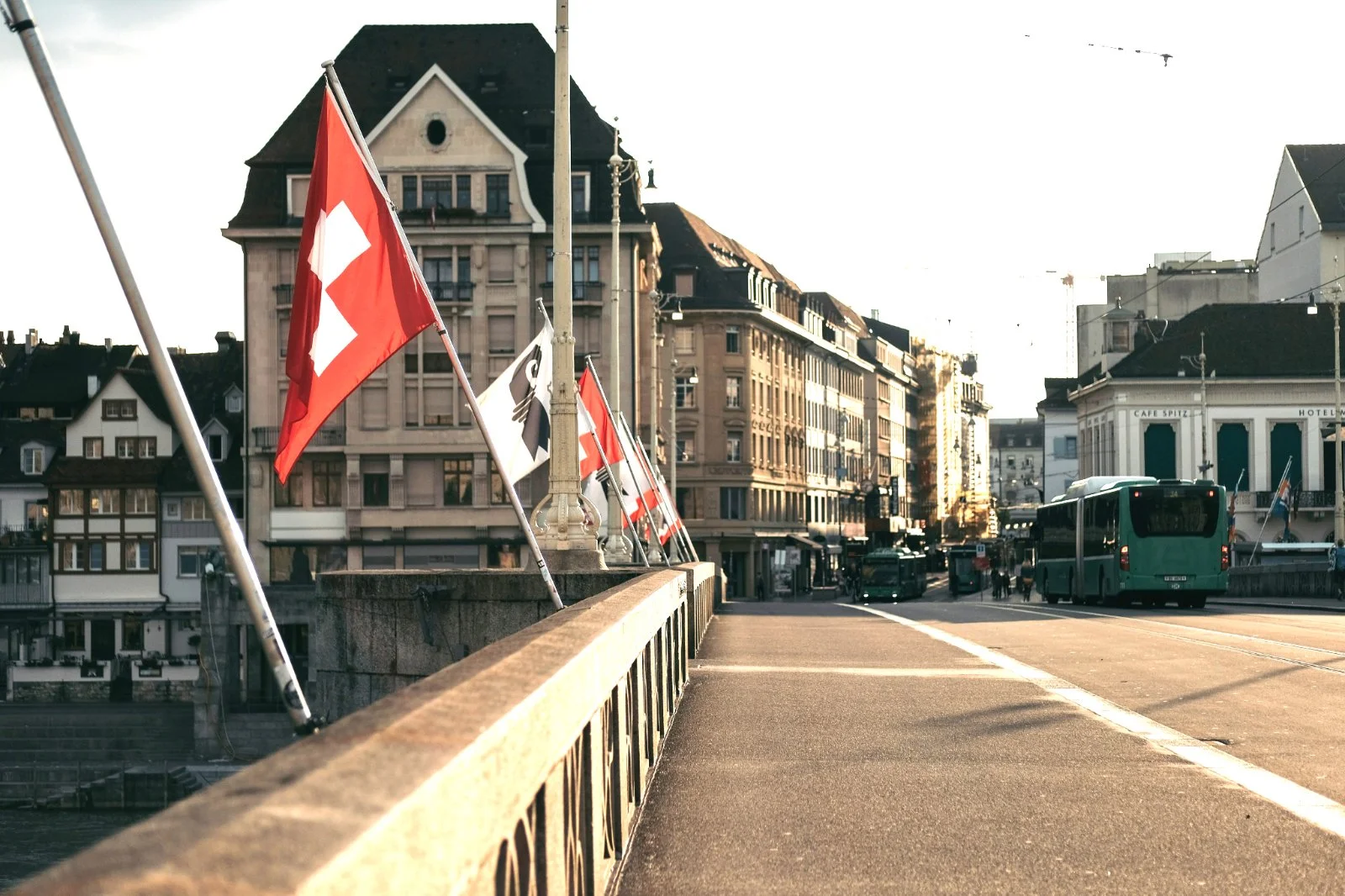
Come and explore the vibrant world of Roy Lichtenstein (1923–1997), a true legend of US Pop Art, at Kunstmuseum Basel. Showcasing prints from every stage of his career, made possible by a wonderful recent gift from the Roy Lichtenstein Foundation. Now on view for the very first time, this donation makes the Department of Prints and Drawings at the museum (Kupferstichkabinett) one of the most important places to see Lichtenstein’s work outside the United States.
From his famous comic-book explosions to his witty takes on classical masterpieces, the exhibition offers a lively journey through fifty years of creative discovery.
You’ll see how Lichtenstein used techniques like woodcuts, etchings, and silkscreens to turn everyday visual culture into a style all his own. With around 35 works on display, we invite you to step into Lichtenstein’s bright, clever, and high-energy world.
Roy Lichtenstein was one of the defining artists of American Pop Art. From the early 1960s, he appropriated the visual language of comics, advertisements and consumer packaging, enlarging their dots, outlines and emotionally exaggerated scenes.
Although his images appear impersonal and mechanically reproduced, they were carefully drawn, revised and fabricated. His work questioned originality, artistic authorship and the supposed distinction between popular imagery and high art.
Sweet Dreams, Baby!
Admission
Artlovers relevance
On view at
Art MuseumHours & rating from Google