At a glance
A century of Pan-African imagination — art, resistance, music, archives and future-making across Africa and its diasporas.

Artlovers Tip
A major London 2026 exhibition: ambitious, complex and necessary — less a single story than a Black planetary map of art, culture, resistance and future imagination.
This is a show where the question is not only what is Africa? but what worlds have people of African descent imagined, built, protected and projected?
Inside the exhibition
Description
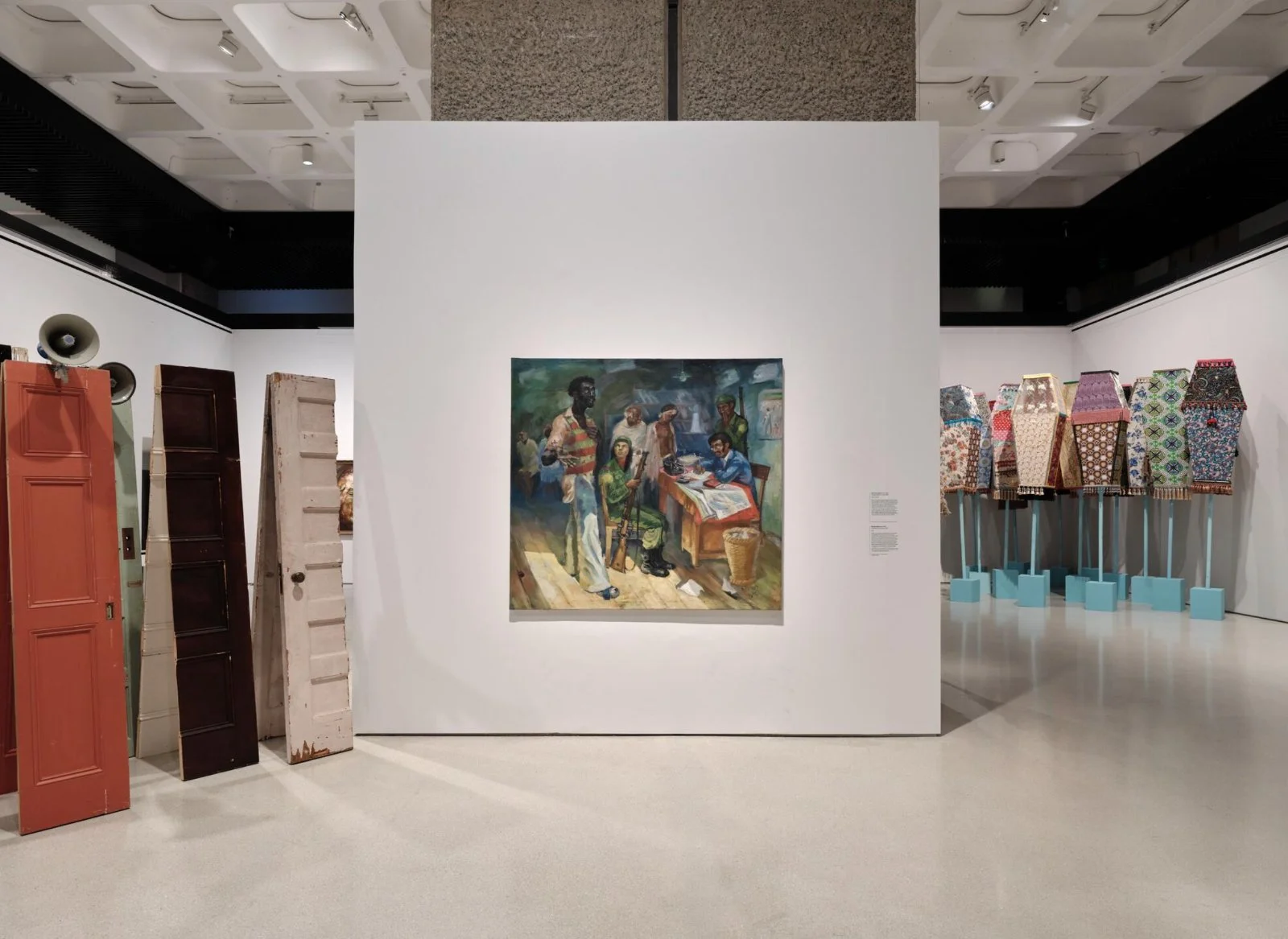
This is the first major international exhibition to explore the cultural manifestations of Pan-Africanism from the 1920s to today. It brings together more than 300 works at the Barbican — and the wider touring project includes around 350 pieces by 100 artists — spanning painting, sculpture, installation, posters, journals, film, sound, documents and archival material.
The exhibition treats Panafrica not simply as a geography, but as a political, cultural and imaginative project: a world built through solidarity, liberation, Black internationalism, anti-colonial movements, music, literature, visual culture and collective futures.
You’ll find connections across Africa, Europe, the Caribbean, North and South America, with artists and cultural figures working through histories of slavery, colonialism, resistance, diaspora, identity, spirituality and self-determination. Earlier presentations and coverage highlight artists such as Simone Leigh, Chris Ofili, Lynette Yiadom-Boakye, David Hammons, Wifredo Lam, Magdalene Odundo, Zanele Muholi, Kader Attia and others
Worth travelling for?
Because this exhibition expands the map of modern and contemporary art.
Instead of treating Pan-Africanism only as a political movement, Project a Black Planet asks how it has been made visible through art, design, publishing, music, performance, photography, film and collective imagination. It shows that culture was not secondary to liberation movements — culture was one of the places where liberation was imagined first.
For Artlovers, this is worth the trip because it is a major intellectual and visual journey: not a simple “best works” exhibition, but a dense constellation of images, archives and ideas. It helps you understand how Black artists and thinkers have created alternative worlds when the existing one denied them freedom, dignity or belonging.
Experience as an Artlover
Visit time / Density: Very dense exhibition. With over 300 works and strong historical, political and archival context, give it at least 90 minutes. If you want to read, watch film material and follow the different Pan-African movements properly, allow 2–3 hours.
Do not try to “complete” it like a checklist.
Enter it as a map. Follow one thread at a time: flags, portraits, archives, music, protest, abstraction, bodies, utopia. Some rooms may feel very theoretical, but stay with the works that pull you back into lived experience: portraiture, sound, film, gesture, material, memory.
Project a Black Planet: The Art and Culture of Panafrica
Artlovers relevance
Plan your visit
Hours & rating from Google