Vibrant pigments and organic textures converge in Helen Marden’s largest works, inspired by the luminous poetry of George Seferis.
Exhibition Highlights - What you'll see
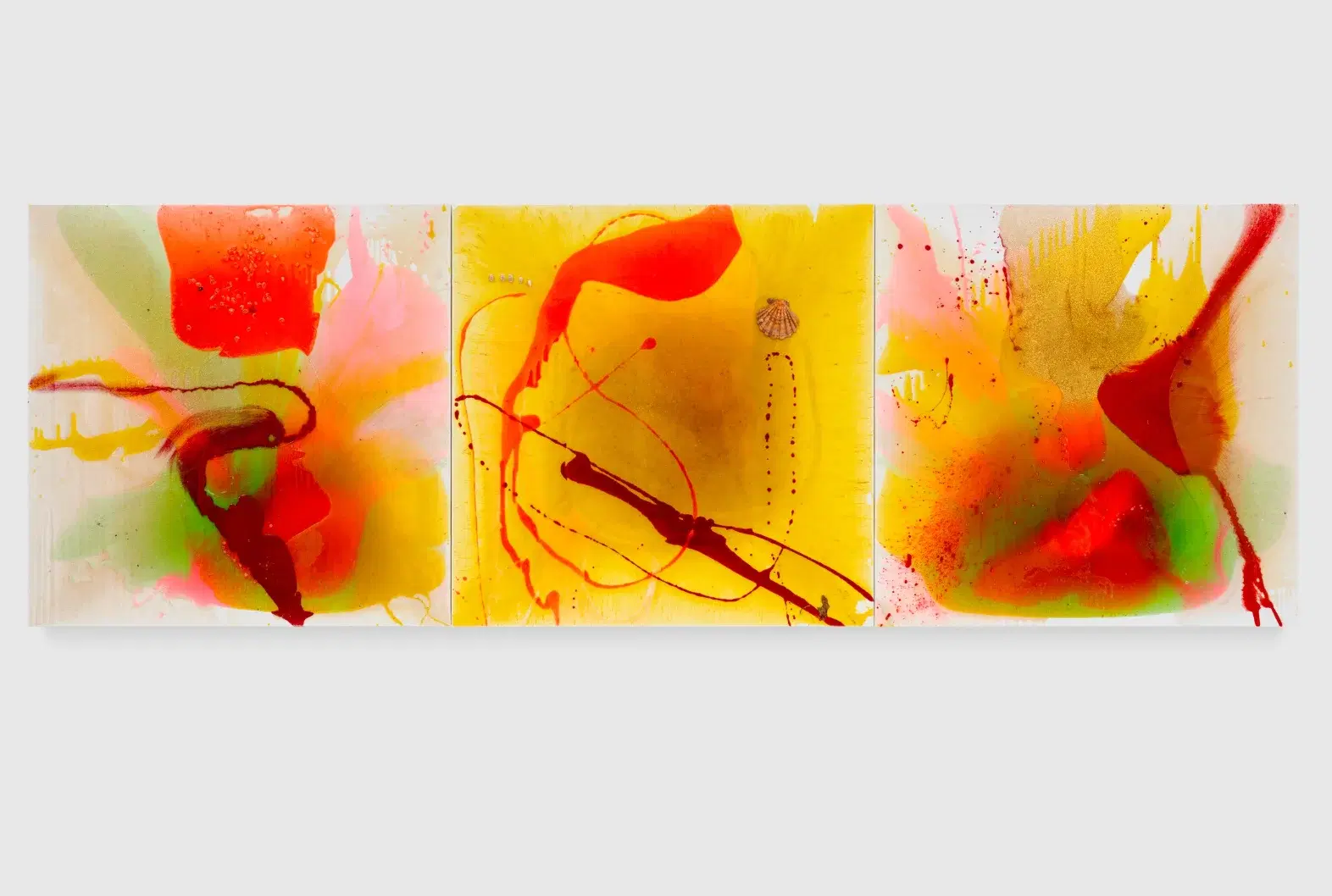
Drawing its title from a poem by George Seferis, Helen Marden’s exhibition is an exuberant meditation on the vitality of the natural world. Marden uses resin, powdered pigments, and shells to build surfaces that feel both liquid and solid, capturing the fleeting sensations of light and landscape. This presentation marks a pivotal moment for the artist, featuring her first foray into large-scale triptychs alongside intimate watercolors that hum with life.
You're watching translucent pours of acrylic and resin dance across the white expanse of massive linen panels. In works like Spring, shells and glass fragments are suspended within glossy layers, catching the overhead gallery light like artifacts found on a beach. The scale of the triptychs creates an immersive field of color, where the rhythm of the artist’s hand feels almost audible against the silence of the Chelsea space.
Worth the trip
- Unprecedented scale: See Marden’s first-ever triptychs, which expand her gestural language across massive multi-panel canvases.
- Tactile materiality: Observe how physical elements like shells and glass are embedded in resin, blurring the line between painting and sculpture.
- Literary dialogue: Experience the visual interpretation of Nobel laureate George Seferis’s poetry, translated into vivid hues and sweeping movements.
How to experience it
Start by standing back to take in the full sweep of the triptychs, then move closer to find the small, intricate details caught in the resin. The interplay of light and texture invites a slow, rhythmic walk through the gallery. Afterward, take a stroll toward the High Line to see how the New York sunlight interacts with the urban greenery, echoing the organic vitality you’ve just witnessed on canvas.
Helen Marden: Interlude of Joy
Hours & rating from Google