One of the darkest and most disturbing images ever painted — and impossible to forget once you’ve seen it.
Dates
The story behind it
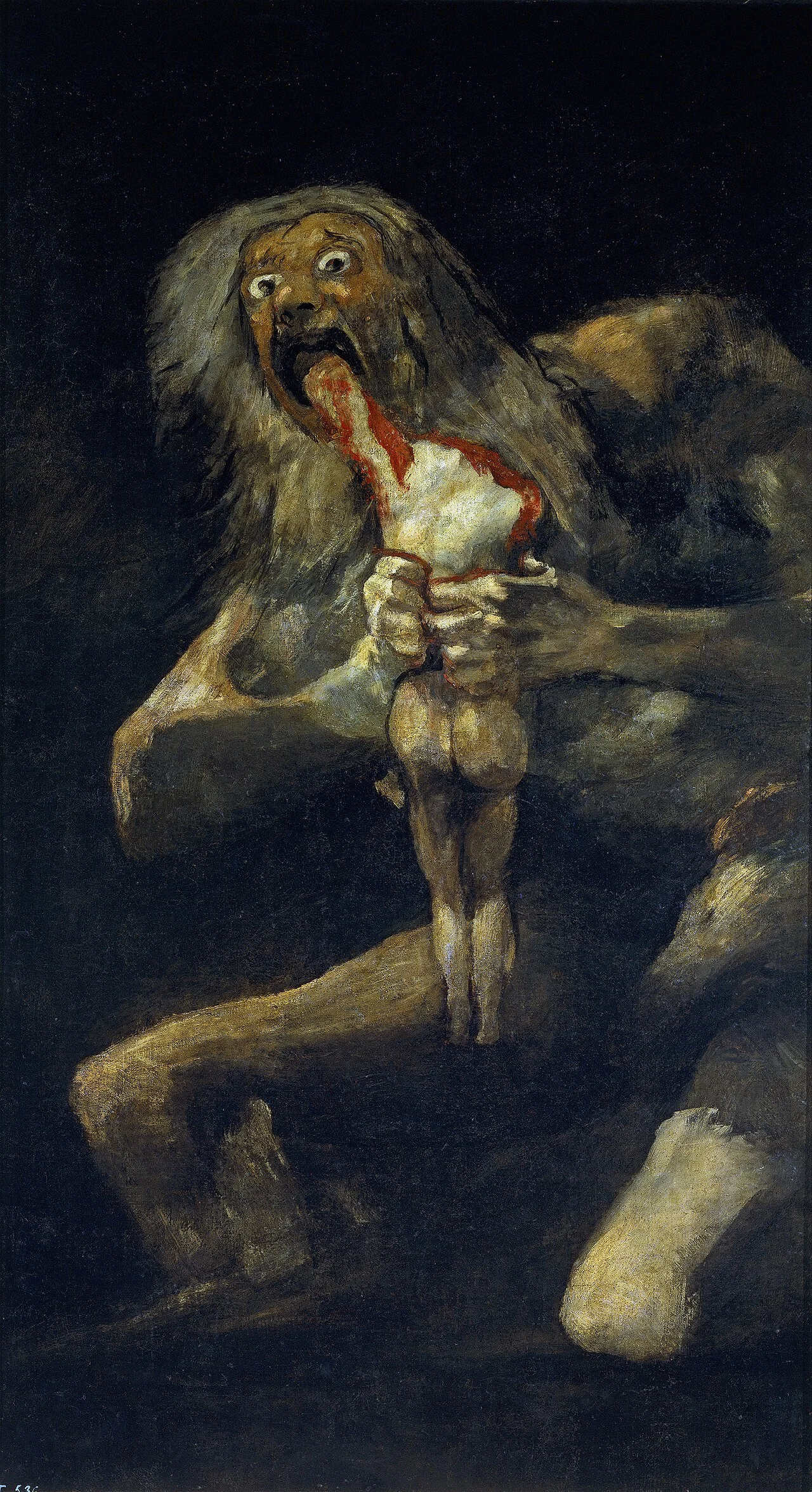
Francisco Goya's "Saturn Devouring His Son" is a powerful and disturbing work, one of the famed "
" that adorned the walls of his home, the Quinta del Sordo. This visceral scene depicts a large, monstrous figure, traditionally interpreted as the Titan Cronus (Saturn to the Romans), devouring one of his children. Driven by the fear of being overthrown, as prophesied, Saturn embodies the destructive nature of power and the anxieties of aging. The painting's raw emotionality and nightmarish imagery break from traditional depictions of the myth, leaving a lasting impression of horror and dread.
Historically, "Saturn Devouring His Son" reflects Goya's own tumultuous life and the political turmoil of early 19th-century Spain. Suffering from deafness and witnessing the horrors of war and political repression, Goya channeled his despair into these intensely personal and unsettling works. Unlike commissioned art, the Black Paintings were for his own contemplation, a raw expression of his inner demons. The fact that Goya never titled or explained them allows for a multitude of interpretations, ranging from personal struggles to broader allegories about time, power, and the fate of Spain.
Goya's artistic technique in this painting is striking. The dark palette, loose brushstrokes, and dramatic use of light and shadow create a sense of chaos and unease. The focus is on the raw emotion of the scene, rather than precise anatomical detail.
Transferred from a wall to canvas after Goya's death, the painting now resides in the Museo del Prado, a testament to its enduring impact. "Saturn Devouring His Son" matters because it represents a profound shift in art, moving away from idealized depictions of classical mythology towards a more psychological and expressive portrayal of human experience, forever questioning the dark side of humanity and power.
Look closer
Goya never intended the painting for public display. It was one of the famous Black Paintings he painted directly onto the walls of his house, known as the Quinta del Sordo (“House of the Deaf Man”), during the final years of his life. Many historians see the work as a reflection of war, aging, paranoia, and humanity’s capacity for destruction.
Worth the journey?
Yes — absolutely worth the trip. Few artworks feel as emotionally intense in person. The scale, darkness, and expression of Saturn’s eyes create an almost physical discomfort. The painting still feels shockingly modern — closer to psychological cinema or horror imagery than traditional classical art.
See it like an Artlover
Spend a moment observing the painting from a distance before moving closer. The image first appears chaotic, but slowly the details emerge from the darkness. Focus on Saturn’s eyes and hands — that’s where the terror truly lives.
Artlovers Tip:
Visit the Black Paintings room without rushing. The emotional impact comes from seeing the works together, not individually. Saturn Devouring His Son becomes even more haunting when understood as part of Goya’s final vision of humanity, fear, and madness.
Saturn Devouring His Son
Hours & rating from Google