A painting that transformed war from heroic spectacle into raw human tragedy.
Dates
The story behind it
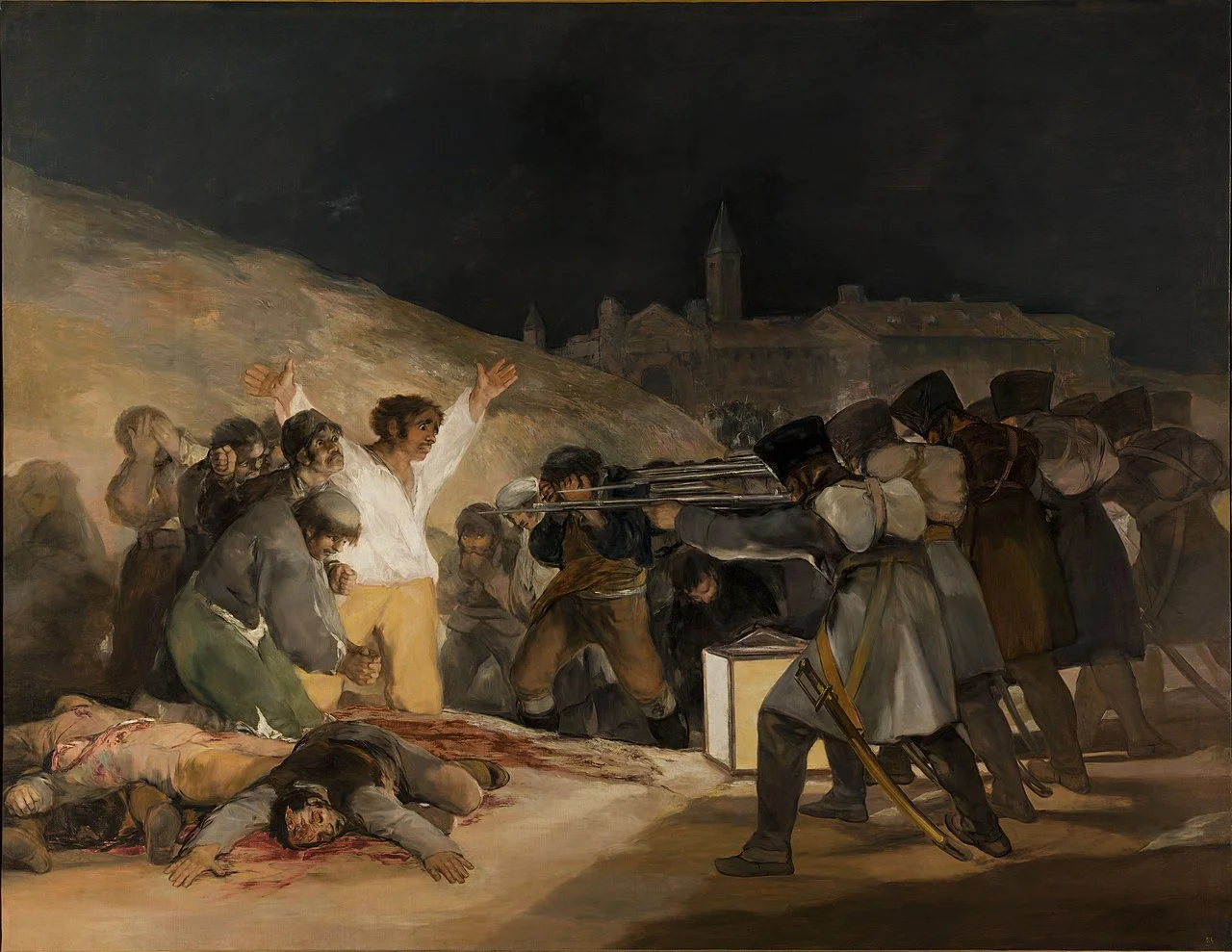
Francisco Goya's "The Third of May 1808" is a powerful and disturbing depiction of the French army's execution of Spanish civilians in the wake of the Dos de Mayo Uprising in Madrid. Painted in 1814, the artwork captures the raw horror and brutality of war, presenting a stark contrast between the faceless, mechanical efficiency of the firing squad and the chaotic, emotional terror of their victims. The painting doesn't glorify war; instead, it serves as a visceral condemnation of violence and oppression. This unflinching portrayal of the consequences of conflict marks a significant departure from traditional heroic depictions of battle, contributing to its status as one of the first paintings of the modern era.
Historically, "The Third of May 1808" commemorates the Spanish resistance against Napoleon's occupation. It stands as a testament to the courage and suffering of the Spanish people. Goya's artistic techniques further enhance the painting's emotional impact. The dramatic use of light and shadow, particularly the lantern illuminating the central figure about to be shot, creates a sense of theatricality and highlights the vulnerability of the victims.
Look closer
Goya completely broke with the tradition of glorifying war. There are no heroic victories here — only terror, violence, and human vulnerability. The central figure’s pose recalls the crucifixion of Christ, turning an anonymous civilian into a universal symbol of sacrifice and resistance.
"The Third of May 1808" matters because it transcends its specific historical context to become a universal symbol of the human cost of conflict.
Worth the journey?
Yes — absolutely worth the trip. This painting still feels devastatingly modern because it speaks directly to the horror of war and political violence. Its emotional realism influenced generations of artists, from Picasso’s Guernica to modern photojournalism.
It is a reminder of the importance of remembering and learning from the past to prevent similar atrocities from occurring in the future. Its emotional force secures its status as a ground-breaking, archetypal image of the horrors of war. Standing in front of it at the Prado is an unforgettable experience.
See it like an Artlover
Begin by looking at the contrast between both sides of the composition: the faceless soldiers versus the emotional individuality of the victims. Then focus on the man in white at the center and let your eyes move through the expressions of fear around him. The longer you observe, the more cinematic and human the scene becomes.
Artlovers Tip:
Try visiting this room after seeing Goya’s Black Paintings. Together, they reveal how deeply Goya understood violence, fear, and human darkness. Also pay attention to the lantern — it’s the emotional spotlight of the painting, illuminating not heroism, but humanity itself.
The Third of May 1808
Hours & rating from Google