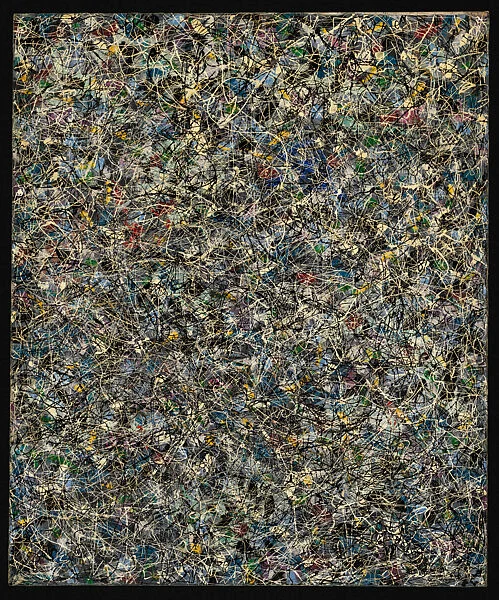
Dense grids of personal hieroglyphs and rhythmic splatters. Her work pulses with a controlled, inner vibration. Look for the physical residue of a painter who refused to stay still.
Key Movements
Abstract ExpressionismA quick note
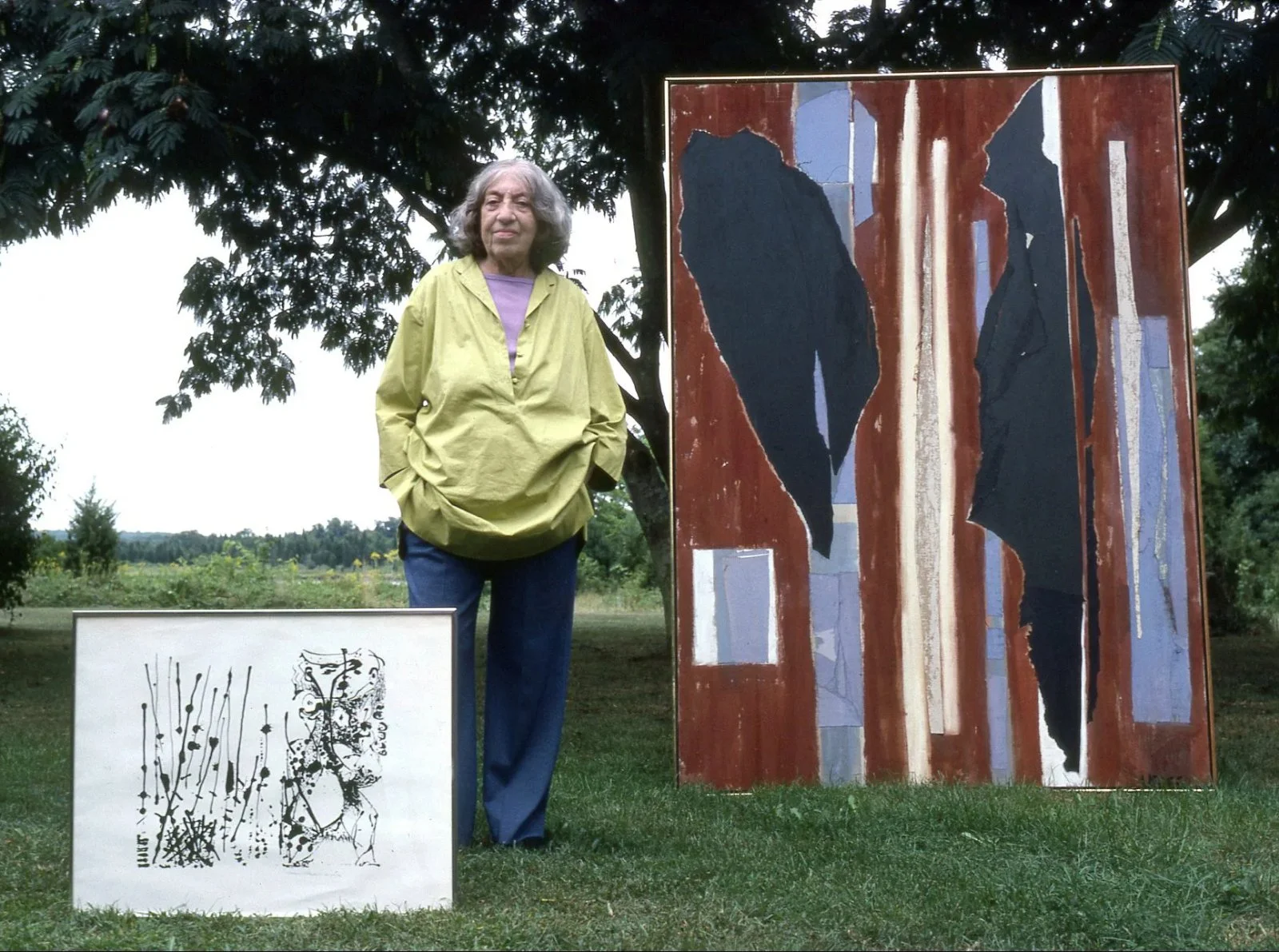
Krasner was the Brooklyn-born daughter of immigrants who clawed her way into the male-dominated New York School. While the world focused on her husband, Jackson Pollock, she was quietly reinventing herself in their shared barn in The Springs. She transitioned from the rigid geometry of cubism to a raw, organic language fueled by grief and insomnia. You're watching the artist dismantle her own history, literally tearing up failed canvases to birth new, layered collages.
Her survival depended on this cyclical destruction. After Pollock's death, her palette shifted from earth-bound greens to the monochromatic ghosts of her night-painted Umber series. She never settled for a signature style, choosing instead to let the rhythm of her life dictate the movement of her brush across the floor.
Did you know?
Driven by a relentless self-critique, Krasner often destroyed entire years of work, yet during periods of deep insomnia, she produced her most haunting Umber series. Working under artificial light in the dead of night, she channeled her grief and loss into mural-sized compositions that lacked a central focus, forcing the viewer to engage with the total, restless energy of the canvas.
Why are they important?
Structural Integrity: She fused the lessons of European modernism and cubist space with the raw, gestural energy of American abstraction.The Collage Innovation: Her practice of recycling rejected drawings and paintings into new, textured compositions recomputed the traditional creative process.Cyclical Resilience: She proved that an artist could evolve through personal tragedy, shifting her visual identity to match her emotional climate rather than market demands.
Lee Krasner
- Born
- Died
- Nationality
- American
Artlovers Tip
Stand close to the Little Images to see the tension in her wrist; these are not just patterns but a private language written in paint. When facing her later, larger works, do not look for a center. Let your eyes follow the inner rhythm Piet Mondrian once praised, and feel how the physical scale of the work pushes against the boundaries of the room.
On view now
Where to see them now
Plan your visit — these exhibitions are on view now.