Wikimedia Commons
Edvard Munch painted the moment when emotion becomes landscape — anxiety, desire, grief and loneliness turning into colour, line and sky.
Key Movements
Expressionism, Modernism, SymbolismA quick note
Edvard Munch was a prolific Norwegian painter and printmaker whose work is characterized by its intense emotional focus and psychological depth. His childhood was marked by tragedy, including the deaths of his mother and sister, which significantly influenced the somber and anxious themes prevalent in his art.
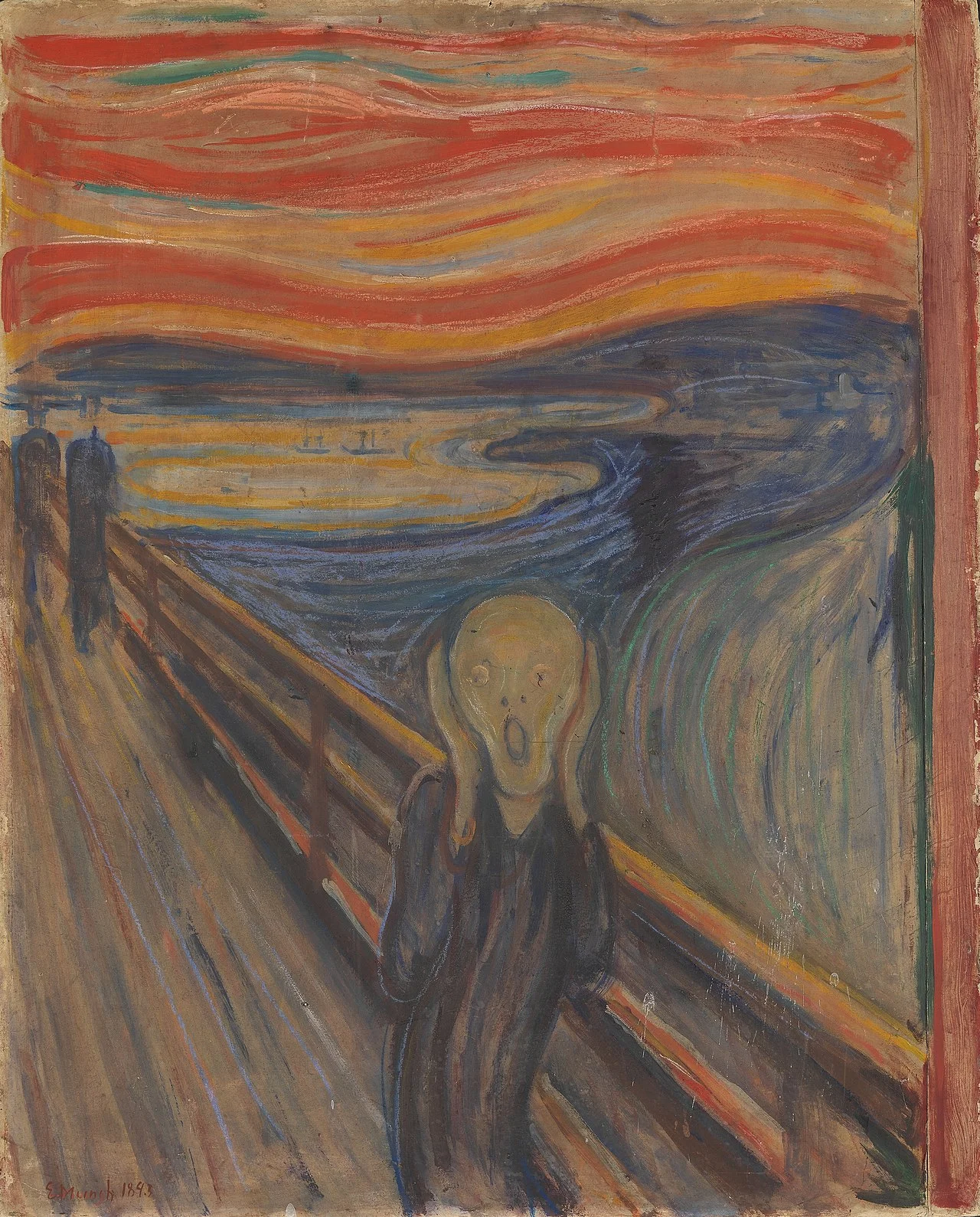
Munch's most famous work, 'The Scream', is part of his 'Frieze of Life' series, which explores universal themes of human existence such as love, anxiety, and death. He played a crucial role in the development of Expressionism, utilizing bold colors and distorted forms to convey inner emotional states. Throughout his career, he experimented with various mediums, including woodcuts and lithographs, leaving a lasting legacy on the course of modern art.
Munch is often seen as a bridge between Symbolism and Expressionism: he did not simply paint what the eye sees, but what the mind and body feel.
Mediums:
Painting, printmaking, drawing, lithography, woodcut, photography
Did you know?
The Scream is not only a face screaming — it is nature screaming through a human body.
Munch gave the work the German title Der Schrei der Natur, meaning The Scream of Nature. The image came from an intense experience at sunset, when he felt what he later described as an “infinite scream” passing through nature.
Another fascinating detail: the National Museum’s version contains a small pencil inscription, “could only have been painted by a madman,” now widely connected to debates around Munch’s mental state and public criticism of his work.
Why are they important?
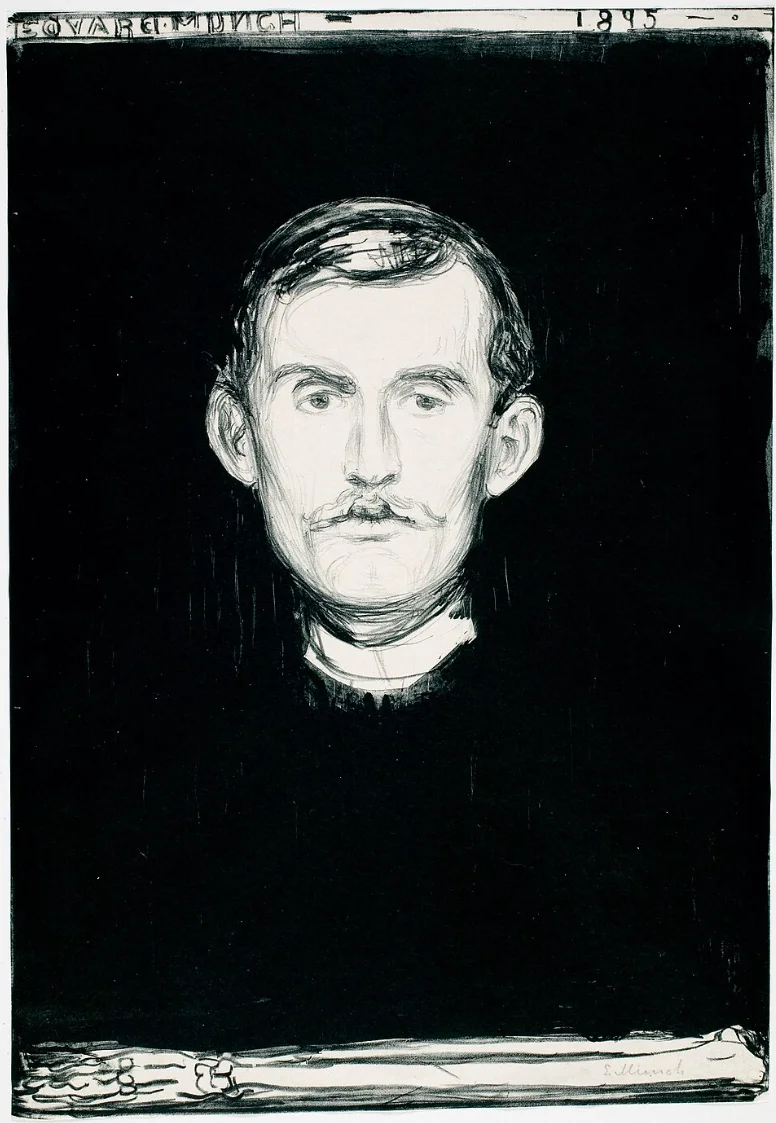
Anxiety · loneliness · love · death · jealousy · illness · desire · existential fear · the body · nature as emotionMunch’s world is not calm. It vibrates. People stand close but feel isolated. Skies burn. Rooms feel haunted. The sea becomes a nervous system.Most Famous ArtworksThe Scream — National Museum and MUNCH, OsloMadonna — MUNCH, OsloThe Sick Child — National Museum / MUNCH, OsloVampire — MUNCH, OsloThe Dance of Life — National Museum, OsloThe Girls on the Bridge — National Museum / MUNCH collectionsSelf-Portrait with Cigarette — National Museum, OsloThe Storm — MoMA, New YorkThe National Museum in Oslo highlights its Munch collection as one of the world’s most important, including The Scream, Madonna, The Sick Child, Melancholy and Self-Portrait with Cigarette.
Edvard Munch
- Born
- Died
- Nationality
- Norwegian
Artlovers Tip
On view now
Where to see them now
Plan your visit — these exhibitions are on view now.