A place where literature, photography, film, art, and cultural memory become visible.
This is not a conventional art museum. It is a place for people who love the hidden life of culture: drafts, letters, manuscripts, rare books, photographs, archives, costumes, film materials, and the physical traces of creative thinking.
You may experience:
- Rare books and manuscripts
- Photography and early image-making
- Film and performing arts archives
- Temporary exhibitions on literature, art, history, and culture
- The Gutenberg Bible and Niépce Heliograph on view
- Public tours, lectures, film screenings, and educational programs
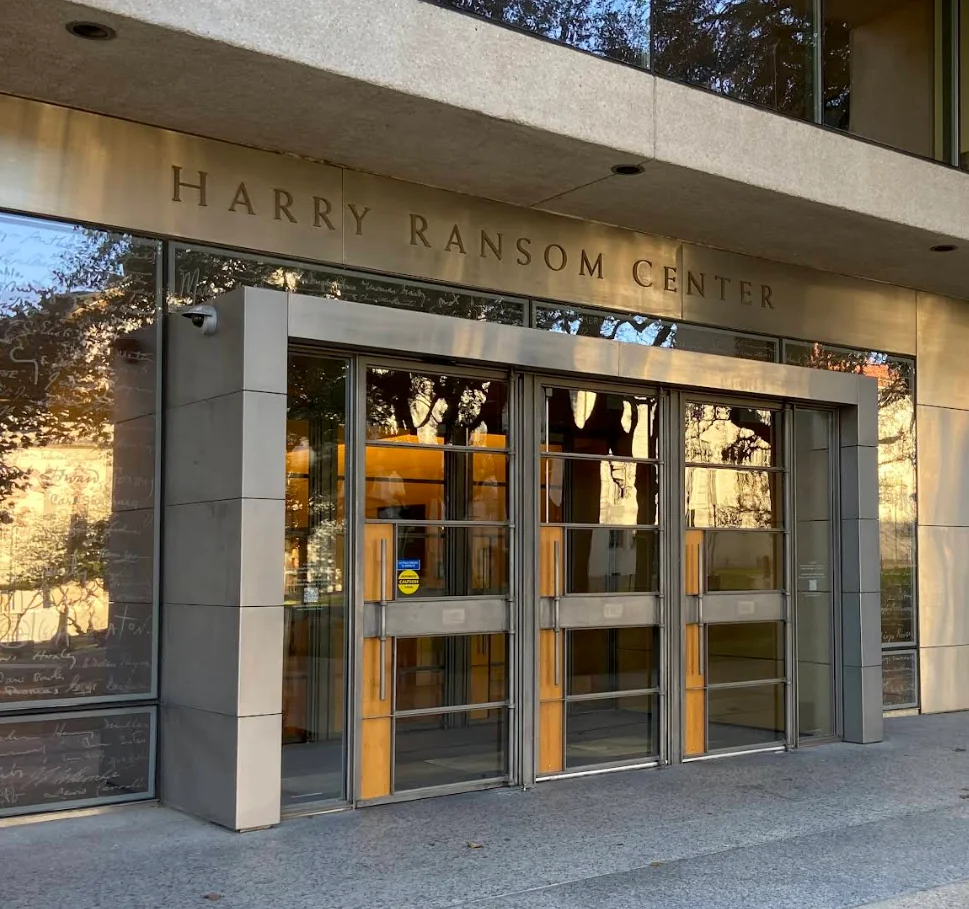
The Center offers free admission to its exhibitions and is located at 300 W 21st Street, Austin, Texas. Current exhibitions include Lives and Literacy in Ancient Egypt through August 2, 2026, alongside permanent displays such as The Gutenberg Bible and The Niépce Heliograph.

About the venue
About
Located at The University of Texas at Austin, the Harry Ransom Center is an internationally renowned humanities research center with collections spanning literature, photography, film, art, and the performing arts. Its mission is to preserve and share materials that reveal how writers, artists, filmmakers, and performers actually created their work.
The Center is especially famous for two permanent highlights: a complete Gutenberg Bible, one of only 20 complete surviving copies, and the Niépce Heliograph, often described as the earliest surviving photograph made with a camera. Both are on view, making the visit feel like a direct encounter with the history of books and images.
Worth the trip
Yes — especially if you are interested in the backstage of art and ideas.
What makes Harry Ransom Center special is that it lets you experience creativity before it becomes polished, published, framed, or canonized. It shows culture in process: messy, material, human, and alive.
For Artlovers, it is worth the trip because it expands the meaning of an art destination. This is not only a place to see masterpieces — it is a place to understand how books, images, films, and performances enter the world.
© Harry Ransom Center