At a glance
Love, power, loneliness and the vulnerable body come together in a portrait of what it feels like to be alive now.
Key Movements
Medium
Why go
You'll see
Painting, sculpture, collage and mixed-media works by 18 artists
Pace of visit
The exhibition occupies three floors and is organised around broad ideas rather than a strict chronology. It is not overwhelming in quantity, but the relationships between works reward a slow visit.
Don't miss
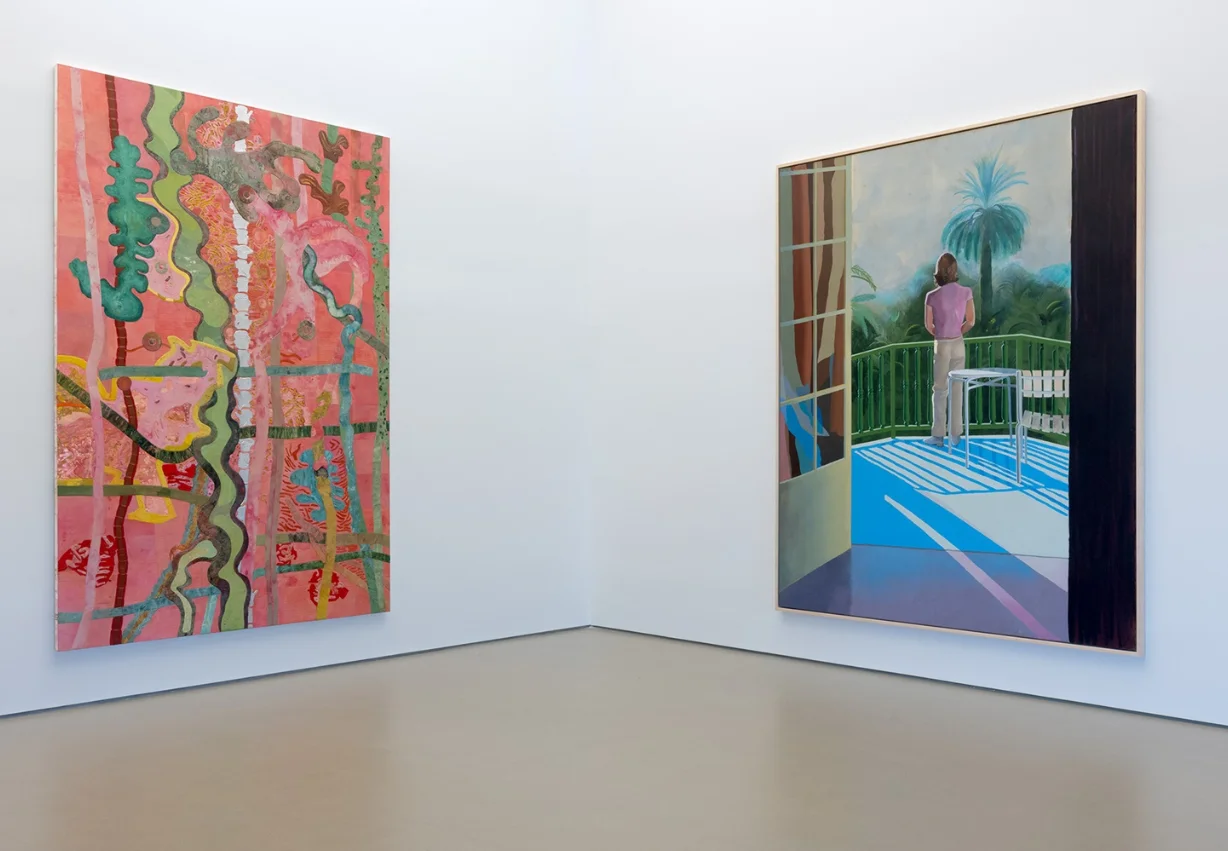
David Hockney’s Sur la Terrasse (On the Terrace), 1971. A solitary figure—generally identified as Peter Schlesinger—looks towards a distant landscape from a hotel balcony. It appears serene, but its emotional power lies in everything left unsaid: intimacy, distance and the quiet observation of someone once loved.
Also look for:
- Louise Bourgeois, Toi et Moi, 2002
- Lorna Simpson, Detroit (Ode to G.), 2016
- Katharina Fritsch, Two Men, 2019
- Charles Ray, Shoe Tie, 2012
- Mohammed Sami, Every Day Is Ashura, 2020

Artlovers Tip
Follow the exhibition as an emotional journey rather than a sequence of individual masterpieces: begin with the desire to connect, move into the pressures of society and power, and end with the vulnerable experience of simply existing.
Inside the exhibition
Meet the artist
Description
The opening section considers love not as a fixed subject but as a way of looking. Relationships are expressed through glances, physical distance, memory and absence.
Hockney’s Sur la Terrasse offers a quiet image of romantic intimacy, while Ellen Gallagher’s Fast-Fish and Loose-Fish introduces a more fluid, fractured visual language. Works by David Hammons and Victor Man move between tenderness, ambiguity and psychological unease.
The body emerges as a private universe: emotionally exposed, never entirely accessible to another person.
Politics:
The second section moves the body into public life. Here, identity is shaped by political history, social structures and the gaze of others.
Louise Bourgeois’s Toi et Moi uses chairs and a mirror to implicate the viewer in questions of self-perception and relationships. Henry Taylor’s imagined portrait of Ethiopian emperor Haile Selassie considers leadership, resistance and Black historical memory.
Works by Lorna Simpson and Mohammed Sami evoke events that continue to inhabit the present through fragments, shadows and incomplete recollections. Politics is presented not only as ideology, but as something carried within individual bodies and memories.
Being:
The final section explores existence itself: being alone, inhabiting a body and trying to remain connected in an increasingly accelerated world.
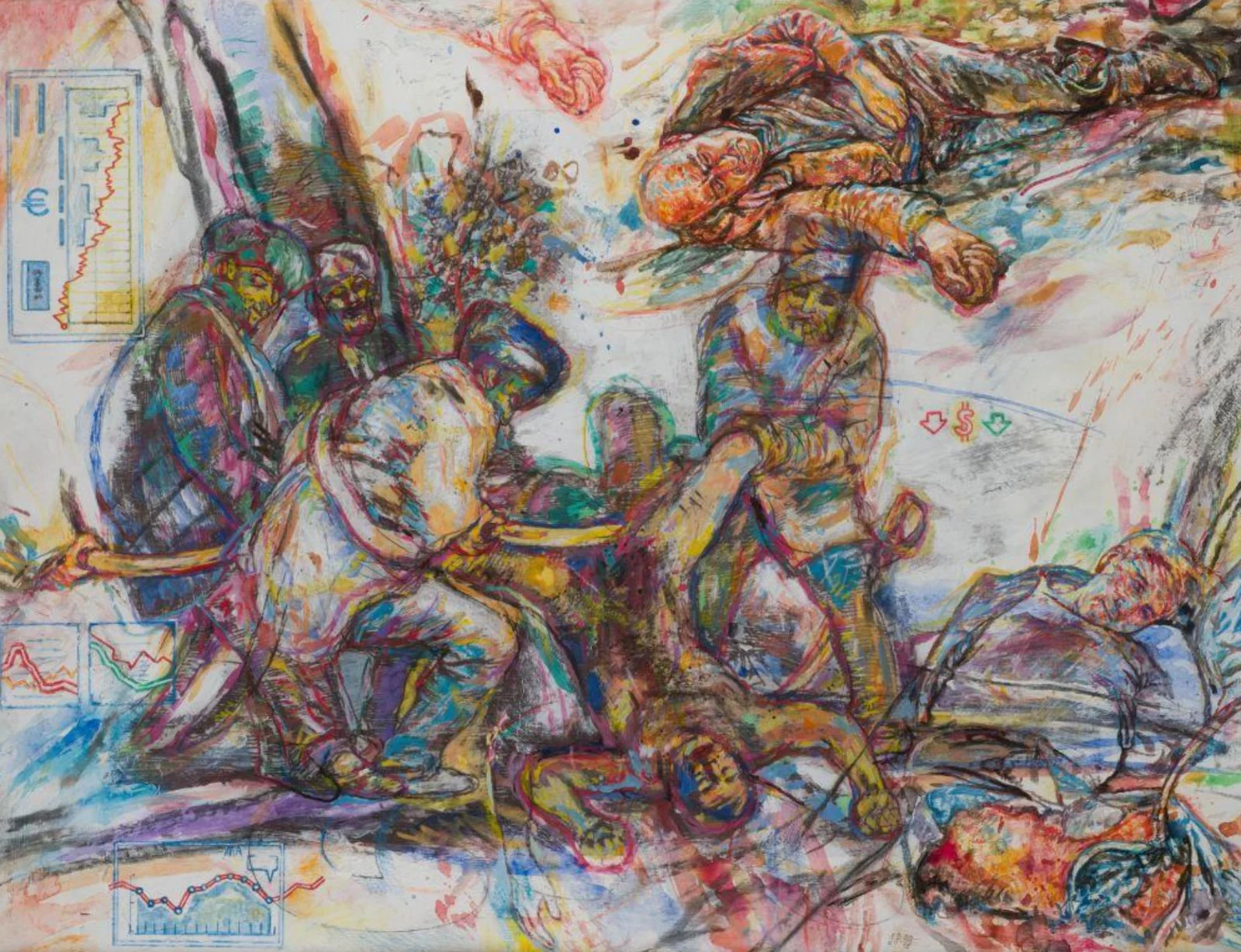
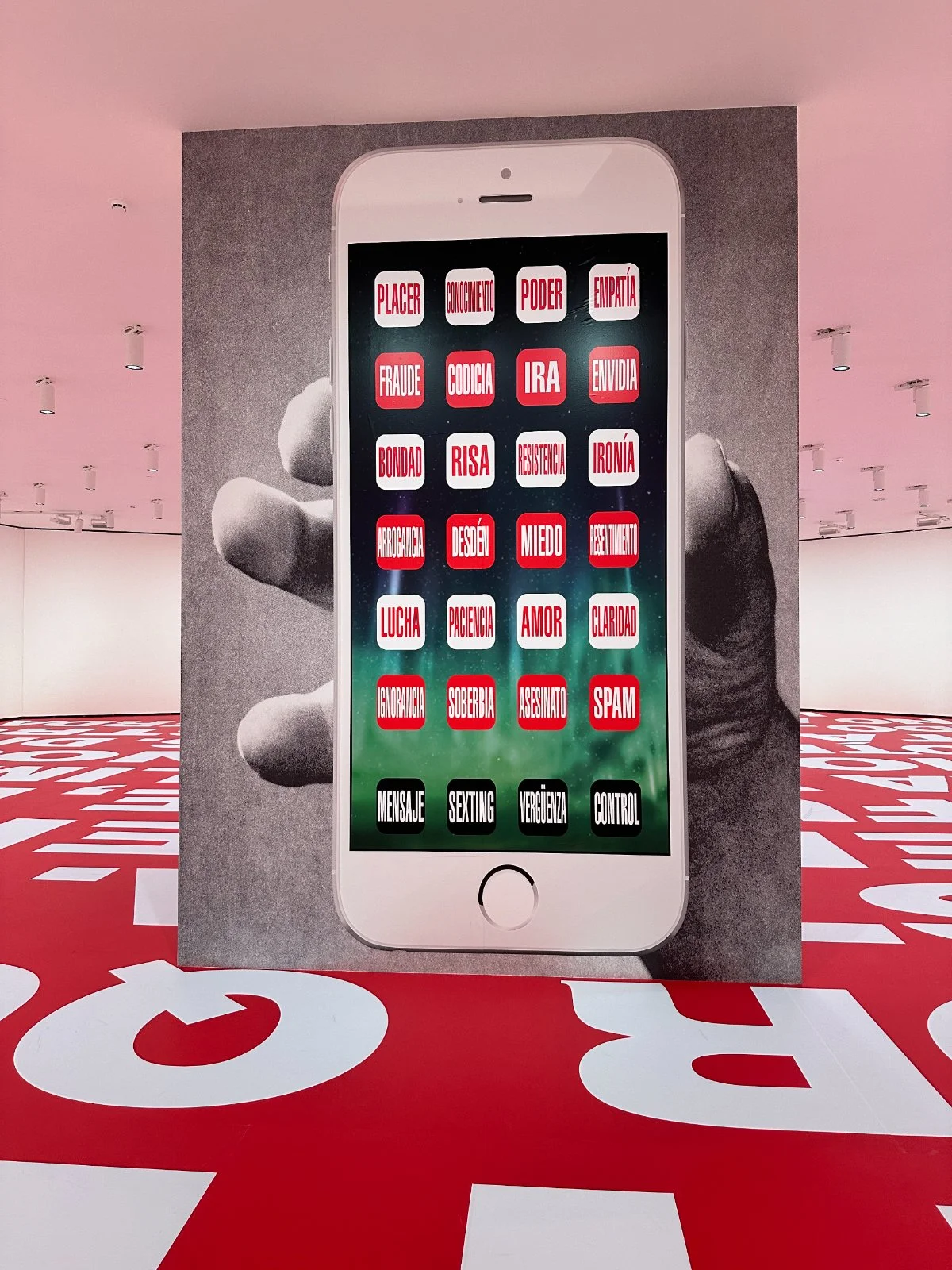
Lisa Brice and Jenny Saville reclaim the female body as a source of presence and energy rather than passive display. Florian Krewer’s figures hover between closeness and estrangement, while Katharina Fritsch’s two blue men stand together yet remain absorbed in their phones.
Charles Ray’s Shoe Tie presents a naked figure crouching to tie shoes that are not there. Cast in stainless steel yet physically exposed, the sculpture turns an ordinary action into an image of vulnerability, absence and human persistence.
Experience as an Artlover
Installation view of The Way We Live Now at the George Economou Collection. Left, Ellen Gallagher (b. 1965), Fast-Fish and Loose-Fish, 2023. Right, David Hockney (1937-2026), Sur la Terrasse, 1971. Photo: Natalia Tsoukala. Artworks: © Ellen Gallagher. Courtesy of the artist and Hauser & Wirth. © David Hockney
The Way We Live Now
Artlovers relevance
Plan your visit
The George Economou Collection
Athens, Greece