Before Caravaggio transformed European painting, the Ribalta family was already turning sacred stories into intensely human, dramatic encounters.

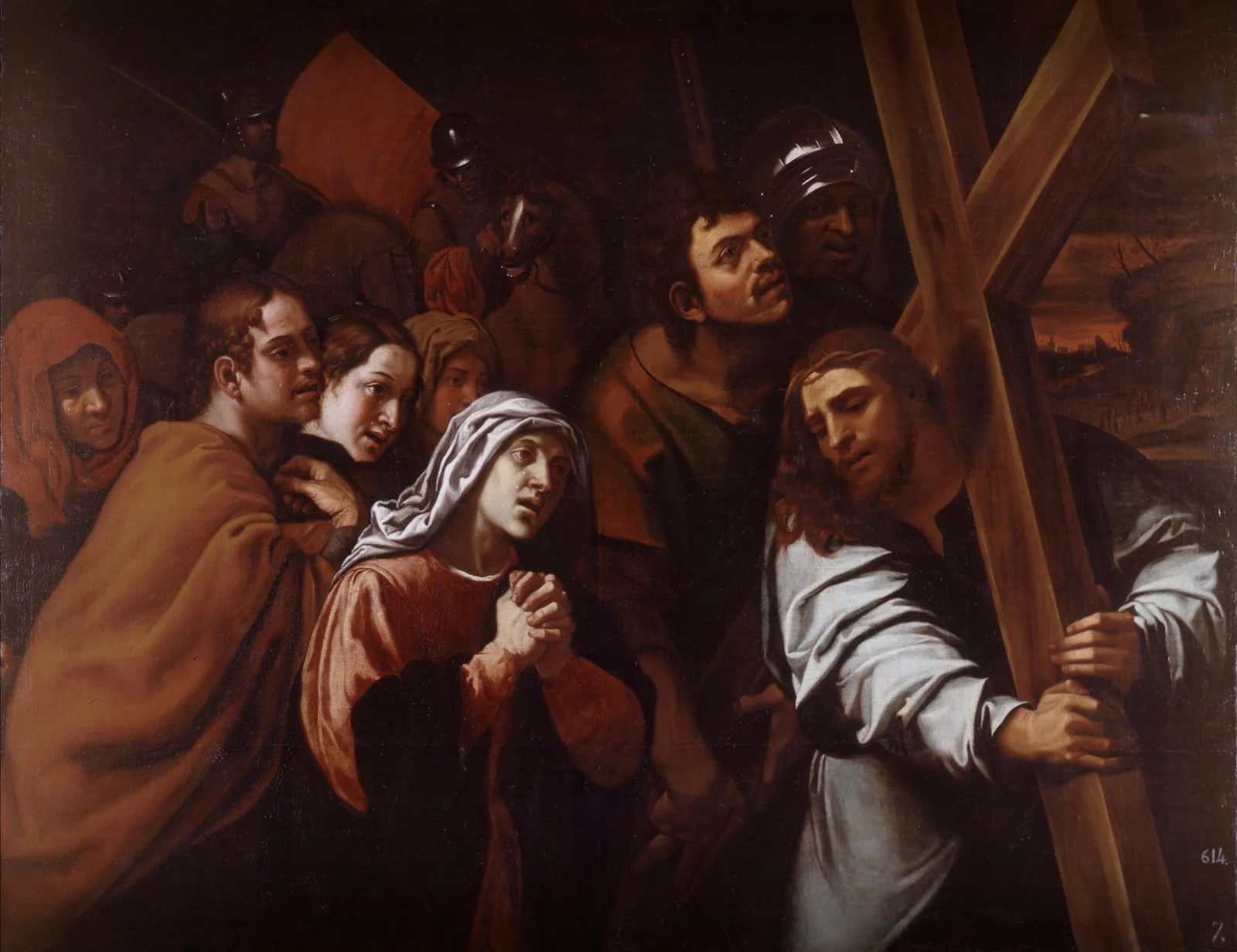
Worth seeing for anyone interested in the origins of Spanish Baroque. Look at the faces, hands and textures before looking at the religious story. Ribalta's great achievement is making faith tangible: skin, fabric, wrinkles, gestures and expressions turn a sacred scene into something almost physically present.
Inside the exhibition
The Ribaltas and Baroque Naturalism is presented at the Museo Carmen Thyssen Málaga from 22 May to 4 October 2026, in the museum's Sala Noble. It is curated by Pablo González Tornel, director of the Museo de Bellas Artes de Valencia, with the collaboration of that museum, from which all ten works in the exhibition come.
The exhibition focuses on Francisco Ribalta (1565–1628) and his son and pupil Juan Ribalta (1596/97–1628). Francisco developed his mature career in Valencia, while Juan's promising career was cut short when he died in 1628, the same year as his father. Their shared workshop provides an opportunity to understand how religious imagery was produced within the family and how their approaches contributed to Valencian Baroque painting.
The story begins with the religious culture of 17th-century Spain and the Catholic Counter-Reformation. Sacred images were expected not merely to teach, but also to delight and, above all, move the viewer. Naturalism became an exceptionally effective tool for this purpose: the closer a saint, biblical episode or Passion scene felt to lived reality, the stronger its emotional and devotional impact could be.
In Valencia, this transformation was encouraged during the archbishopric of Saint Juan de Ribera, whose influence contributed to the abandonment of the more artificial Mannerist aesthetic in favour of naturalism, particularly in representations of the Passion of Christ and saints.
Francisco Ribalta became one of the central figures of this development. His work is characterised by an extraordinary realistic description combined with intense emotion and pathos. Together with Juan, and in the wider Valencian context alongside artists such as Jerónimo Jacinto de Espinosa and José de Ribera, he helped establish the powerful naturalistic tradition that would continue throughout the Spanish Baroque.
The exhibition is therefore small in scale but significant in context: these ten paintings offer a concentrated introduction to a moment when Spanish Baroque painting discovered the persuasive power of reality.
The Ribaltas and Baroque Naturalism
Hours & rating from Google