Joana Vasconcelos turns the everyday into the monumental — transforming textiles, ceramics, domestic objects and popular traditions into exuberant sculptures that blur the line between craft and contemporary art.

Look for the transformation behind each spectacular object. The key question is not simply “What is this made of?” but “What was this before it became art — and what has changed?”
Inside the exhibition
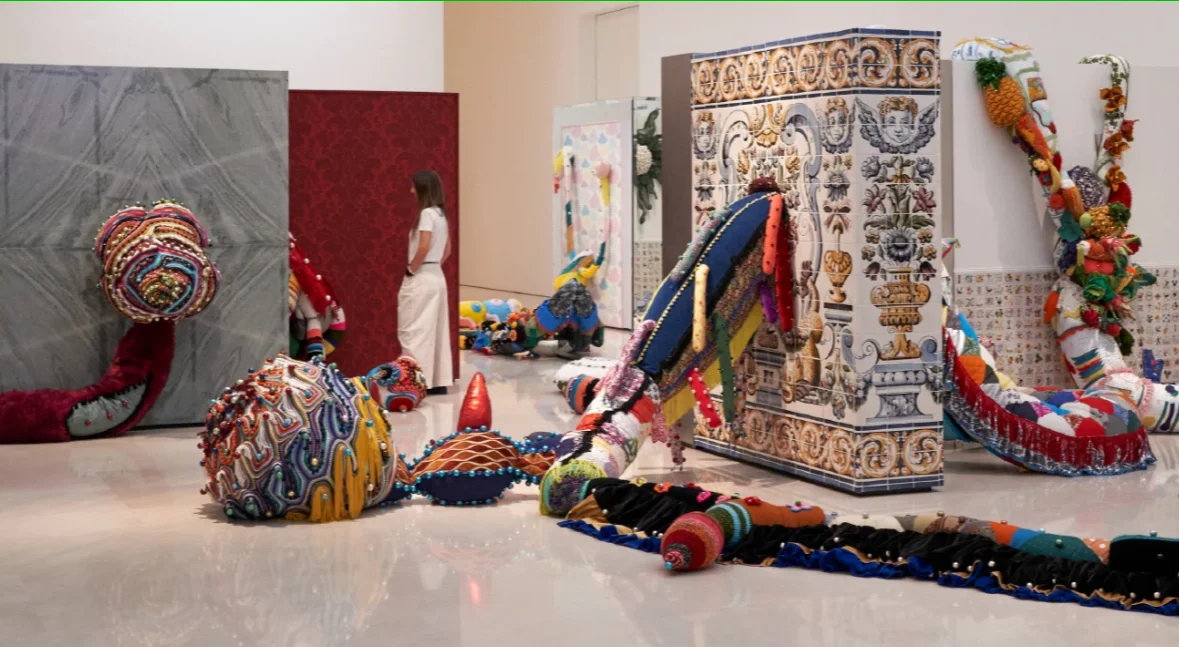
Joana Vasconcelos. Transfiguración is presented at the Museo Picasso Málaga from 29 May to 27 September 2026. Curated by Miguel López-Remiro, artistic director of the museum, it brings together works from the late 1990s to the present, offering a perspective on the evolution of one of Portugal’s most internationally recognised contemporary artists.
The title is the key to understanding the exhibition. Vasconcelos takes familiar things — textiles, ceramics, tiles, household objects and elements of popular culture — and changes their scale, function and context. Fabric becomes architecture; ornament becomes structure; the domestic becomes monumental; and an everyday object can become a critical or political device.
Her approach also challenges the traditional hierarchy between fine art and craft. Techniques associated with domestic and feminine traditions, such as crochet, embroidery and textile work, become the basis for monumental contemporary sculptures. In doing so, Vasconcelos gives visibility to forms of knowledge and craftsmanship that have often been marginalised in conventional art history.
There is also a strong connection between the exhibition and Portuguese cultural identity. Vasconcelos draws on popular symbols such as the Coração de Viana, as well as ceramics, azulejos and everyday materials, but she does not treat tradition nostalgically. Instead, she turns it into something playful, contemporary and sometimes subversive.
The exhibition is particularly interesting in the context of the Museo Picasso Málaga because Vasconcelos has a long-standing relationship with Picasso's work. The artist has spoken about encountering Guernica as a teenager and understanding through Picasso that art could be a physical and emotional experience. In Málaga, her work effectively enters into a dialogue with Picasso's city and museum.
Among the works on view are Flores do Meu Desejo (1996), Carmen, Betty Boop (2020), Spot Me and Bosque Encantado (2024). The latter incorporates movement sensors, allowing the visitor's presence to activate changes in the lighting and making the audience part of the work.
Worth travelling for?
This exhibition offers a broad look at Vasconcelos’s career through 13 sculptures and installations, from the late 1990s to recent works. Her central idea of transfiguration is particularly powerful here: ordinary materials keep their cultural memory while acquiring an entirely new meaning, scale and presence.
Joana Vasconcelos. Transfiguración
Hours & rating from Google