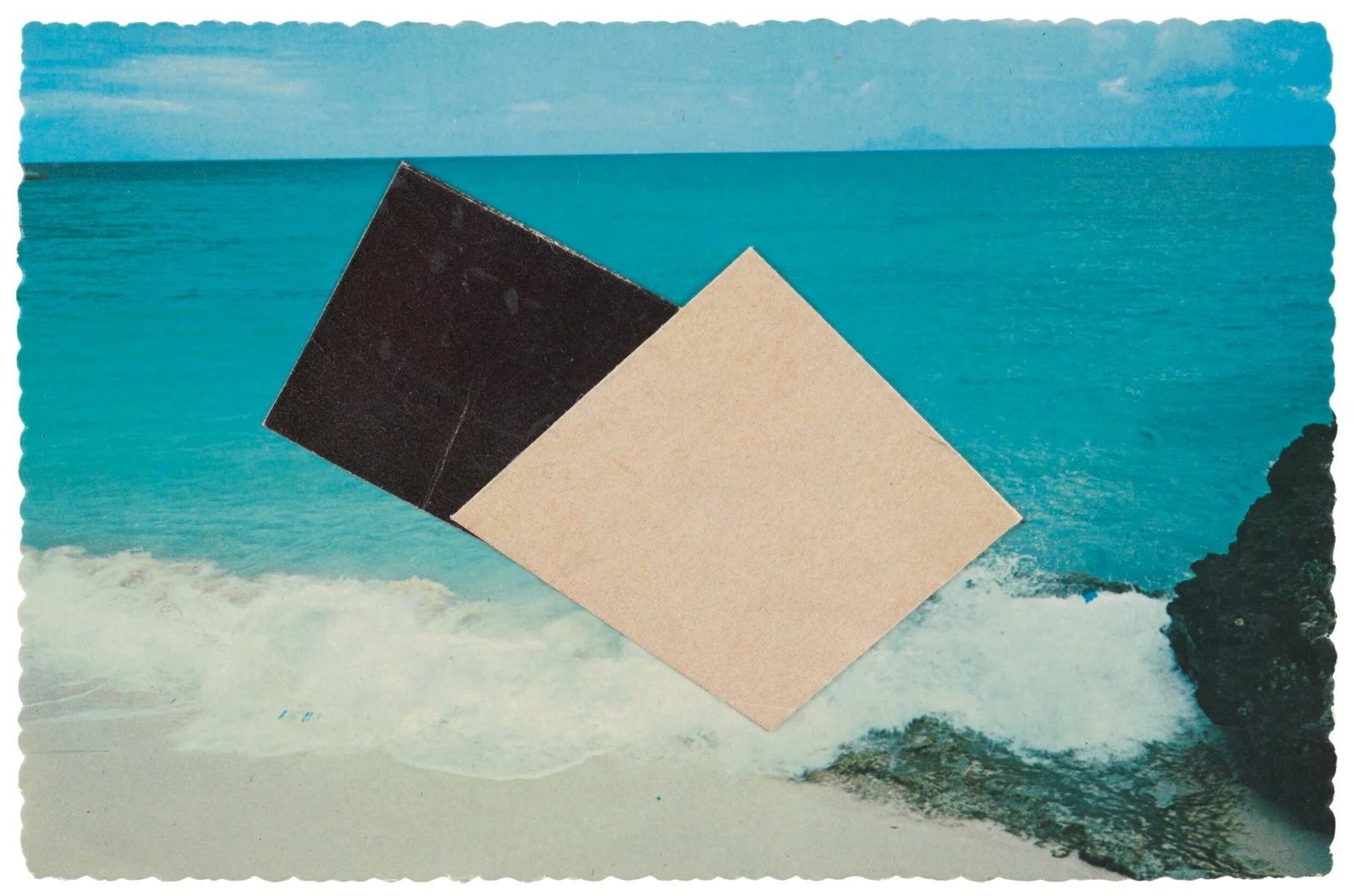
Ellsworth Kelly found abstraction not by leaving the real world behind, but by looking at it more closely — especially at the shifting light, colour and surfaces of water.

Don't ask “What does this represent?” Ask “What did Kelly actually see?” His abstraction often begins with something very concrete — a horizon, a reflection, a patch of colour — and then strips it down to its essential visual information.
Inside the exhibition
Ellsworth Kelly: At the Edge of Water is presented at the Fondation Maeght in Saint-Paul-de-Vence from 27 June to 15 November 2026, curated by Éric de Chassey. It is the first exhibition to examine specifically the role of water in Kelly's work and uses this theme to illuminate his working method.
Kelly (1923–2015) is one of the defining figures of American abstraction. Yet his work was never entirely detached from the visible world. He repeatedly observed forms, colours, shadows and surfaces in nature, reducing them until only their essential visual qualities remained.
Water was particularly important. Its constantly changing colour, light and surface offered Kelly a subject that could be observed directly but could never be completely fixed. Rather than painting a conventional seascape, he translated the experience of looking at water into abstract compositions.
The exhibition follows this process through drawings, collages, paintings and sculptures, allowing visitors to see how an observation of the natural world could evolve through different stages of experimentation. The small postcard collage Long Bay Beach (study for White and Dark Gray Panels I) from 1977 is one example of this process.
There is also a particularly strong reason to see Kelly at the Fondation Maeght. His relationship with the Maeght family goes back to his return to France in 1948. He exhibited at Galerie Maeght in Paris and regularly stayed with the Maeght family in Saint-Paul-de-Vence, developing a lifelong friendship with Adrien Maeght.
That personal connection makes this more than simply another Kelly retrospective. The Fondation's combination of art, architecture and Mediterranean landscape creates an especially appropriate setting for an artist whose work was so deeply connected to observation and nature.
The exhibition is also an opportunity to consider Kelly's deceptively simple artistic philosophy. As he put it: “In my paintings, I do not invent; my ideas come from a constant investigation of the appearance of things.”
Worth travelling for?
A must-see if you're visiting the Côte d’Azur for art.
The exhibition's great strength is its conceptual simplicity: take one recurring subject — water — and use it to understand how one of the great abstract artists actually looked at the world. And at the Fondation Maeght, surrounded by Mediterranean light, architecture and sculpture, the setting becomes part of the experience.
Worth the trip: ⭐⭐⭐⭐⭐
Artlovers mood: Serene · Luminous · Precise · Contemplative