She doesn’t walk — she leads a revolution
Dates
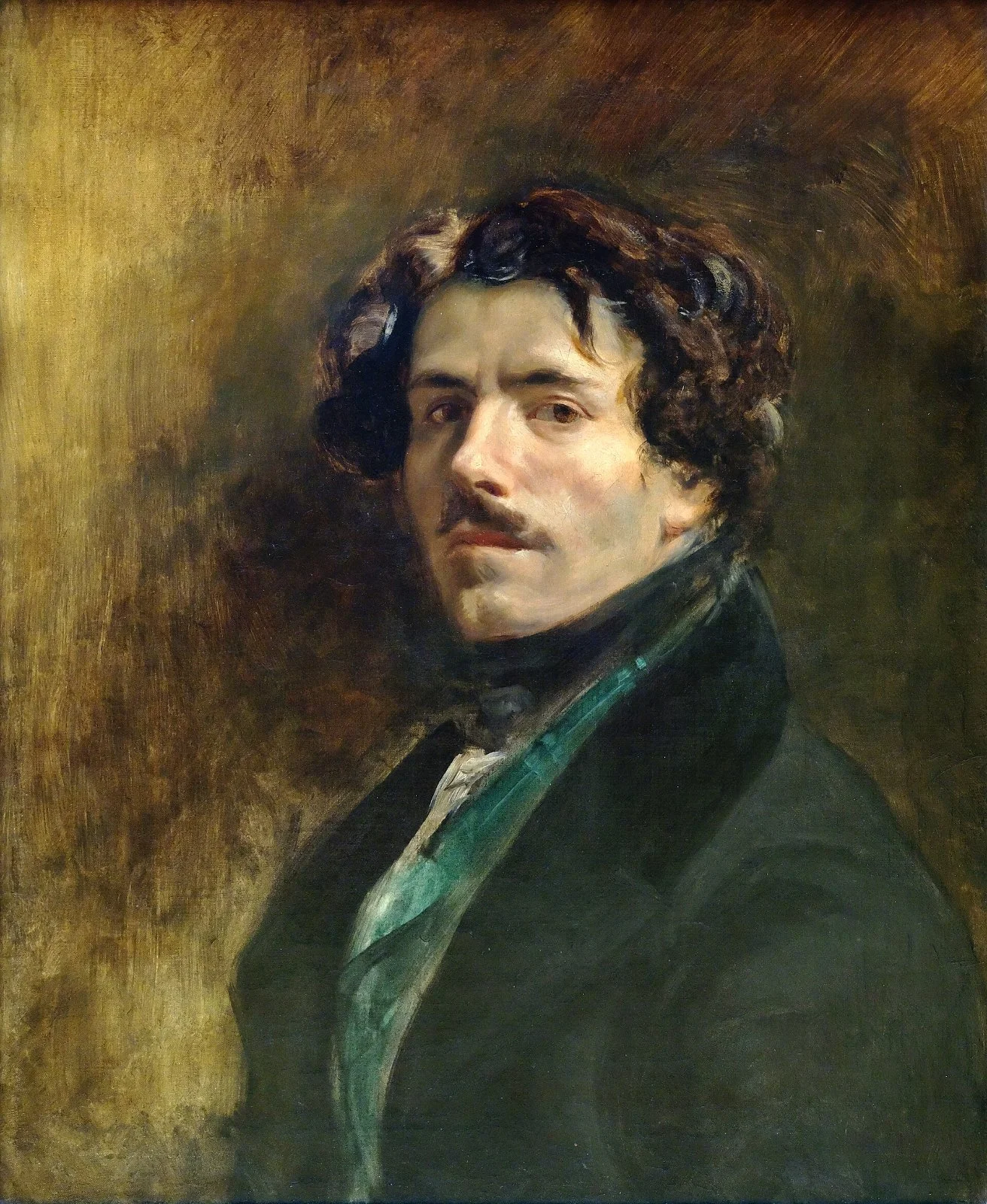
Meet the artist
More details
- Original title
- Le 28 juillet 1830. La Liberté guidant le peuple
- Movement
- Romanticism
- Medium
- Oil Painting
- Genre
- Historical Painting
- Dimensions
- 260 × 325 cm
The story behind it
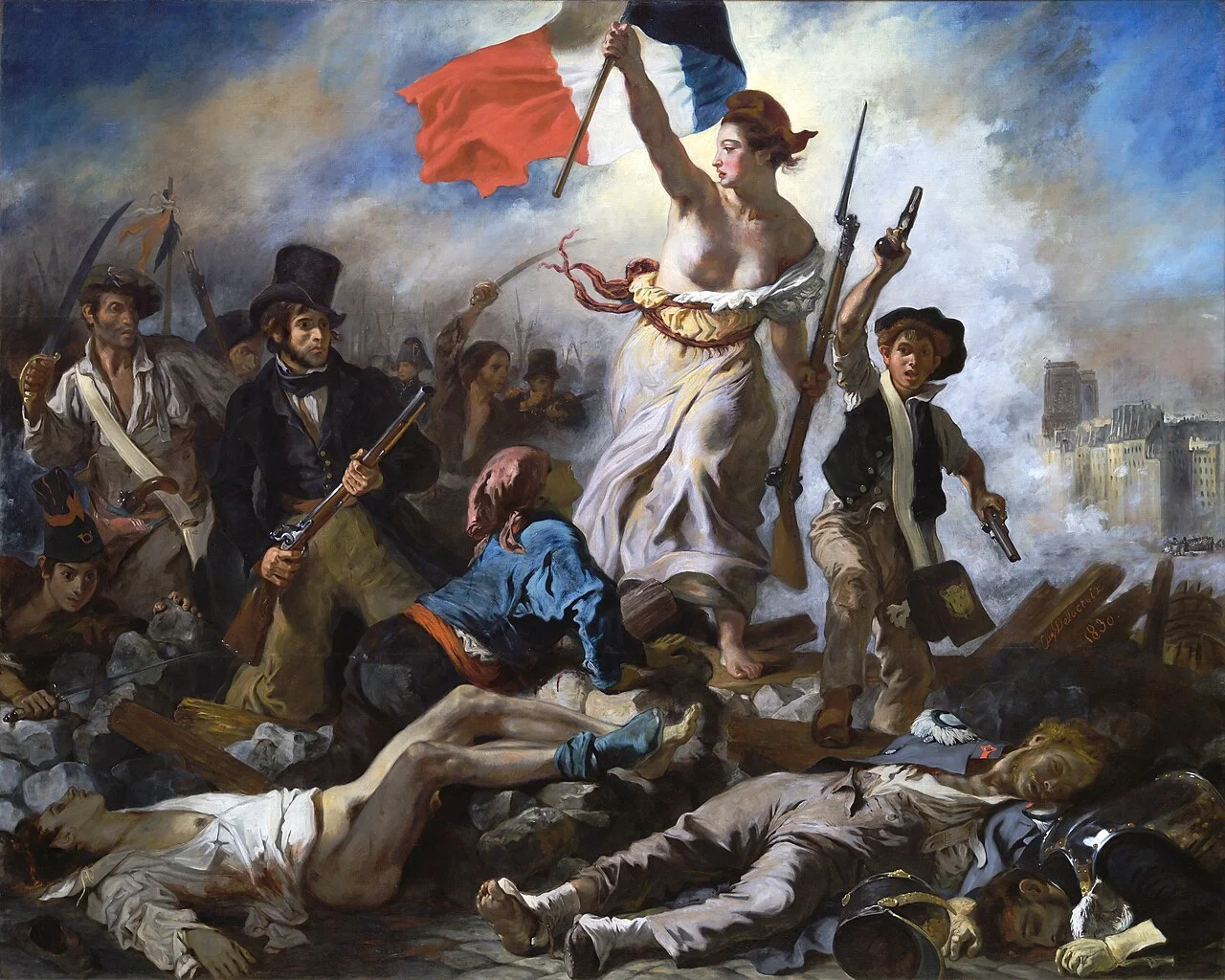
Eugène Delacroix's *Liberty Leading the People*, an iconic masterpiece housed in the Louvre, vividly captures the spirit of the July Revolution of 1830. This wasn't just another historical painting; it was a bold statement by Delacroix, a leading figure of the Romantic movement, rejecting the rigid, academic style of the time in favor of freely brushed color and emotional intensity. The painting depicts a bare-breasted woman, personifying Liberty, fearlessly leading a diverse group of revolutionaries – a mix of bourgeoisie, students, and working-class citizens – over a barricade and fallen bodies. She carries the tricolor flag of France, symbolizing the revolution's ideals, and brandishes a bayonetted musket, embodying both freedom and force. The scene pulsates with the energy of rebellion and the fervent desire for change.
Beyond its immediate depiction of the revolution, *Liberty Leading the People* holds significant historical and symbolic weight. It marked a shift away from the Enlightenment and towards the Romantic era, embracing emotion and individualism. The figure of Liberty, wearing a Phrygian cap, became synonymous with Marianne, the symbol of France and the French Republic. The painting's impact extended beyond the art world, possibly influencing Victor Hugo's *Les Misérables*, with the character of Gavroche echoing the pistol-wielding boy in Delacroix's work.
Look closer
Eugène Delacroix blends reality and symbolism:
- The scene is inspired by the July Revolution of 1830 in Paris
- Liberty (often associated with Marianne) is both real and mythological
- The mix of social classes sends a clear message: revolution belongs to everyone
And the boy with pistols? He later inspired Victor Hugo’s Gavroche in Les Misérables.
It’s propaganda, poetry, and painting — all at once.
Worth the journey?
Because seeing it at the Louvre Museum feels electric.
It’s large, dynamic, almost cinematic. You don’t just see a revolution — you feel pulled into it.
And beyond history, it still resonates: freedom, resistance, collective action.
If Artlovers is about traveling for powerful ideas, this is one of the clearest visual symbols ever created.
See it like an Artlover
Start from a distance - Let the full energy hit you — it’s about movement, not detail.
Lock onto Liberty - She’s your anchor. Everything radiates from her.
Follow the flag - Your eye moves upward — it’s intentional, almost like hope rising.
Then drop your gaze - Look at the bodies below. That contrast is the message.
Notice the people - Different classes, same fight — it’s a collective scene.
Move closer for expressions - Faces, gestures, tension — it becomes human.
Step back again - Reconnect emotion + composition.
Liberty Leading the People
Hours & rating from Google