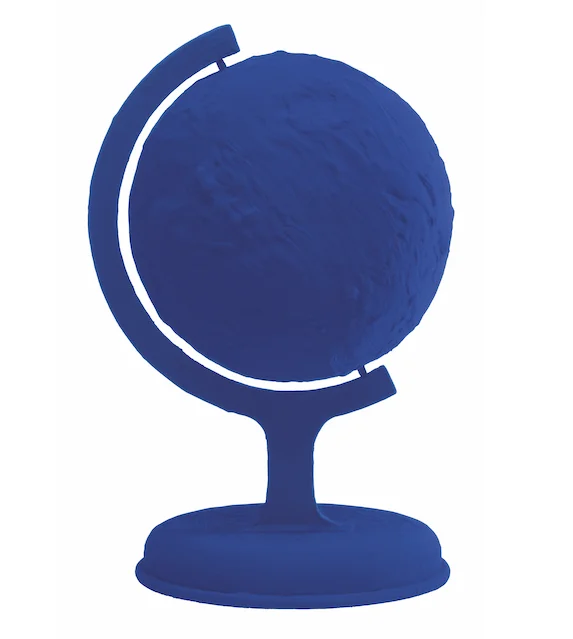
A saturated, velvet ultramarine that seems to hum against the retina. Naked bodies used as human brushes. A man suspended in mid-air, leaping toward the pavement of a quiet Parisian street.
Key Movements
Conceptual Art, MinimalismA quick note
Born to painter parents in Nice, Klein spent his youth not in a studio, but on the beach, where he famously signed the sky as his first artwork. He was a judo master, a Rosicrucian, and a seeker of the immaterial who viewed the atmosphere as his true canvas. In Paris, he turned the art world upside down by exhibiting empty rooms and canvases of a single, patented blue.
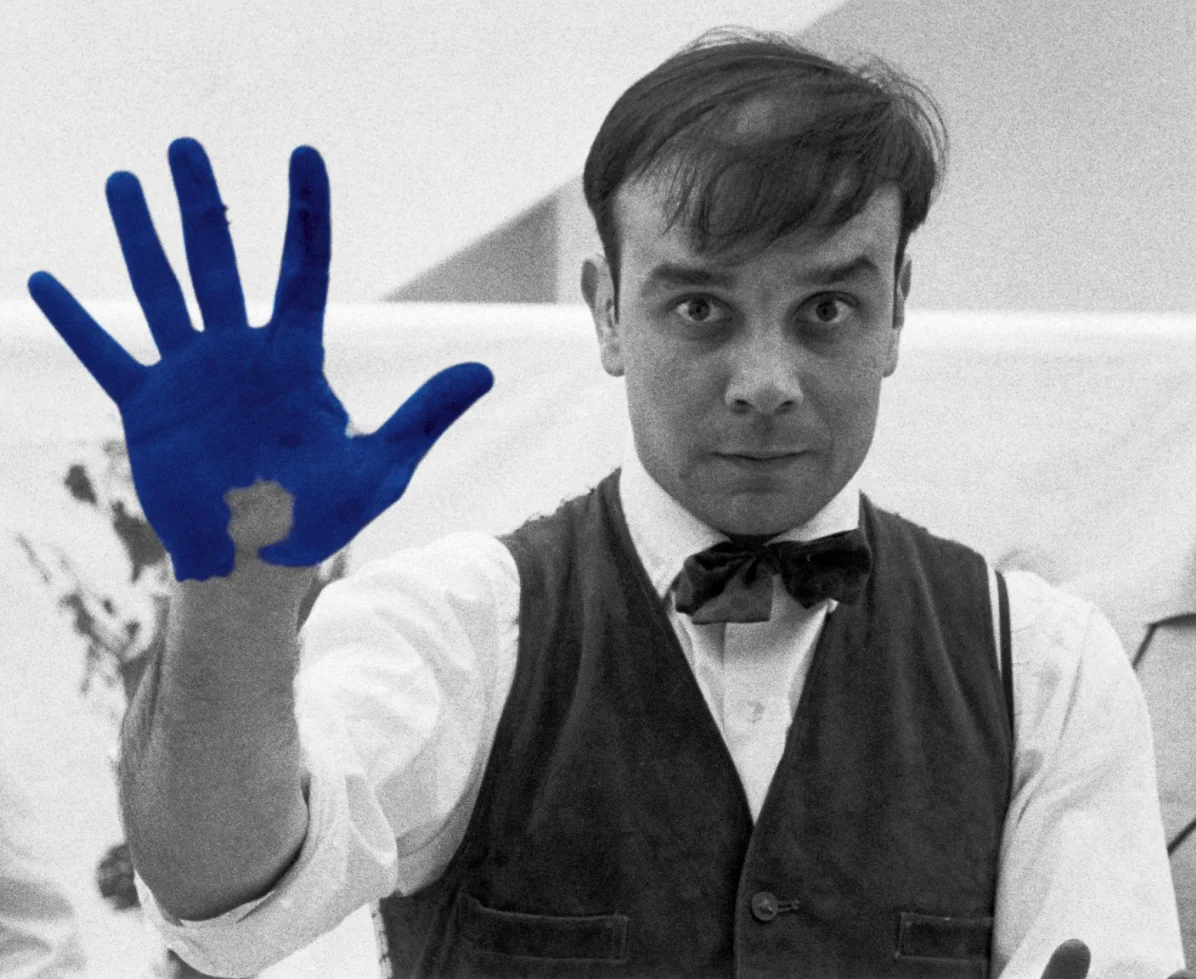
You're watching the artist direct a formal orchestra while blue-painted models press their skin against paper, a ritual intended to capture the very trace of life without the interference of a brush. His career was a brief, meteoric streak that ended at thirty-four, leaving behind a legacy that transformed color into a physical experience.
Did you know?
Before he was the artist of the void, Klein was one of the highest-ranking judo experts in Europe. He lived in Japan for years to master the discipline, viewing the rigorous physical control of the martial art as a necessary foundation for his spiritual leap into total abstraction.
Why are they important?
The invention of IKB: He created and patented International Klein Blue to preserve the luminescence and texture of pure pigment.Body as brush: His Anthropometry series replaced traditional tools with the human form, pioneering performance art and body art.Conceptual void: By selling empty space for gold, he challenged the material nature of art and paved the way for the conceptual movements of the 1960s.
Yves Klein
- Born
- Died
- Nationality
- French
Artlovers Tip
Look for the grain. In a gallery, stand close enough to feel the velvet texture of the IKB pigment; it is designed to draw the eye into a bottomless space rather than sit on a flat surface. To feel his spirit, visit the Opera House in Gelsenkirchen to see his vast sponge reliefs, where the blue becomes an architectural environment.
On view now
Where to see them now
Plan your visit — these exhibitions are on view now.