At a glance
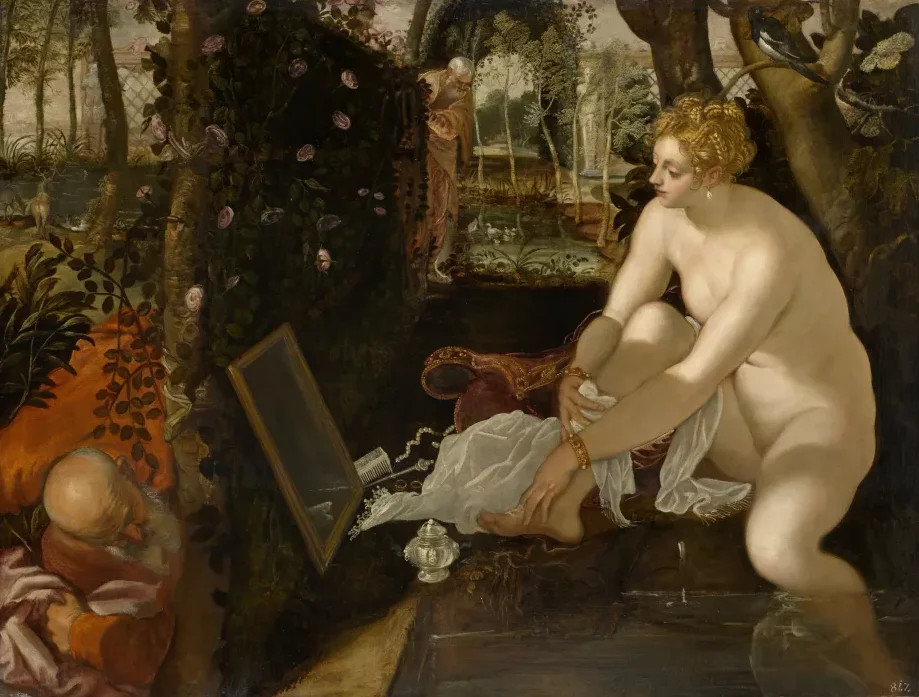
Figures lunge across the canvas in streaks of light, caught in moments of high-octane drama. Tintoretto didn't just paint stories; he directed them, using radical perspectives and flickering brushwork that make his scenes feel alive and unfolding.
Dates
- Born
- Died
Key Movements

Artlovers Tip
Stand beneath the ceilings of the Scuola Grande di San Rocco and look for the 'unfinished' strokes—the rapid, jagged lines where he barely lifted the brush. Don't look for quiet contemplation; look for the collision of light and shadow, and let the sheer physical scale of his ambition overwhelm you.
Top Artwork(s)
- The Miracle of the Slave, 1548, Gallerie dell’Accademia, Venice
- The Crucifixion, 1565, Scuola Grande di San Rocco, Venice
- The Last Supper, 1592–1594, Church of San Giorgio Maggiore, Venice
About the artist
A quick note
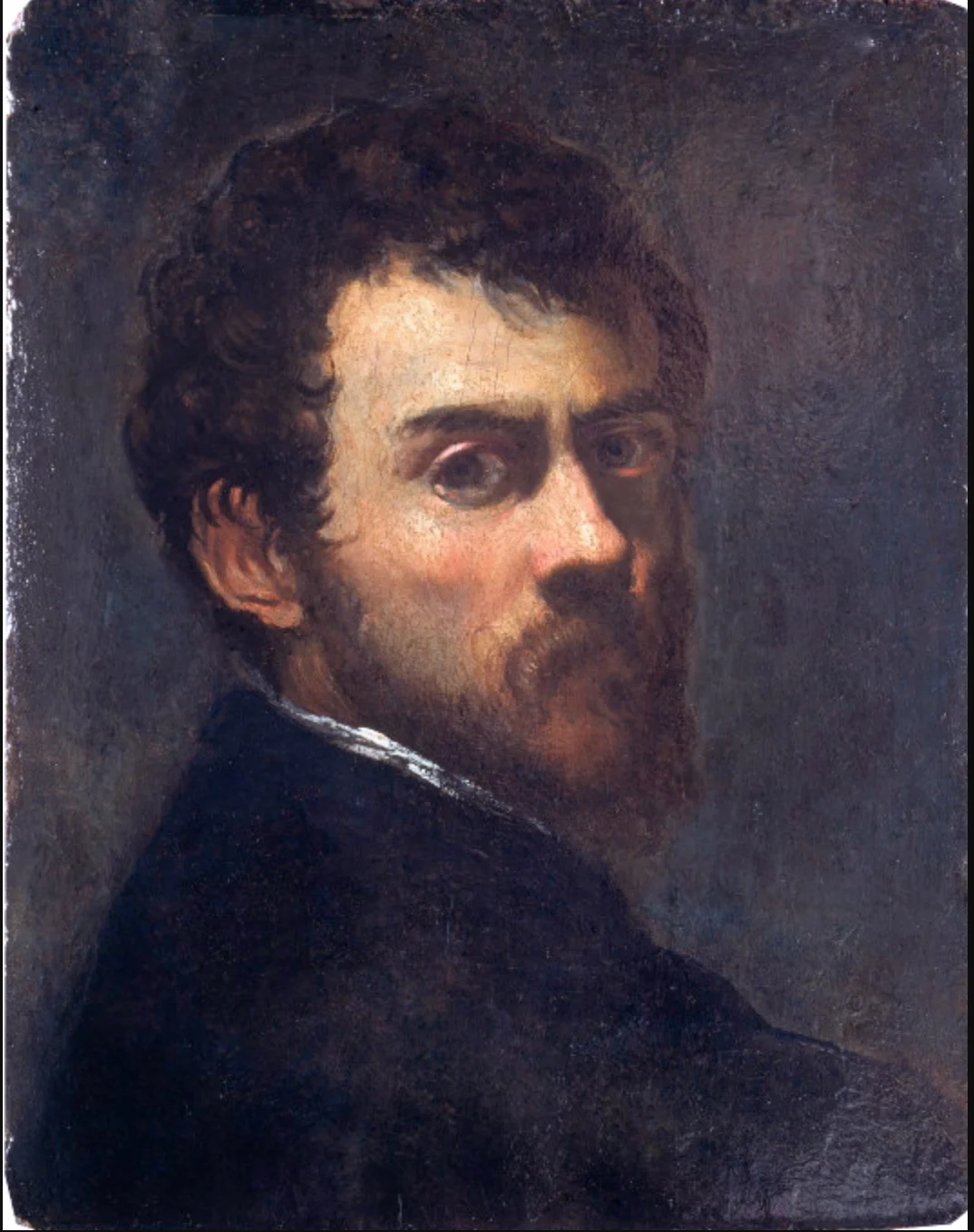
Born to a Venetian cloth-dyer, Jacopo Robusti earned the name Tintoretto—the little dyer—long before he became known as Il Furioso for his manic painting speed. After a legendary clash saw him dismissed from Titian's studio within days, he spent his life proving his rival wrong through sheer, unrelenting work and a bold ambition to marry Michelangelo's drawing with Titian's color.
He turned the shadowy halls of Venice’s charitable confraternities into his personal theaters, working late into the night by candlelight to perfect the muscular, plunging perspectives of his massive canvases. You're watching a man possessed by the need to out-paint every contemporary, eventually filling the Doge’s Palace with Paradise, the largest oil painting ever created on canvas.
Did you know?
Tintoretto was a recluse who treated his studio like a secret laboratory. To master his trademark dramatic lighting, he built miniature stage sets out of wooden boxes, placing small wax models inside and illuminating them with single candles to study exactly how shadows fall across a body in motion.
Why are they important?
Cinematic Perspective: He pioneered extreme foreshortening and off-center compositions, transforming the viewer from a passive spectator into a participant in the action.The Aesthetic of Speed: His prestezza technique prioritized raw energy and visible brushwork over a polished finish, paving the way for the expressive freedom of the Baroque and Modern eras.Grand-Scale Narrative: By covering entire buildings like the Scuola Grande di San Rocco with unified cycles, he redefined how art could define and dominate a physical architecture.
Jacopo Tintoretto
On view now
Where to see them now
Plan your visit — these exhibitions are on view now.