Wikimedia Commons
Rembrandt did not paint perfection. He painted humanity: old skin, tired eyes, gold light, grief, pride, silence — and the strange beauty of being imperfectly alive.
Key Movements
Baroque, Dutch Golden Age, Historical MemoryA quick note
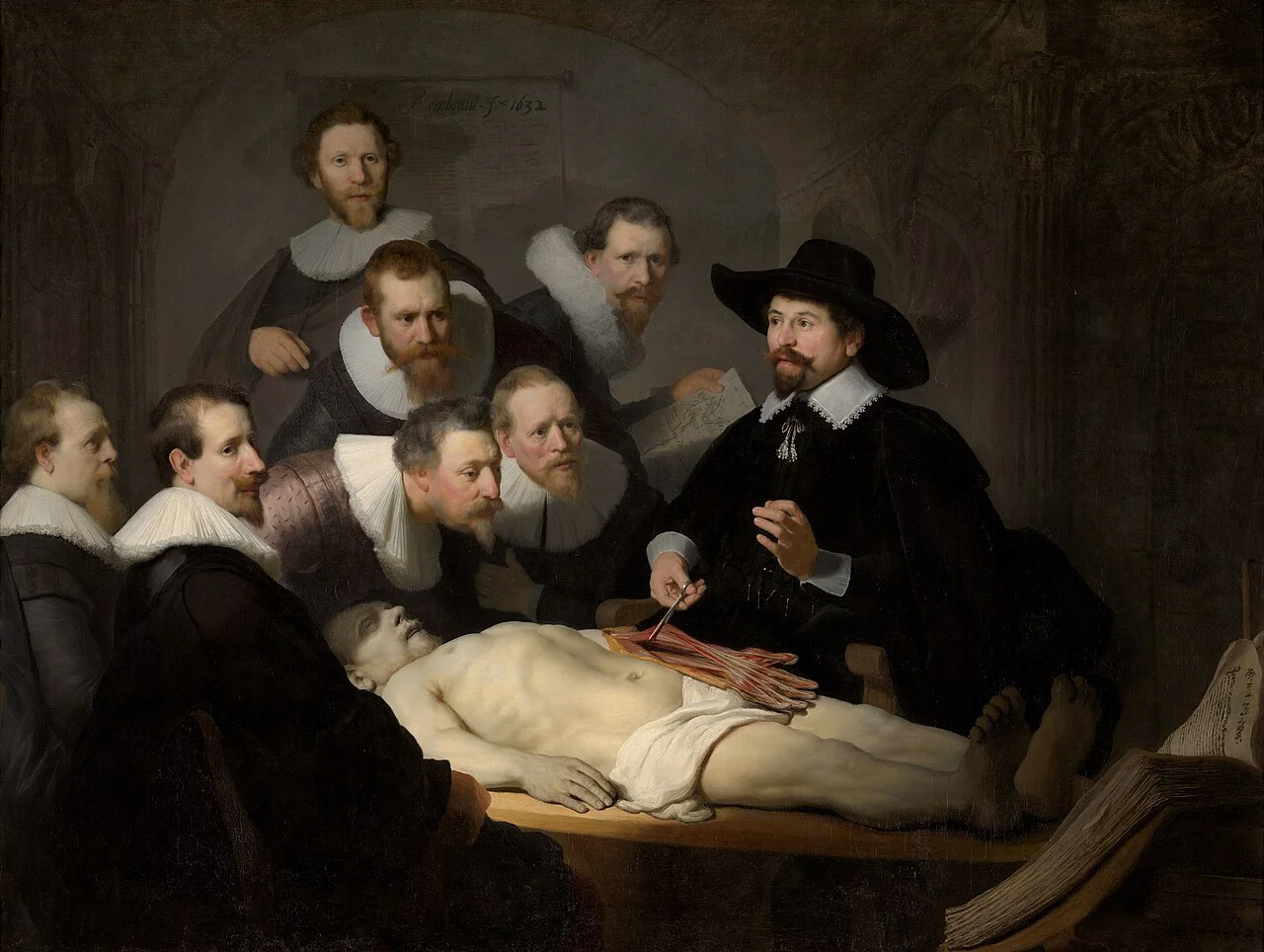
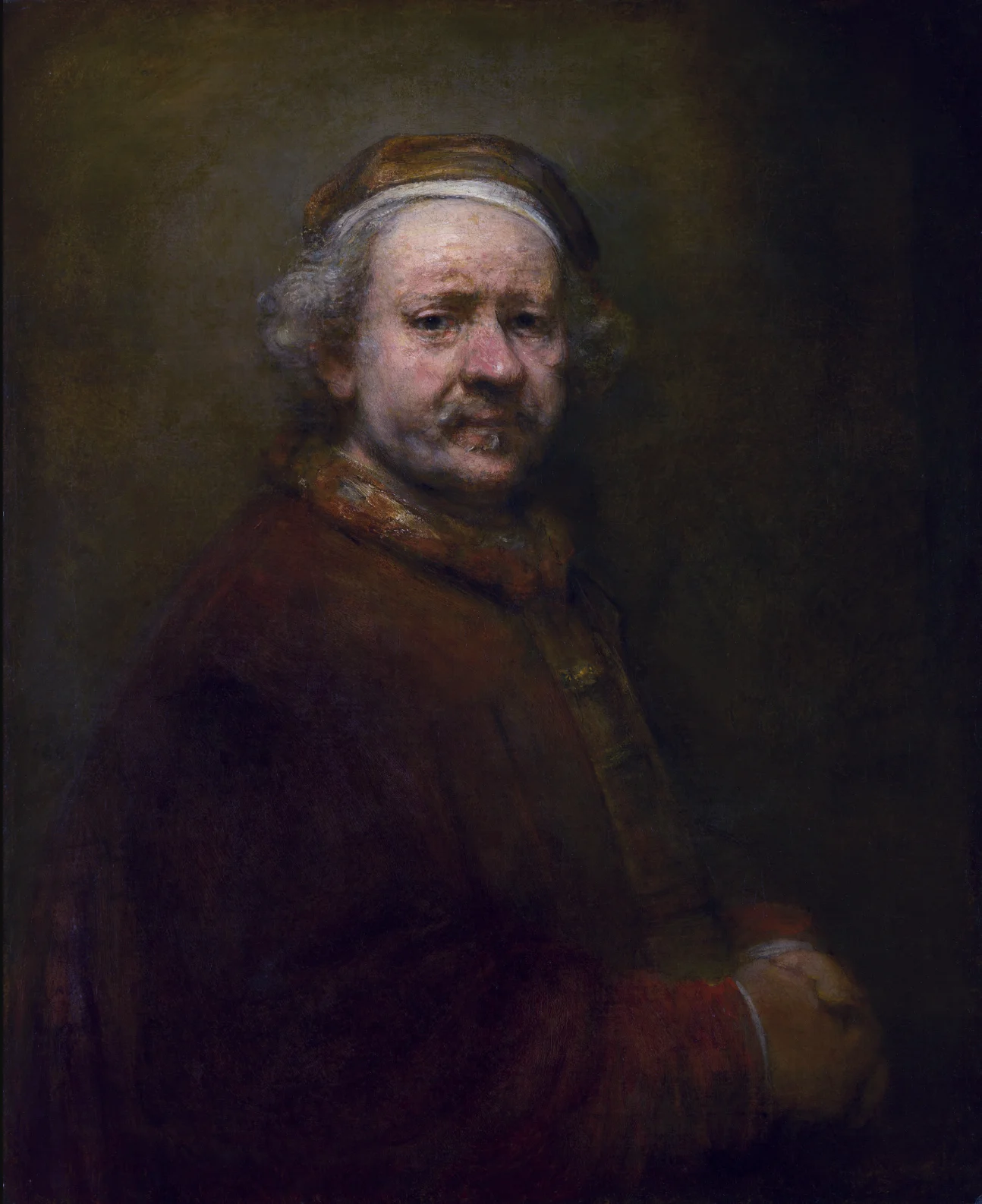
Rembrandt Harmenszoon van Rijn was born in Leiden in the Dutch Republic in 1606, the son of a miller, and became the defining master of the Dutch Golden Age — arguably the most psychologically penetrating painter in the history of Western art. He studied in Leiden under Jacob van Swanenburg and then briefly in Amsterdam under Pieter Lastman, before returning to Leiden to establish his own studio. By the early 1630s he had relocated permanently to Amsterdam, where his talents as a portraitist brought him immediate success, culminating in the monumental 'Anatomy Lesson of Dr. Nicolaes Tulp' (1632), which secured his reputation as the city's leading painter.\n\nRembrandt's mastery extended across portraiture, history painting, landscape, and — perhaps above all — printmaking, in which he pushed the possibilities of etching and drypoint to previously unimagined expressive depths. His celebrated series of self-portraits, numbering nearly a hundred across his career, charts the passage of time and the accumulation of experience with unsparing honesty.
The later decades of his life were marked by financial ruin following the bankruptcy of 1656, the death of his beloved partner Hendrickje Stoffels, and the loss of his son Titus; yet these years produced some of the most profoundly moving works in his catalogue, including 'The Return of the Prodigal Son.' He died in Amsterdam in 1669, aged sixty-three, leaving behind an output of over three hundred paintings, nearly three hundred etchings, and two thousand drawings.
In works like The Night Watch, The Jewish Bride, The Anatomy Lesson of Dr. Nicolaes Tulp, or The Return of the Prodigal Son, Rembrandt turns public scenes, biblical stories, and portraits into deeply human experiences.
Did you know?
Rembrandt van Rijn stands as the supreme master of light, shadow, and human psychology in Western painting, leaving a body of portraits, self-portraits, and etchings that have never been surpassed in their emotional truth.
Why are they important?
Rembrandt is relevant now because his art still teaches us how to look at people with complexity. In a world obsessed with polished images, he gives us faces with time, doubt, sadness, dignity, and truth.Seeing Rembrandt in person is essential for any art lover. Reproductions cannot capture the depth of his blacks, the warmth of his golds, or the way a face seems to breathe from inside the canvas.The Rijksmuseum in Amsterdam is one of the great places to experience him, especially for The Night Watch. But Rembrandt is also worth travelling for in places like the Mauritshuis, the National Gallery in London, the Louvre, and the Hermitage / major European collections where his works still hold the room.
Rembrandt van Rijn
- Born
- Died
- Nationality
- Dutch
Artlovers Tip
Begin with the light. Ask yourself: what is Rembrandt choosing to reveal, and what is he leaving in darkness?
Then look at the hands and faces. Rembrandt often tells the real story there — not in the grand action, but in the smallest human gesture.
Stand back first and let the darkness settle. Then move closer. Rembrandt rewards patience: the more time you give him, the more human the painting becomes.