A featured work
A tiny room explodes into dreams, music, creatures… and pure Miró magic.
More info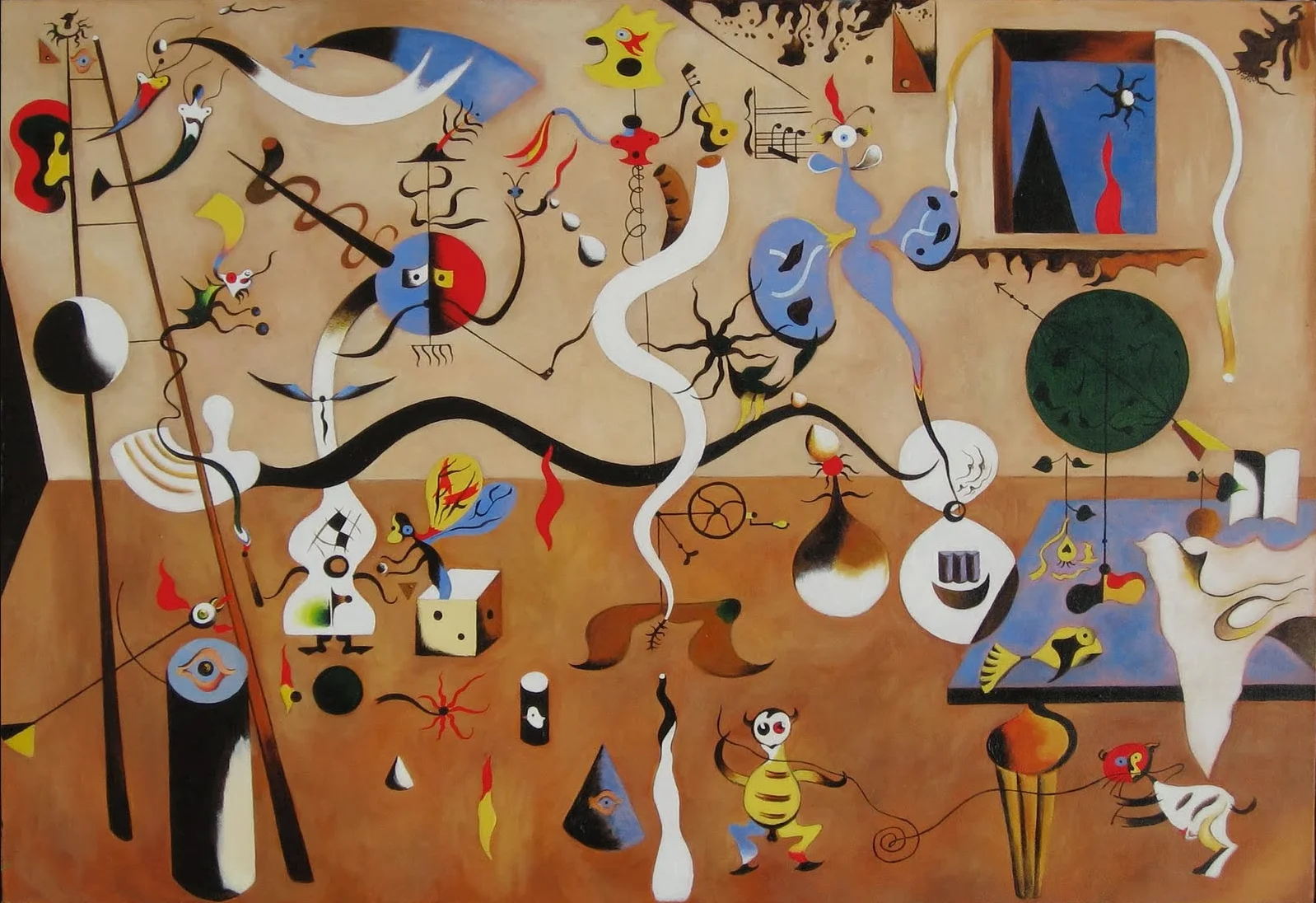
© Buffalo AKG Art Museum, Buffalo, USA . Successió Miró S.L.
Joan Miró turned the universe into a playground — stars, birds, moons, bodies and dreams floating in a language that feels both ancient and radically free.
Key Movements
SurrealismA quick note
Miró is often linked to Surrealism, but his world is bigger than one label. He created a visual alphabet of signs, colours and cosmic symbols that feels instantly recognisable.
Painting, sculpture, ceramics, drawing, printmaking, murals, textiles
Miró was not only a painter. He worked across materials and scales, from intimate drawings to public murals and monumental sculptures.
Signature Themes
Dreams · stars · birds · women · the moon · the sun · Catalonia · escape · freedom · childhood · symbols · the cosmos.
Miró’s universe feels light, but it is not superficial. Behind the joy there is also exile, war, memory and resistance.
Most Famous Artworks
- The Farm — National Gallery of Art, Washington, D.C.
- Harlequin’s Carnival — Albright-Knox Art Gallery, Buffalo
- The Tilled Field — Solomon R. Guggenheim Museum, New York
- Blue I, Blue II, Blue III — Centre Pompidou, Paris
- Woman and Bird — Parc Joan Miró, Barcelona
- The Hope of a Condemned Man — Fundació Joan Miró, Barcelona
- May 1968 — Fundació Joan Miró, Barcelona
- Personnage sculptures — various collections and public spaces
Did you know?
Miró wanted to “assassinate painting.”
Not because he hated art, but because he wanted to break the old rules of what painting had become. He pushed art away from academic beauty and towards freedom, signs, gesture, material and imagination.
That is why Miró can feel playful and revolutionary at the same time.
Why are they important?
Miró matters because he gave modern art a new kind of freedom.He did not paint dreams as realistic scenes. He invented a language for them: dots, lines, birds, women, stars, suns, moons, ladders, eyes and strange creatures that seem to come from a child’s imagination and a cosmic ritual at the same time.His work reminds us that abstraction does not have to feel cold. It can be playful, poetic, political and deeply human.Miró feels incredibly contemporary because his work speaks the language of symbols — almost like emojis before emojis. His paintings are visual messages: direct, emotional, mysterious, universal. In a world saturated with images, Miró reminds us that the simplest sign can still open a whole inner universe.He also matters because he shows that joy can be serious. Play can be radical. Colour can be a form of freedom.
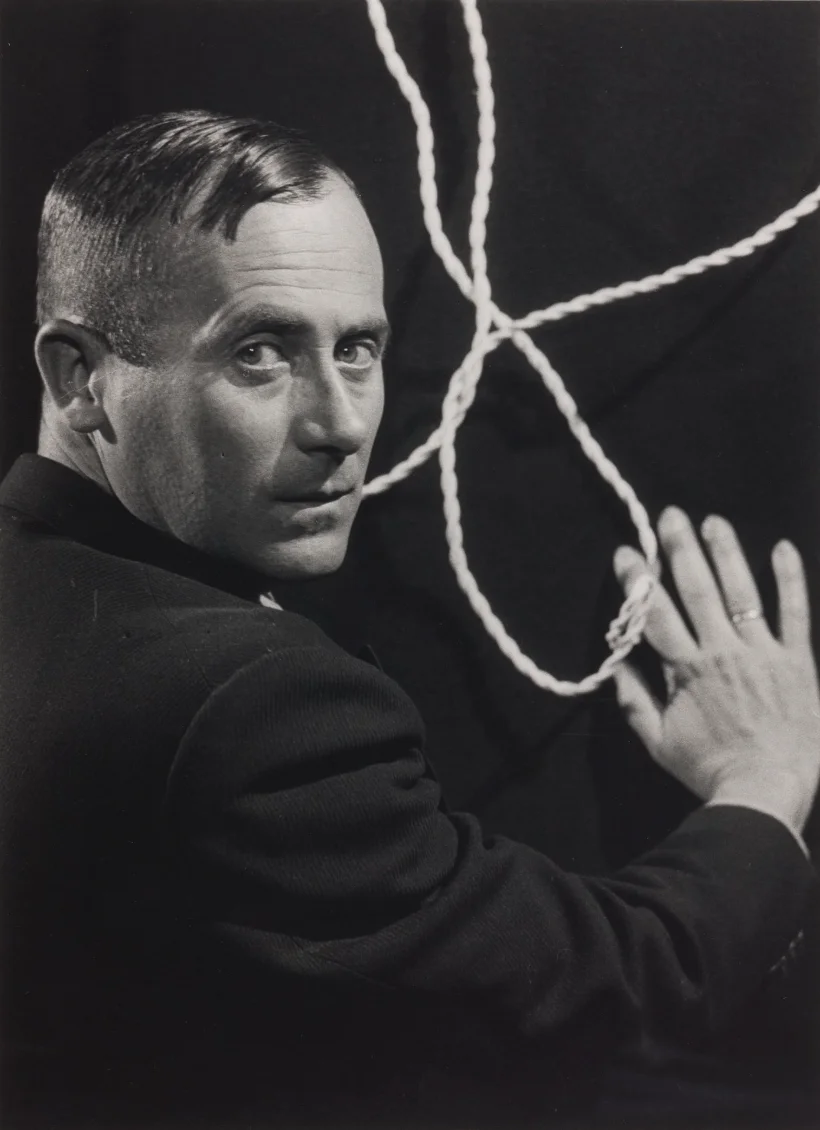
Joan Miró
- Born
- Died
- Nationality
- Spanish