Jasper Johns made the familiar strange: flags, targets, numbers, maps, letters. Things we think we already know — until he paints them and makes us question what seeing really means.
Key Movements
Abstract Expressionism, Conceptual Art, Pop ArtA quick note
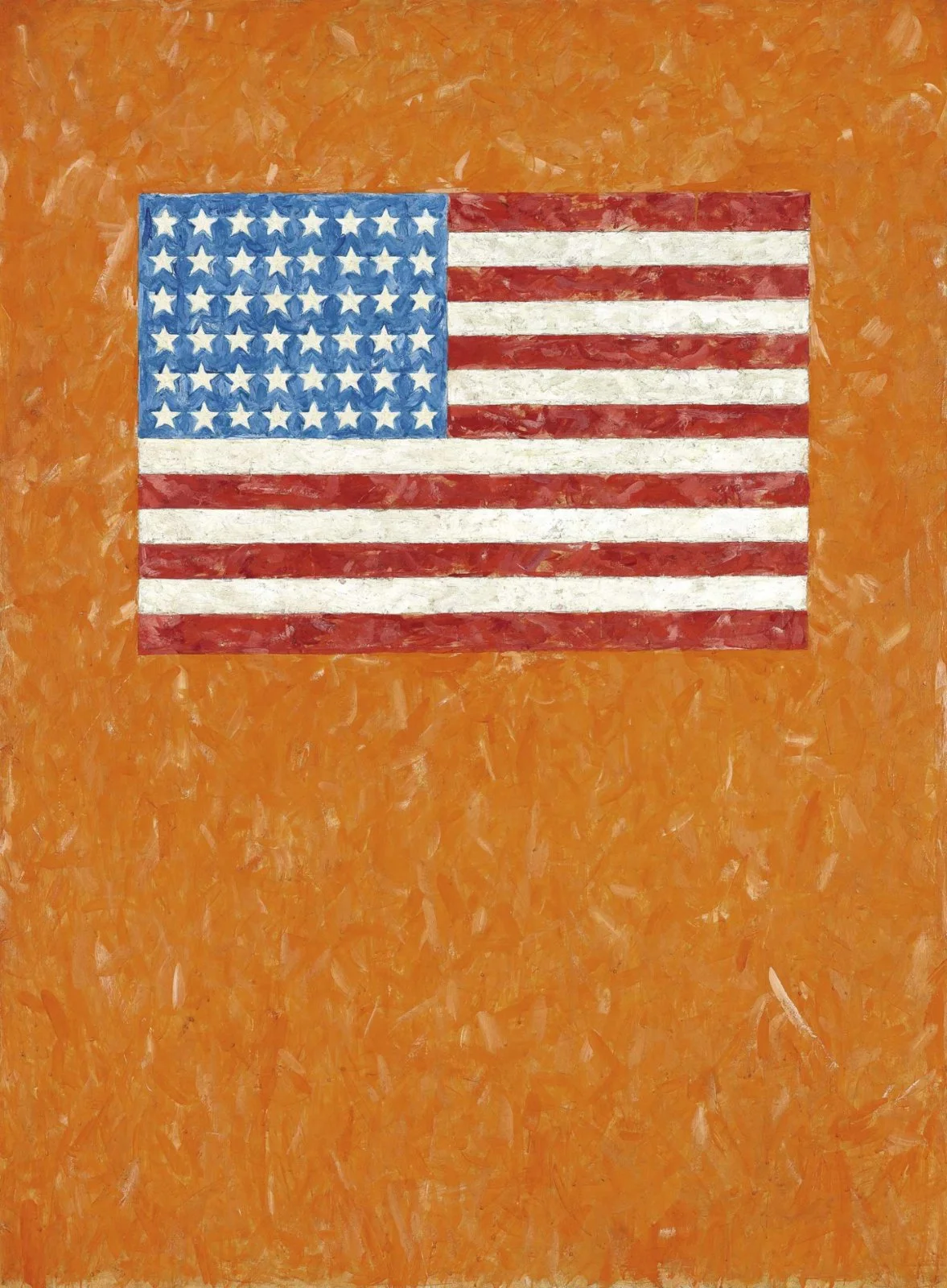
His close friendship with Robert Rauschenberg and association with composer John Cage profoundly shaped his artistic vision. Johns's seminal 1954–55 painting Flag — depicting the American flag in encaustic and collage — marked a decisive break from Abstract Expressionism by focusing on familiar, flat imagery that challenged the boundary between representation and abstraction.
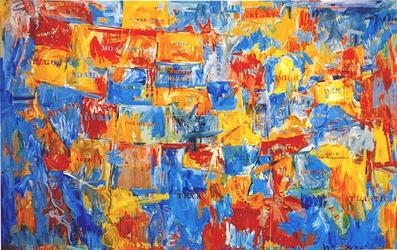
Over seven decades, Johns has explored targets, maps, numbers, and letters as subjects that are simultaneously seen and known, collapsing the distinction between an image and the thing it represents.
His technical range is exceptional: he works in oil and encaustic painting, bronze sculpture, and an extensive printmaking practice encompassing lithography, etching, and screen printing. His 1958 debut at the Leo Castelli Gallery sold out entirely, catapulting him to immediate prominence.
Johns has received virtually every major honor in the art world, including the Presidential Medal of Freedom (2011) and the National Medal of Arts. His work is held in leading museums worldwide, and his paintings regularly set auction records.
In his nineties, he continues to work from his studio in Connecticut, remaining one of the most consequential living American artists.
Looking at Jasper Johns means looking at images that are already part of your visual memory.
A flag. A target. A number. A map.
But Johns does not use them as simple symbols. He turns them into paintings that ask questions: Is this a flag, or a painting of a flag? Is a number still a number when it becomes colour, texture and gesture? Can something totally familiar become mysterious again?
His surfaces are often rich and physical, especially in his early encaustic works, where wax, pigment and collage create a dense, almost archaeological texture. The image may look simple from a distance, but close up it becomes layered, unstable and full of doubt.
Did you know?
Jasper Johns transformed American art with iconic paintings of flags, targets, and numbers that blurred the line between image and object, bridging Abstract Expressionism and the Pop era.
Why are they important?
Johns is one of the key figures who helped move American art beyond Abstract Expressionism, opening the way for Pop Art, Minimalism and Conceptual Art.Jasper Johns feels very relevant now because we live surrounded by signs, icons, logos, flags, maps and repeated images. His work asks us to slow down and question the symbols we use every day.
Jasper Johns
- Born
- Nationality
- American

Artlovers Tip
Start with the image you recognise first — the flag, the target, the map, the number. Then forget what it “means” and look at how it is made: wax, layers, brushwork, collage, repetition, grey tones, erasures.
With Jasper Johns, do not ask only: “What is it?”
Ask: “Why do I think I already know what it is?”
On view now
Where to see them now
Plan your visit — these exhibitions are on view now.