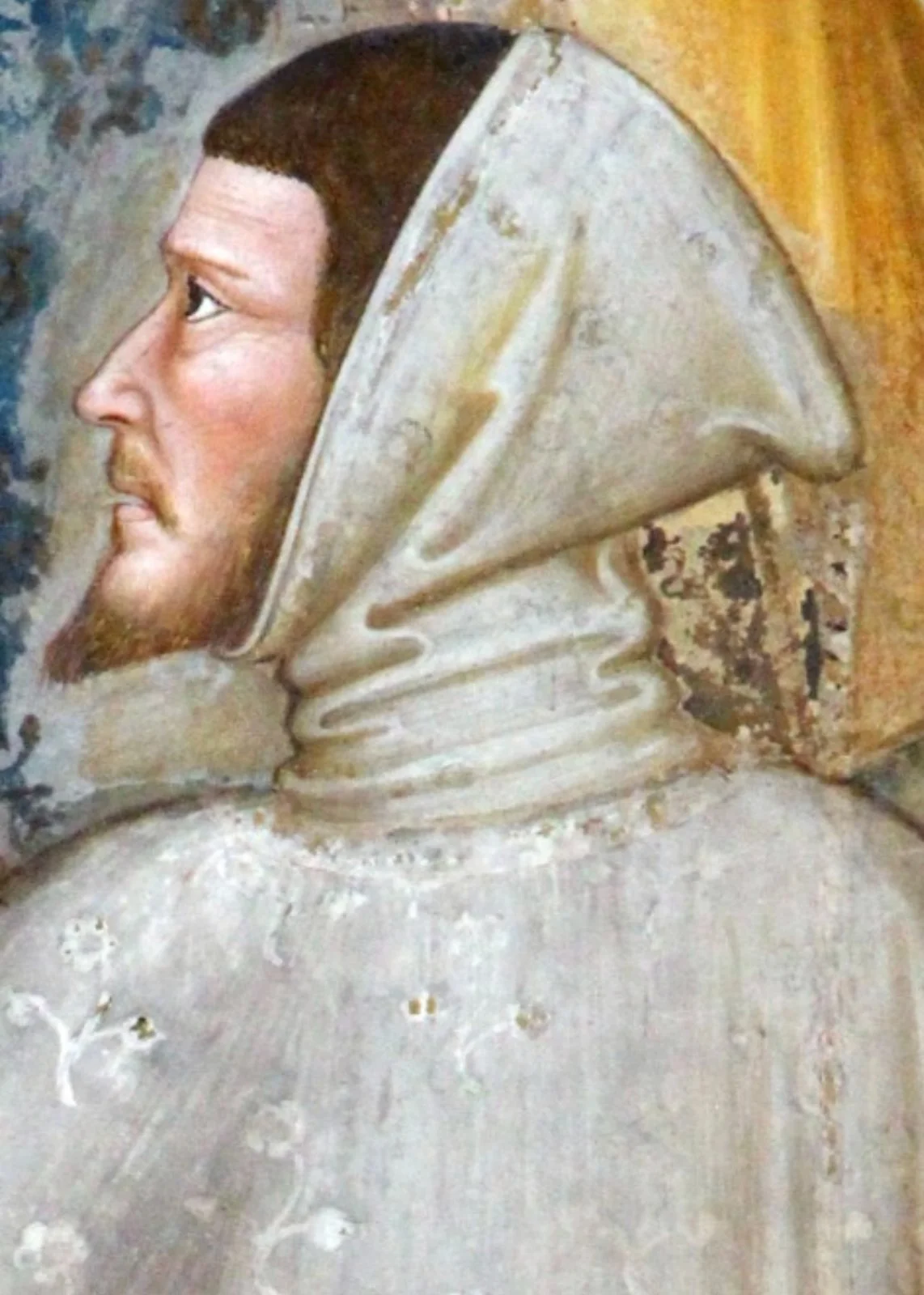
Giotto changed the history of art by making sacred stories feel human. Before him, figures often looked symbolic and distant. With him, they began to cry, embrace, suffer, and live.
Key Movements
Early RenaissanceA quick note
Proto-Renaissance: Also connected to late Medieval art, early Italian Renaissance, and the transition from Byzantine tradition to naturalism.
Looking at Giotto means watching art wake up to human emotion. His figures have weight, bodies, faces, gestures, and relationships. They do not float like icons; they stand, bend, mourn, touch, and react.
His frescoes are built like visual theatre: simple spaces, clear storytelling, powerful silence. In works like the Scrovegni Chapel in Padua, every scene feels direct and readable — almost cinematic. You do not need to know all the theology to feel the drama.
Giotto’s genius is not decoration. It is presence.
Did you know?
Giotto was so famous for his skill that another legend says he once painted a perfect freehand circle to prove his genius to the Pope. The message was clear: no tricks, no decoration — just pure control.
Why are they important?
Giotto matters because he helped open the door to the Renaissance. Without him, it is hard to imagine Masaccio, Fra Angelico, Michelangelo, or even the emotional storytelling of Western painting.The Scrovegni Chapel in Padua is one of the great art pilgrimages in Europe. It is not just a chapel; it is a before-and-after moment in art history. You walk in and see the beginning of modern visual storytelling.
Giotto di Bondone
- Born
- Died
- Nationality
- Italian