At a glance
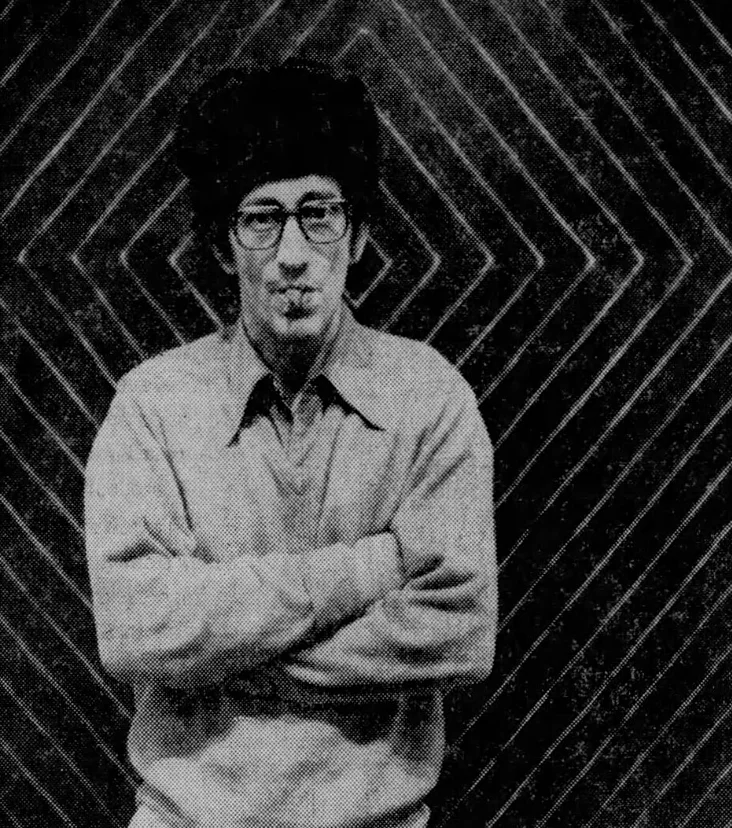
Frank Stella made painting leave the wall — turning lines, colour and geometry into objects, structures and almost architectural explosions.
Dates
- Born
- Died
Key Movements

Artlovers Tip
About the artist
A quick note
Stella began as one of the key figures of Minimalism, but his career moved far beyond restraint. His work evolved from strict black stripes to shaped canvases, metallic surfaces, vibrant colour, huge reliefs and sculptural constructions.
Most Famous Artworks
- Die Fahne Hoch! — 1959
- The Marriage of Reason and Squalor, II — 1959
- Empress of India — 1965
- Harran II — 1967
- Damascus Gate, Stretch Variation III — 1970
- Black Series I — 1967, print series
- Moby-Dick Series — 1980s–1990s
- The Fountain — later sculptural work
- Jasper’s Dilemma — 1962
Best destinations to see his artworks:
New York, Washington D.C., Fort Worth and major modern art museums.
In the early works, the canvas is strict, flat and controlled: black bands, repeated lines, hard edges. But later, Stella’s art breaks open. Curves, metal, colour and relief push outward until the painting feels like it wants to become a building, a machine or a wave.
His work asks a simple but radical question:
What happens when a painting stops pretending to be a window and becomes an object?
Did you know?
Stella began as one of the key figures of Minimalism, but his career moved far beyond restraint. His work evolved from strict black stripes to shaped canvases, metallic surfaces, vibrant colour, huge reliefs and sculptural constructions.
Frank Stella became famous extremely young.
He was only in his early twenties when his Black Paintings entered the New York art conversation. At a time when Abstract Expressionism was still associated with gesture, emotion and heroic brushwork, Stella did the opposite: precision, repetition, control.
That refusal of drama became dramatic in itself.
Why are they important?
Frank Stella changed the rules of modern painting.His early Black Paintings stripped art down to repetition, surface and structure. No drama, no illusion, no hidden story — just the object itself. His famous idea, “What you see is what you see,” became one of the clearest statements of Minimalist art.But Stella did not stay minimal. He pushed painting into space, making works that behave almost like sculpture, architecture or visual music. His career is a lesson in artistic evolution: from radical simplicity to radical complexity.For an Artlover, seeing Stella in person is the best way to understand how painting escaped the rectangle.Today, when art often crosses disciplines and becomes immersive, spatial or object-based, Stella feels like a pioneer. He helped make it possible to think of painting not just as an image, but as an experience in space.
Frank Stella