At a glance
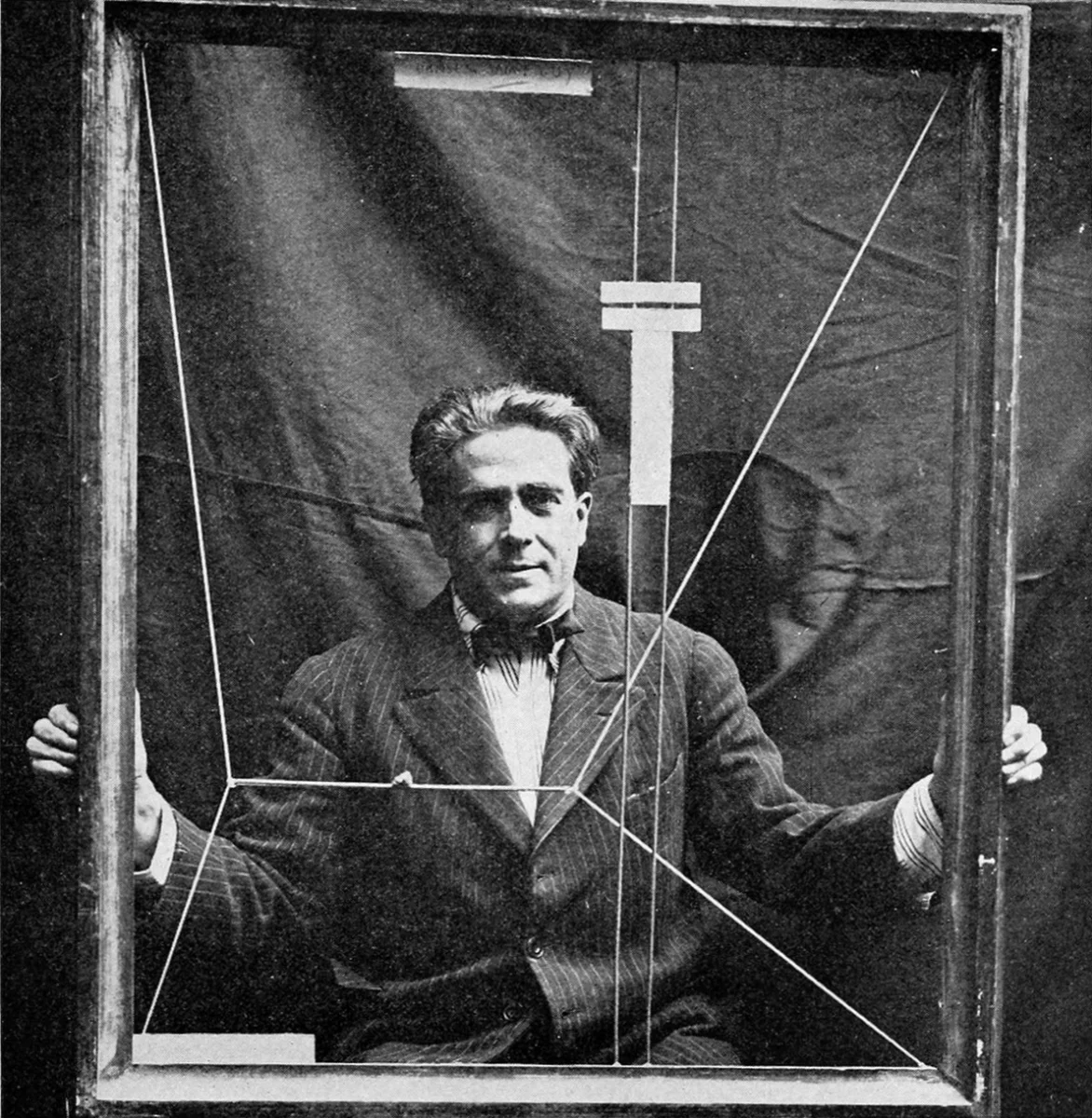
Francis Picabia was the artist who refused to behave. He changed styles like other people change clothes: Impressionism, Cubism, Dada, machines, erotic images, transparencies — always escaping the label just when the art world thought it had understood him.
Dates
- Born
- Died
Key Movements

Artlovers Tip
Do not try to find “the real Picabia” in one style. The changes are the point.
Move through his work as if you were following a brilliant troublemaker: from elegant painting to absurd machines, from anti-art jokes to layered dream images. Ask yourself: is he serious, mocking us, or both?
Picabia is best experienced with curiosity and a sense of humour. Don’t look for purity. Look for contradiction. His art says: thoughts can change direction — and so can art.
About the artist
A quick note
Picabia was closely associated with Dada, but his career was deliberately unstable: he moved through Impressionism, Cubism, abstraction, mechanomorphic drawings, Surrealist-adjacent imagery, and later controversial figurative works. Tate describes him as a French avant-garde painter, writer, filmmaker, magazine publisher, poet, and typographist linked to Dada.
Looking at Picabia means watching modern art lose its manners.
His early works flirt with Impressionism and Cubism, but soon he turns art into provocation. Machines become portraits. Diagrams become desire. Titles become jokes. Style becomes a weapon.
Picabia’s work is restless, sarcastic, elegant, vulgar, intellectual, and sometimes deliberately “wrong.” He did not want art to be pure or stable. He wanted it to move, contradict itself, mock itself, and break the rules before rules could become a new academy.
In his mechanomorphic works, bodies and emotions are translated into machine-like forms. In his Transparencies, images overlap like ghosts, memories, myths, and art history collapsing into one surface. With Picabia, you are not watching a single style — you are watching an artist sabotage the idea of style itself.
Did you know?
Picabia was anti-movement even inside the anti-movement.
Picabia did not want to be understood. He wanted to stay impossible to classify — and today, that is exactly what makes him feel so contemporary.
His auction record is Pavonia from 1929, sold at Sotheby’s Paris in March 2022 for around €10 million / $11 million, setting a new record for the artist. It is interesting because it is not one of his pure Dada machine works, but a later, sensual, almost “boudoir” painting — proof that the market also loves his contradictions.
Why are they important?
Picabia feels extremely contemporary because he understood something very early: identity is fluid, images are unstable, and culture loves to turn rebellion into branding.He is relevant now because his work speaks to remix culture, irony, visual overload, anti-branding, meme logic, and the freedom to refuse a single artistic identity. Long before postmodernism became a word, Picabia was already behaving like a postmodern artist.Picabia is not always “beautiful” in the classic sense, but he is electric. His work is ideal for viewers who enjoy Duchamp, Dada, Surrealism, conceptual art, and artists who keep changing the rules.
Francis Picabia